- Integrated energy
- Digital energy innovations
- Alternative sustainable fuels and chemicals
- Coupling energy and environment
Sub-Topics
One important challenge is determining where to pursue smart and large-scale energy infrastructure, where to enable smart, decentralised systems that facilitate the operation of smaller, more resilient facilities and how to find the right combination of centralised and distributed systems. In designing these future systems, it will be important to dismantle the energy inequalities embedded in our current fossil-fuel-based world and to put measures in place that ensure that they do not re-emerge. It is likely that this will involve a transition from rigid electromechanical grids to programmable, data-driven networks. This too will require careful design that balances decentralised, bottom-up microgrids against large-scale, networked systems — and integrates the benefits of AI without compromising data security or introducing weakness into our critical infrastructure.
Equally important is the decarbonisation of our energy systems, including challenging sectors such as aviation and shipping. There is reason for optimism here: innovations in chemical engineering are helping the energy sector move towards alternative, low-carbon fuels and capturing carbon from existing and future fossil-fuel-burning energy sources. Primary obstacles include the need for more efficient catalysts, scalable sources of renewable feedstocks and the high costs that make direct air capture (DAC) of carbon dioxide a competing and complementary technology. Broader environmental and sustainability considerations will require significant economic and societal changes: it is likely that only blunt policy instruments and mindset shifts will align our energy use with planetary boundaries and enable us to achieve long-term environmental goals. International funding, cooperation and regulation mechanisms could accelerate adoption of such measures.
KEY TAKEAWAYS
Energy production and delivery systems need to undergo a profound transformation if we are to meet both our energy needs and climate and sustainability goals. One important innovation will be an Integrated energy sector, where thermal, fuel-based and electrical energy systems interoperate. Electrical grids will also require new infrastructure that can make the most of Digital energy innovations and the transformative potential of AI to optimise complex new energy flows. Alternative sustainable fuels and chemicals are set to play a significant role in decarbonising energy systems. The science behind creating synthetic fuels from captured carbon dioxide is not yet fully understood and yet is a vital pathway for decarbonising sectors like aviation and shipping. Ecological sustainability and the health of people and the planet demands that the largest change must be to fully Coupling energy and environment, which will require significant economic and societal shifts for a successful and timely transition.
Anticipatory Impact:
Three fundamental questions guide GESDA’s mission and drive its work: Who are we, as humans? How can we all live together? How can we ensure the well-being of humankind and the sustainable future of our planet? We asked researchers from the field to anticipate what impact future breakthroughs could have on each of these dimensions. This wheel summarises their opinions when considering each of these questions, with a higher score indicating high anticipated impact, and vice versa.
- Anticipated impact on who we are as humans
- Anticipated impact on how we will all live together
- Anticipated impact on the well-being of humankind and sustainable future of our planet

Integrated energy
Future Horizons:
10-yearhorizon
International energy flows accelerate
25-yearhorizon
Energy systems managed on a global scale
Computational advances in AI and quantum computing allow energy systems to be simulated and managed dynamically on a global scale. This leads to a seamlessly integrated energy system across geographies that can operate autonomously. Space-based solar-harvesting technologies send energy to Earth for the first time. However, hundreds of millions still do not have access to electricity.
This energy transition is already under way. Clean power is now 40 per cent of global electricity production and the amount of solar power is doubling every three years.1 For several years now, it has generally been cheaper to build a new clean-energy power plant (with storage) than it is to operate an existing fossil-fuel power plant.2 But properly modelling and operating energy systems that integrate systems for electricity, fuel and heat requires significant advances. These include high-resolution computer models that capture complex behaviour, control systems optimised by machine learning, standardised communication protocols so that key components can integrate into decentralised systems and advanced cybersecurity to secure energy networks against attack. The scale of these systems must also increase so that energy can flow smoothly across borders, entire regions and potentially globally. This scaling will require advances in modelling, analysis and prediction enabled by advances in AI and quantum computing.
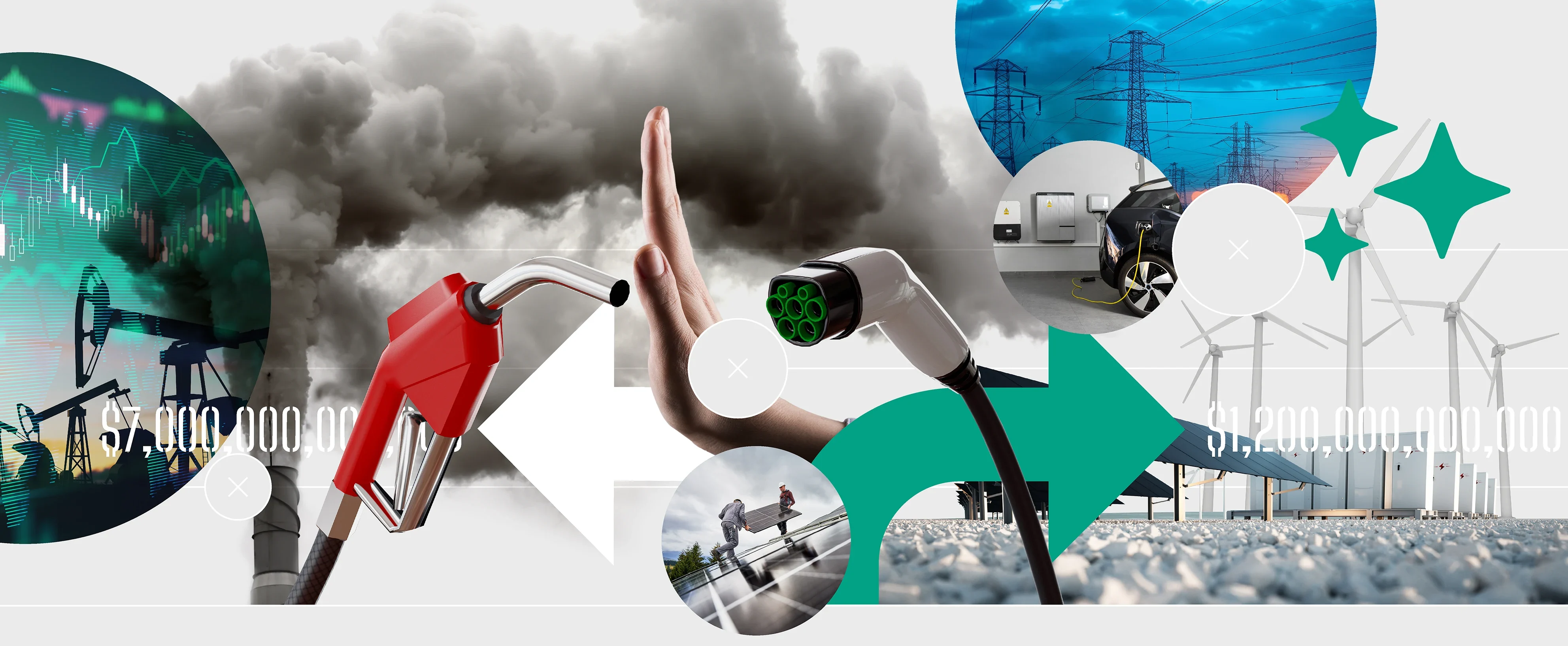
Non-technical barriers, such as legal incompatibilities across regions, socio-political resistance and skills gaps, are also beginning to weigh more heavily than technical ones. For example, global energy policies are heavily biased towards fossil fuels, which are currently subsidised to the tune of up to $7 trillion a year compared to the $1.2 trillion invested in clean energy. Ensuring equal access to clean energy is also a growing concern, given the initial cost of acquiring the infrastructure to deliver it. Ensuring that all people can benefit from the outset is an important task.
Integrated energy - Anticipation Scores
The Anticipation Potential of a research field is determined by the capacity for impactful action in the present, considering possible future transformative breakthroughs in a field over a 25-year outlook. A field with a high Anticipation Potential, therefore, combines the potential range of future transformative possibilities engendered by a research area with a wide field of opportunities for action in the present. We asked researchers in the field to anticipate:
- The uncertainty related to future science breakthroughs in the field
- The transformative effect anticipated breakthroughs may have on research and society
- The scope for action in the present in relation to anticipated breakthroughs.
This chart represents a summary of their responses to each of these elements, which when combined, provide the Anticipation Potential for the topic. See methodology for more information.

Digital energy innovations
Future Horizons:
5-yearhorizon
The emergence of pico- and nano-grids
10-yearhorizon
The scaling challenge focuses attention
25-yearhorizon
The first fully integrated, bottom-up energy system
Just how these new energy grids will evolve is an open question. One option is the development of decentralised, bottom-up systems, or "microgrids",4 which are more adaptable and can be aggregated over time. Proponents argue that they offer a more modular and resilient form of connectivity. The alternative is large, integrated and networked systems that benefit from economies of scale and encourage resource-sharing. In many parts of the world, these will continue to be favoured.
Both will require sophisticated models that can simulate complex behaviour, control multifaceted systems and predict future outputs. These “digital twins” are evolving rapidly, enabled by the analysis of large datasets and AI.
However, significant barriers still prevent wider implementation, including the inaccessibility of data for security reasons and a reluctance to test AI in critical infrastructure where failures are unacceptable. Building trust in AI and ensuring it is understandable and safe through “explainability” initiatives or insistence on “human-in-the-loop” protocols are major challenges.
Digital energy innovations - Anticipation Scores
The Anticipation Potential of a research field is determined by the capacity for impactful action in the present, considering possible future transformative breakthroughs in a field over a 25-year outlook. A field with a high Anticipation Potential, therefore, combines the potential range of future transformative possibilities engendered by a research area with a wide field of opportunities for action in the present. We asked researchers in the field to anticipate:
- The uncertainty related to future science breakthroughs in the field
- The transformative effect anticipated breakthroughs may have on research and society
- The scope for action in the present in relation to anticipated breakthroughs.
This chart represents a summary of their responses to each of these elements, which when combined, provide the Anticipation Potential for the topic. See methodology for more information.

Alternative sustainable fuels and chemicals
Future Horizons:
5-yearhorizon
Electrochemistry unearths novel materials and processes
10-yearhorizon
Direct air capture investment soars
25-yearhorizon
Sustainable aviation fuel policy generates demand for synthetics
Much research is currently devoted to developing alternative sustainable fuels and chemicals, improving understanding of the reaction mechanisms and developing better catalysts that can lower energy costs, increase yields and reduce the need for scarce or controversial materials like cobalt and ruthenium. More efficient reactions will improve the viability of “power-to-X” technologies that convert renewable energy into fuels like methane or other hydrocarbons as a form of energy storage, although life-cycle assessment protocols will be required to ensure that synthetic fuels really do have net climate benefits.
Beyond the challenge of developing better materials and processes is the problem of finding scalable, renewable sources of carbon dioxide and hydrogen to act as feedstocks, should these fuels be produced on a vast scale. Biogenic sources of carbon are generally limited and, in some cases, may compete with crops and agriculture. Other sources, like direct air capture (DAC), raise massive engineering challenges. Methane pyrolysis and ammonia cracking are looking like promising routes to producing hydrogen. There remains the problem of integrating these new fuels into a processing, refining and distribution system designed for fossil fuels.
In the meantime, the high cost of synthetic fuels raises the question of where to use them, with aviation and international shipping being likely candidates.7 Indeed, the costs of synthetic fuels are so high that it is currently cheaper to continue burning fossil fuels and then remove the carbon dioxide this produces from the atmosphere with DAC.8 This is unlikely to change soon but could bootstrap DAC technology to the point where it can capture carbon-dioxide feedstocks on a scale suitable for manufacturing synthetic fuels at a more reasonable price.9
Alternative sustainable fuels and chemicals - Anticipation Scores
The Anticipation Potential of a research field is determined by the capacity for impactful action in the present, considering possible future transformative breakthroughs in a field over a 25-year outlook. A field with a high Anticipation Potential, therefore, combines the potential range of future transformative possibilities engendered by a research area with a wide field of opportunities for action in the present. We asked researchers in the field to anticipate:
- The uncertainty related to future science breakthroughs in the field
- The transformative effect anticipated breakthroughs may have on research and society
- The scope for action in the present in relation to anticipated breakthroughs.
This chart represents a summary of their responses to each of these elements, which when combined, provide the Anticipation Potential for the topic. See methodology for more information.

Coupling energy and environment
Future Horizons:
5-yearhorizon
Short-term goals unmet
10-yearhorizon
Mid-term goals are more realistic
25-yearhorizon
With immediate widespread action, long-term goals are achievable
Economic incentives could help, given their role in past environmental progress such as reducing sulphur-dioxide emissions by switching from coal-burning to gas. In the same way, future transitions will mean creating opportunities for large industries to invest in new technologies that reduce environmental impacts.
One important issue is the role of consumption. Even with cleaner technology, emissions continue to increase because overall activity increases. One reason for this is that our economic models do not account for the true environmental cost of extracting and consuming natural resources. Finding ways to model and control consumption, perhaps with "environmental allowances", will be essential.
Beyond that, the switch to a circular economy will require a mindset shift,10 focusing on recovering resources rather than just reducing pollution. This includes, for example, turning waste into fertiliser and developing devices to recover nitrogen from emissions for reuse,11 plus reuse of solar-panel materials, recovery of lithium and the development of industrial symbiosis projects.
Crucial to these goals is the recognition of the inescapable coupling between energy generation and the environment. Achieving our 2050 environmental goals will require immediate action, but shorter-term goals look increasingly unachievable. Without urgent action at every scale of society, there is a significant chance that many of the UN’s 2030 Sustainable Development Goals will not be met.

Coupling energy and environment - Anticipation Scores
The Anticipation Potential of a research field is determined by the capacity for impactful action in the present, considering possible future transformative breakthroughs in a field over a 25-year outlook. A field with a high Anticipation Potential, therefore, combines the potential range of future transformative possibilities engendered by a research area with a wide field of opportunities for action in the present. We asked researchers in the field to anticipate:
- The uncertainty related to future science breakthroughs in the field
- The transformative effect anticipated breakthroughs may have on research and society
- The scope for action in the present in relation to anticipated breakthroughs.
This chart represents a summary of their responses to each of these elements, which when combined, provide the Anticipation Potential for the topic. See methodology for more information.