- Ecosystems in rapid transition
- Innovations in data-gathering
- Connected social-ecological futures
- Modified and artificial life
Sub-Topics
The IUCN Red List has identified 47,000 species as threatened by extinction,2 including 44 per cent of reef-building corals, 12 per cent of birds and 71 per cent of cycads.3 Assessments of ecosystem health began more recently and are less complete, but in the US, 41 per cent of ecosystems are estimated to be at risk of collapse4 and a fifth of countries are at risk from ecosystem collapse.5
The impacts of climate change are already being felt and are predicted to accelerate. As soon as 2070, 33 per cent of land will see significant changes in the types of plants that can survive — and that is assuming drastic cuts in greenhouse-gas emissions.6 The biosphere is changing around us, largely because of us.
Steps are being taken to avert the worst impacts. Governments agreed in 2022 to establish protected areas covering 30 per cent of Earth’s land and sea area by 2030.7 It remains to be seen whether and how this will actually be enacted. As of 2024, just 17.6 per cent of land and inland waters and 8.4 per cent of the ocean and coastal areas are within protected areas.8
Massive increases in the volume and diversity of ecological data are providing ever-greater understanding of the ecological changes that are occurring and of the processes that underpin them. This should enable us to predict dangerous ecological transitions and take steps to avert them, and to design more effective and fair conservation and sustainable-use actions. Some interventions may involve novel high-tech solutions such as genetic modification. However, all will require an appreciation of the role of human cultures in ecosystems9 and a wide discussion of the ethical and political implications well beyond the technical aspects.10,11,12
KEY TAKEAWAYS
Ecosystems are essential to our survival and wellbeing, but many are transforming fast as a result of human activities. In a world of Ecosystems in rapid transition, it is essential to develop new methods and models to understand them, and to devise improved ethical guidance for how to manage them. Fortunately, ecology is seeing unprecedented Innovations in data-gathering, including a multitude of new types of data and methods of acquiring data. This is leading to a big increase in our capacity to discover and assess the key components of the biosphere, although access to these new tools and their products is still unequal among countries and sectors. A major lesson from modern ecology is that humanity and the rest of the biosphere are intrinsically linked, so we need to construct Connected social-ecological futures in which both humans and other life can thrive. This requires major advances in incorporating futures thinking into ecosystem modelling, including deeper integration with social, political and economic science. Such holistic understandings of ecosystems will be necessary to navigate the challenges and opportunities posed by Modified and artificial life. There is scope to use modified organisms to reduce the spread of disease, protect species and restore ecosystems — which is both exciting and profoundly morally challenging, with technological advancements sometimes progressing faster than regulatory frameworks. Not only will more information be needed to navigate this fast-transforming world: most of our conceptual frameworks and ecological narratives will also need to change.
Anticipatory Impact:
Three fundamental questions guide GESDA’s mission and drive its work: Who are we, as humans? How can we all live together? How can we ensure the well-being of humankind and the sustainable future of our planet? We asked researchers from the field to anticipate what impact future breakthroughs could have on each of these dimensions. This wheel summarises their opinions when considering each of these questions, with a higher score indicating high anticipated impact, and vice versa.
- Anticipated impact on who we are as humans
- Anticipated impact on how we will all live together
- Anticipated impact on the well-being of humankind and sustainable future of our planet

Ecosystems in rapid transition
Ecosystems are changing in diverse and hard-to-predict ways,13 due to a complex set of human drivers.
Future Horizons:
10-yearhorizon
Understanding of impacts deepens
25-yearhorizon
Forecast of species movements leads to better protective measures
One such driver is the accumulation of novel substances such as microplastics, pharmaceuticals and long-lived compounds, which are being found in the environment with increasing regularity.14,15,16 There is uncertainty about the nature and scale of their impacts,17 but emerging evidence suggests they may affect ecosystem functioning.18
Climate change, in particular, though often in combination with other factors, is causing shifts in the distributional ranges of many species.19 The average native plant species is moving around 1.74 kilometres per year — non-native species are moving significantly faster.20 Previously temperate ecosystems are increasingly home to tropical species.21As a result, some protected areas face becoming obsolete because they are no longer able to protect the living entities they were designed to protect. Many ecosystems are not changing fast enough to keep up with the changing climate.22,23 Furthermore, because species move at different rates, most ecosystems will not simply move but will instead profoundly rearrange themselves. We are witnessing the emergence of unprecedented ecosystems that include unprecedented combinations of species. This is raising potential conflicts between human and non-human rights, and increasing risk to human health from zoonotic diseases such as Ebola and Lyme disease.24,25
Humans are directly contributing to transformations by introducing new species to regions where they did not previously exist, either accidentally or purposefully.26 Researchers are exploring methods for containing such invasions, including green infrastructure design.27 However, these efforts will be complicated by the fact that invasive species can themselves evolve, adapting to their new surroundings.28 Indeed, many groups of organisms are now undergoing rapid evolution in response to anthropogenic changes.29,30 How ecological theory and practice navigate these transitions and novel configurations is facing us with deep dilemmas in terms of ethics and logistics.
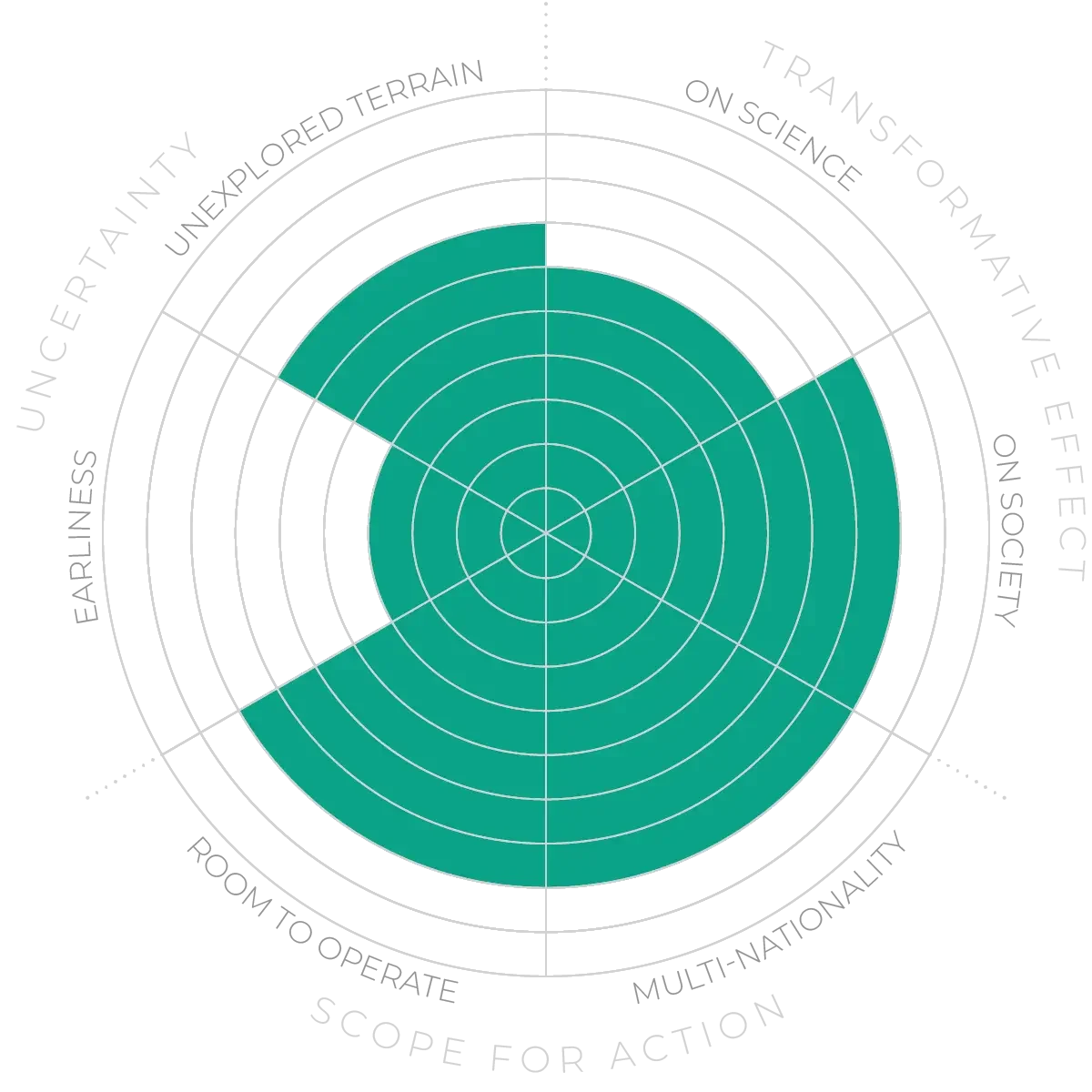
Ecosystems in rapid transition - Anticipation Scores
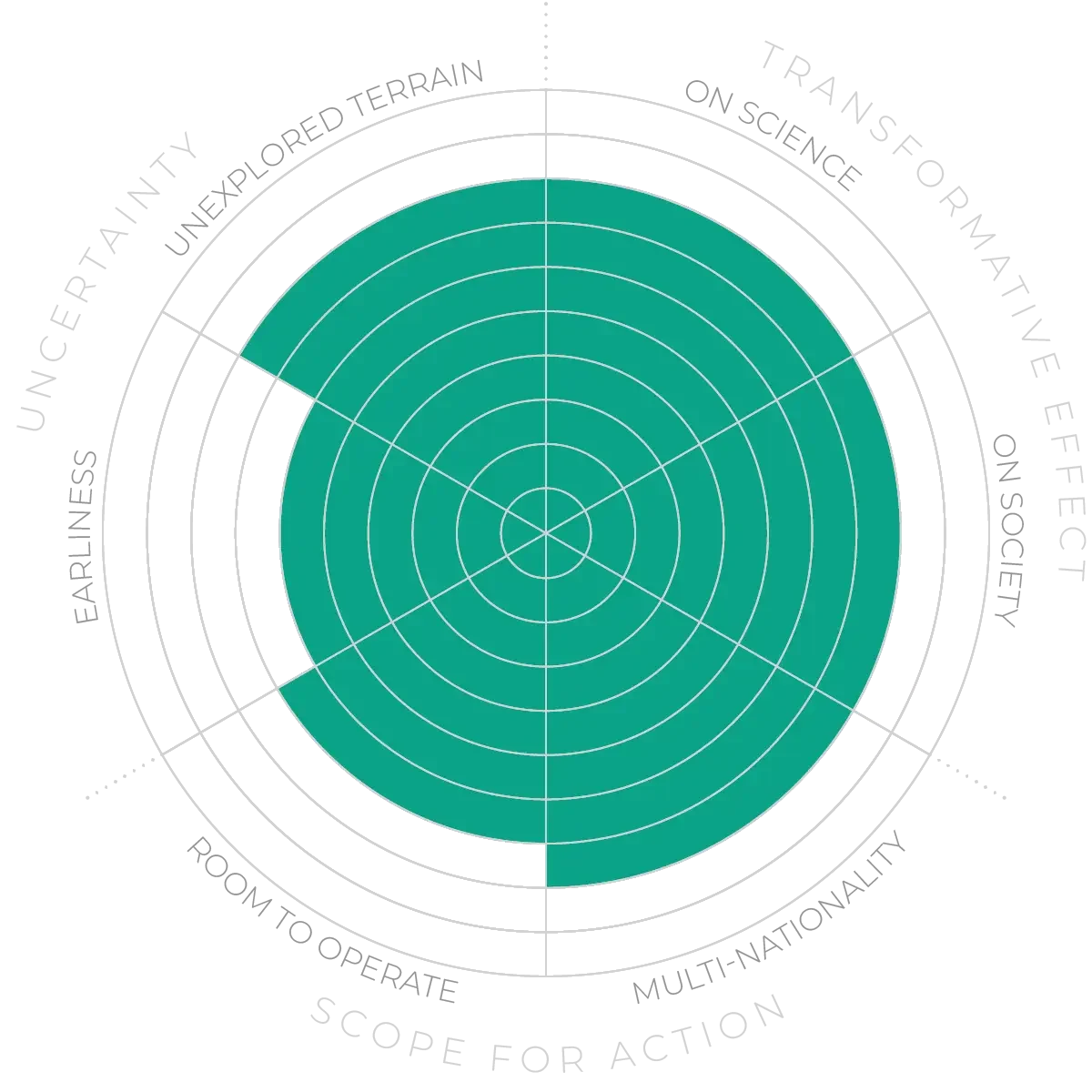
The Anticipation Potential of a research field is determined by the capacity for impactful action in the present, considering possible future transformative breakthroughs in a field over a 25-year outlook. A field with a high Anticipation Potential, therefore, combines the potential range of future transformative possibilities engendered by a research area with a wide field of opportunities for action in the present. We asked researchers in the field to anticipate:
- The uncertainty related to future science breakthroughs in the field
- The transformative effect anticipated breakthroughs may have on research and society
- The scope for action in the present in relation to anticipated breakthroughs.
This chart represents a summary of their responses to each of these elements, which when combined, provide the Anticipation Potential for the topic. See methodology for more information.

Innovations in data-gathering
Future Horizons:
5-yearhorizon
Biosphere data enables study of ecosystem dynamics
10-yearhorizon
Holistic ecosystem data become widely available
25-yearhorizon
Early-warning systems are adopted
32 Environmental DNA (eDNA) can reveal hidden diversity within communities33 and is becoming increasingly accurate.34 Imaging technologies can identify species, predict physiological processes35 and analyse ecological functions even in complex ecosystems.36 Acoustic monitoring can reveal changes in ecosystems,37 including underwater.38 Chemical sensors can detect volatile organic compounds,39 many of which are used as signals. There is growing scope for remote monitoring,40,41including from space.42 On the scale of individual organisms, tracking devices are increasingly small and smart. AI is being embedded in all these tools.
Alongside these technological advances, there is a second growing source of information and knowledge: Indigenous and local knowledge (ILK). While Indigenous groups have often been shut out of research and conservation,43 in more recent decades there have been calls to generate more comprehensive and equitably produced data,44 and resulting action.45 This more inclusive approach has improved the assessment of endangered-species status46 and enabled more effective conservation action.47 While combining ILK and normal science can be challenging, conservationists need to build on these early successes and further enrich their work with ILK.48
This blizzard of new datasets poses a challenge: how do we integrate so many diverse types of data? Can we build them into a global picture — and is that even a useful thing to do? AI could help us process and understand these enormous datasets, but only if they are sufficiently systematic to be learnable.49 However, such projects inevitably raise issues of privacy and data sovereignty.
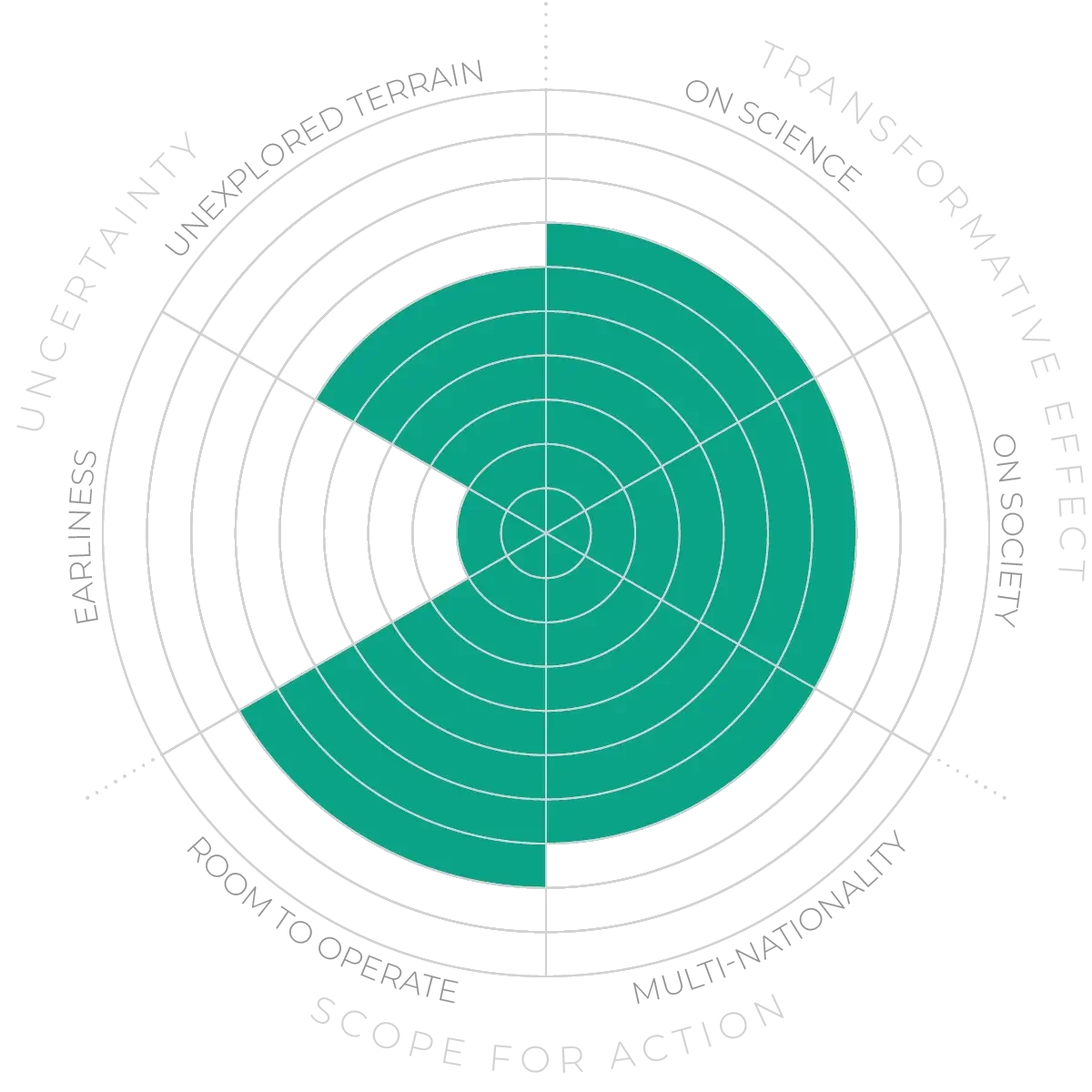
Innovations in data-gathering - Anticipation Scores
The Anticipation Potential of a research field is determined by the capacity for impactful action in the present, considering possible future transformative breakthroughs in a field over a 25-year outlook. A field with a high Anticipation Potential, therefore, combines the potential range of future transformative possibilities engendered by a research area with a wide field of opportunities for action in the present. We asked researchers in the field to anticipate:
- The uncertainty related to future science breakthroughs in the field
- The transformative effect anticipated breakthroughs may have on research and society
- The scope for action in the present in relation to anticipated breakthroughs.
This chart represents a summary of their responses to each of these elements, which when combined, provide the Anticipation Potential for the topic. See methodology for more information.

Modified and artificial life
Future Horizons:
5-yearhorizon
Gene drives and similar tools get closer to field testing
10-yearhorizon
Governments make decisions about gene-drive deployment
25-yearhorizon
Gene-drive platforms are developed
To date, the most widely deployed modified organisms are genetically modified crops.81 Despite decades of use, our understanding of their environmental impacts remains limited,82 and the public view of them remains cautious or even critical.83
More recently, there have been ongoing efforts to develop genetic techniques for controlling vector-borne diseases84 or invasive species.85 Many approaches use a gene drive,86,87,88 a technology that ensures a particular version of a gene is inherited and spreads through the population.89 This could be used to impair the malaria parasites’ ability to develop and spread,90,91 or to prevent mosquitoes from reproducing.9293,94 It could also be used for reducing the populations of invasive rodents in islands.95
However, it could be exceedingly difficult to retrieve a gene drive once it has been unleashed. Despite current effort to test and mitigate their risks,96,97,98,99,100,101,102 the potential impacts are largely unknown and could be widespread and devastating. Ecological assessments contain an intrinsic uncertainty that imposes limits on the reliability of even the most rigorous processes of gene drive impact assessment.103
Other, possibly more controllable, approaches are being developed, such as precision-guided sterile insect technique (pgSIT).104 This scalable system uses CRISPR gene-editing technology to genetically kill females and sterilise males which can be released into the environment at any life stage to emerge as genetically sterile males that will suppress populations. It is currently being tested in the field.105
Clearly, all of these innovations and potential interventions raise many unanswered ecological, evolutionary, ethical and political questions.106,107,108,109

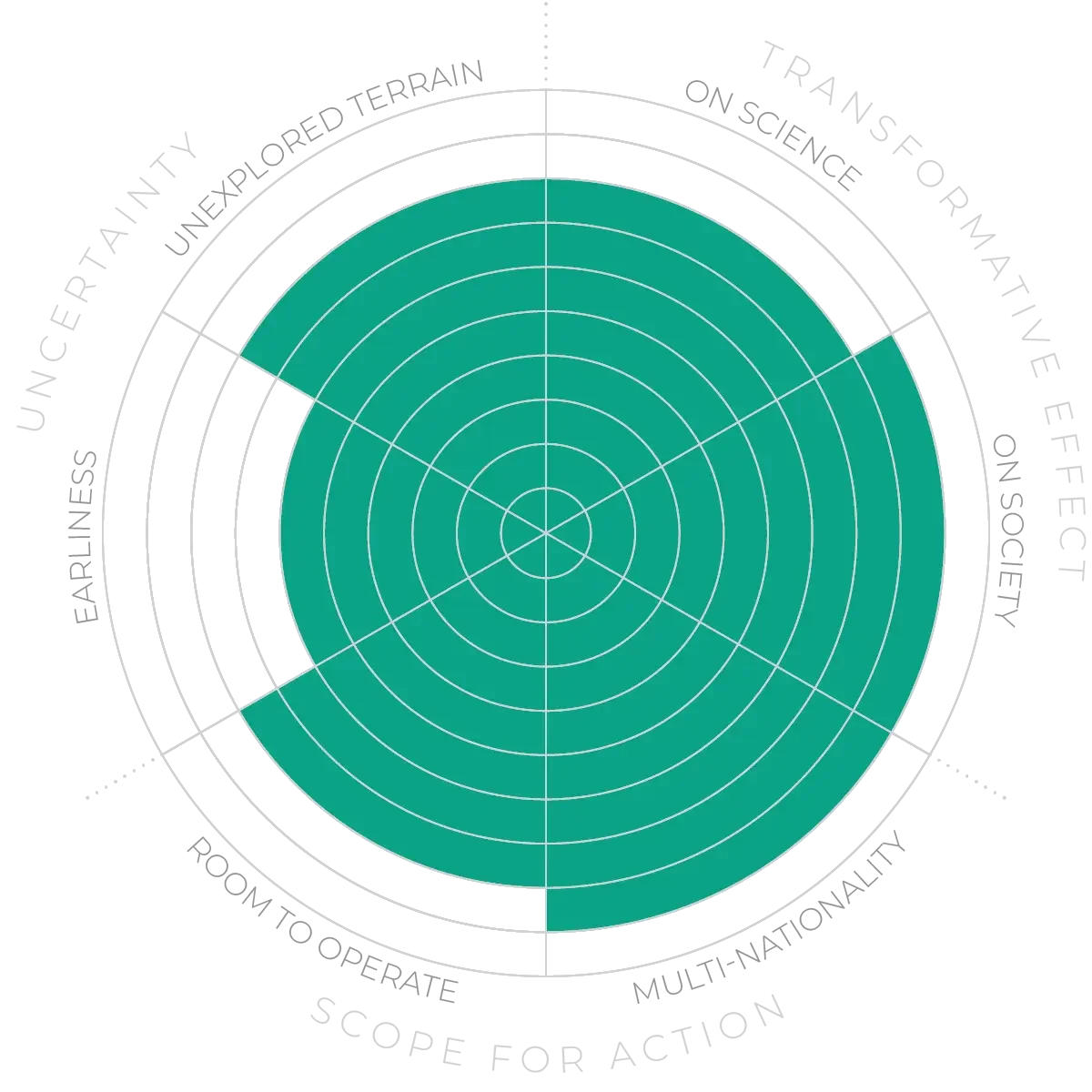
Modified and artificial life - Anticipation Scores
The Anticipation Potential of a research field is determined by the capacity for impactful action in the present, considering possible future transformative breakthroughs in a field over a 25-year outlook. A field with a high Anticipation Potential, therefore, combines the potential range of future transformative possibilities engendered by a research area with a wide field of opportunities for action in the present. We asked researchers in the field to anticipate:
- The uncertainty related to future science breakthroughs in the field
- The transformative effect anticipated breakthroughs may have on research and society
- The scope for action in the present in relation to anticipated breakthroughs.
This chart represents a summary of their responses to each of these elements, which when combined, provide the Anticipation Potential for the topic. See methodology for more information.