Engineering Human Biology
Comment
Stakeholder Type

Engineering Human Biology

Re-engineering human biology is increasingly possible, largely thanks to the convergence of three developments.

Video

Growing ‘mini organs’ in the lab will revolutionise how we study disease and test new drugs

    Video

    Defining Health Usage Frameworks for Organoids

      One is the rapid improvement in our understanding of how tissues, organs and embryos develop.1 The other is the emergence of new technologies such as genome synthesis and editing, tissue engineering and the lab-based growth of replicas of organs and embryos. The third is the development of comprehensive in silico models of developmental processes. This pairing of fundamental knowledge and emergent technologies has rendered engineering (and re-engineering) the components of our bodies increasingly practical.

      These developments are likely to have considerable benefits for human health and well-being. However, it is crucial to separate true potential from utopian hype. A great deal of venture-capital money has been thrown at the prospect of reversing ageing and radically extending human lifespans, for instance, but there are more immediate and wide-reaching benefits from tackling major killers such as cardiovascular disease and cancer, as well as chronic conditions like bone degeneration and immune suppression. Lab-grown “organoids” may ultimately offer an alternative to organ donation. Furthermore, an improved understanding of embryonic development may lead to treatments for a host of congenital conditions.

      Despite this potential, the complexity of the systems in the human body remains a challenge. “Digital twins” of the human body2 may help here,3 as will the development of new technologies and therapeutics.4 Likewise, specialised AIs that can sift through the vast datasets on human biology are likely to offer great insights. Studying how extreme environments like space affect our biology will also aid our understanding.5

      There are also profound issues of ethics and social acceptance. For instance, some technologies require working with human embryos. Many people are also wary of anything they perceive as unnatural. Sustained, long-term public engagement is required: the successful use of pronuclear transfer to enable UK children to be born without mitochondrial disease, begun 25 years ago through early conversations with policy-makers, media and regulators, offers a good model.6

      KEY TAKEAWAYS

      It is increasingly possible to exert control over how cells behave and even how they develop. Scaled up, these technologies offer the prospect of engineering entire tissues. Cellular (re-)programming and tissue development are leading to new therapeutics. In parallel, researchers have developed methods to study the rules governing development. Organoids are simplified replicas of organs that can be grown in a lab: they enable the study of processes that were previously inaccessible. The large amount of data emerging from these systems is driving the development of in-silico “digital twins” of organ functions and early human development, which should further accelerate our understanding of fundamental developmental processes and interventions that lead to better health. Similarly, model embryos allow researchers to study how human embryos develop. Both technologies could ultimately lead to treatments for congenital conditions. In the longer term, researchers may be able to create synthetic human genomes. This represents a huge technical challenge, but offers the possibility of understanding and perhaps eliminating a host of inherited conditions.

      Topic:

      Anticipation Potential

      Engineering Human Biology

      Sub-Fields:

      Cellular (re-)programming and tissue development
      Organoids
      Model embryos
      Synthetic human genomes
      The topics with the highest transformative potentials are Cellular (re)programming and tissue engineering and Organoids. These fields will reach maturity in eight and four years respectively. The need for multilateral action is highest for Organoids. Synthetic human genomes still require 20 years of significant work before reaching maturity, and progress in this area remains highly uncertain.

      Anticipatory Impact:

      Three fundamental questions guide GESDA’s mission and drive its work: Who are we, as humans? How can we all live together? How can we ensure the well-being of humankind and the sustainable future of our planet? We asked researchers from the field to anticipate what impact future breakthroughs could have on each of these dimensions. This wheel summarises their opinions when considering each of these questions, with a higher score indicating high anticipated impact, and vice versa.

      • Anticipated impact on who we are as humans
      • Anticipated impact on how we will all live together
      • Anticipated impact on the well-being of humankind and sustainable future of our planet

      Cellular (re-)programming and tissue development

      Through a deeper understanding of the structures and processes within living cells, scientists are learning how to reprogram human cells. 7 Cellular reprogramming can be used to reverse age-related changes in cells.8 This enables the mechanisms of human ageing to be studied in vitro.9 It may also shed light on developmental disorders.10 By partially rejuvenating cells while retaining their identity,11 it may be possible to restore lost immune function12 and other ageing-related health conditions.13 There is also potential to use viral vectors to reprogram specific cells: for instance, reprogramming cancer cells in such a way that the immune system attacks and destroys them.14

      Future Horizons:

      ×××

      5-yearhorizon

      Practical engineering solutions emerge

      Researchers identify sets of rules that determine cell-fate decisions. Improved substrates for tissue culture lead to more realistic cultured tissues. AI-based models of epigenetic gene regulation enable rational engineering of the epigenome.

      10-yearhorizon

      Reprogramming comes of age

      Cellular and tissue reprogramming are achieved at high efficiency with larger groups of cells. Adult tissues are reprogrammed to become another tissue type, enabling organ repair. Research enables control of cell division.

      25-yearhorizon

      Complex circuits and organs are created

      Researchers learn how to engineer cells into highly complex circuits and organs. The human genome becomes editable in a systematic, large-scale fashion, enabling the creation of human cells that perform wholly novel functions.

      On a larger scale, these and other techniques can be used to grow tissues and organs to order. To achieve this, it is necessary to first understand how those tissues develop naturally, and research is under way on a host of body parts, including the immune system, heart,15 muscle,16 breasts17 and skin.18 Replicating the three-dimensional structures of organs and how they change over time will be difficult, but bioprinting will enable this,19 and AI is also likely to help optimise tissue engineering.20

      Tissue engineers have worked for decades to develop “scaffolds” on which tissues can be grown.21 Originally made from synthetics, these are increasingly made from biological materials such as human collagen,22 biological films23 and decellularised matrices.24 It is vital to understand how the developing tissues interact with these scaffolds.25

      A key challenge is to ensure that implanted cells and tissues do not cause harm. It is becoming possible to “cloak” the cells by adding and then overexpressing a set of immune genes, enabling the introduced cells to survive long-term.26 Another promising precaution is a “safety switch”27 that enables the cells to be quickly killed if they prove harmful28 — or, preferably, multiple safety switches for redundancy.29

      Cellular (re-)programming and tissue development - Anticipation Scores

      The Anticipation Potential of a research field is determined by the capacity for impactful action in the present, considering possible future transformative breakthroughs in a field over a 25-year outlook. A field with a high Anticipation Potential, therefore, combines the potential range of future transformative possibilities engendered by a research area with a wide field of opportunities for action in the present. We asked researchers in the field to anticipate:

      1. The uncertainty related to future science breakthroughs in the field
      2. The transformative effect anticipated breakthroughs may have on research and society
      3. The scope for action in the present in relation to anticipated breakthroughs.

      This chart represents a summary of their responses to each of these elements, which when combined, provide the Anticipation Potential for the topic. See methodology for more information.

      Organoids

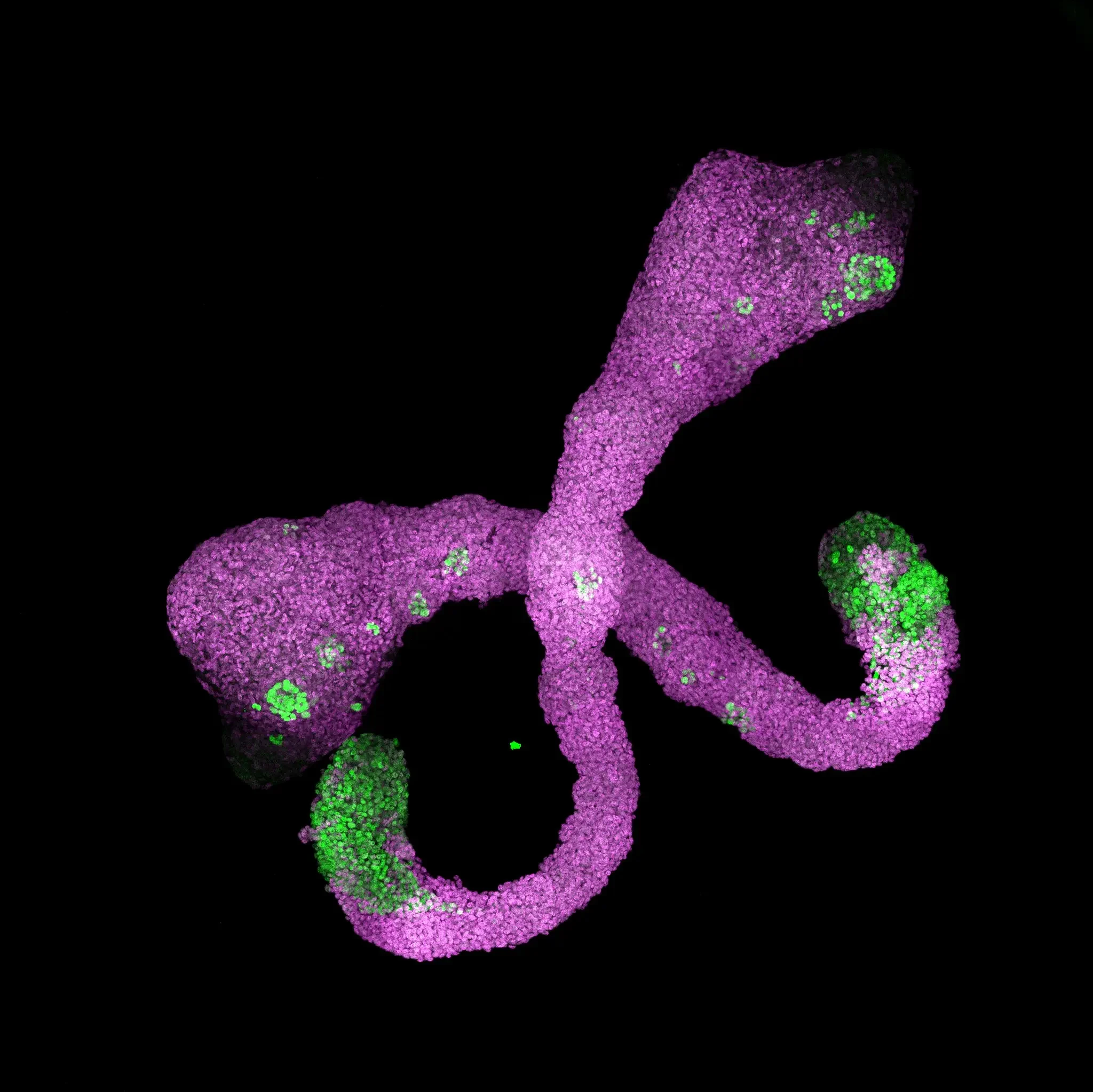
      Organoids are clusters of cells that mimic the development of tissues and organs. They are an increasingly valuable tool for understanding human development, including the progression of inherited diseases.30 Ultimately, organoids could replace a great deal of animal testing.31

      Future Horizons:

      ×××

      5-yearhorizon

      Organoids move beyond the basic

      Organoids are created with blood supplies and lymphatic systems. Microfluidic devices enable multiple organoids to be connected and their interactions studied.

      10-yearhorizon

      Organ damage is mitigated with organoid grafts

      Organoids are grafted into existing organs to repair damage. More in-vivo data enables organoids to be validated against real organs.

      25-yearhorizon

      Organoids provide new transplant opportunities

      AI-based systems optimise the maturation of organoids into organs. Organoid-based organ transplants are performed in humans.

      Organoids have been developed for many body systems, including the intestines,32 kidneys,33 bone marrow,34 cartilage35 and neurons.36 It has also proved possible to create “gastruloids” that mimic some of the earliest stages of embryonic development.37 Furthermore, organoids can be used to simulate the growth of tumours, shedding light on the internal mechanisms of cancers.38

      To create more realistic organoids, it will be necessary to add in more cells and complex tissues. For example, living organs have a blood supply, which affects their development and function.39 Researchers are now developing ways to create vascularised organoids,40 but the next generation may also need a lymphatic system and other additions.

      Ultimately, organoids could be used to create replacement tissues and organs, serving as an alternative to organ donation. However, at present the culturing of organoids is inefficient, and it is difficult to upscale them to model more complex tissues. For clinical purposes, it will be necessary to validate organoids against “real” tissues or organs, and this is challenging because the necessary in-vitro data is frequently unavailable. One useful benchmark is the Human Cell Atlas41: however, for testing organoids it would be necessary to create an atlas showing how cells and tissues change during development.

      As a result, organoids are not ready to be widely used clinically.42 Improvements may emerge from integrating organoids with the related field of organ-on-a-chip,43 and from the use of AI to optimise the construction.44

      Organoids - Anticipation Scores

      The Anticipation Potential of a research field is determined by the capacity for impactful action in the present, considering possible future transformative breakthroughs in a field over a 25-year outlook. A field with a high Anticipation Potential, therefore, combines the potential range of future transformative possibilities engendered by a research area with a wide field of opportunities for action in the present. We asked researchers in the field to anticipate:

      1. The uncertainty related to future science breakthroughs in the field
      2. The transformative effect anticipated breakthroughs may have on research and society
      3. The scope for action in the present in relation to anticipated breakthroughs.

      This chart represents a summary of their responses to each of these elements, which when combined, provide the Anticipation Potential for the topic. See methodology for more information.

      Model embryos

      Embryo-like structures or “model embryos” can be grown from embryonic stem cells,45 mimicking the behaviour and physiology of early embryos46 and offering a means to study the earliest stages of the development of human embryos.47

      Future Horizons:

      ×××

      5-yearhorizon

      Improved model embryos are allowed to develop for longer

      Model embryos proceed further along their developmental trajectory. Improved culture methods create more realistic model embryos.

      10-yearhorizon

      Model-embryo research improves IVF outcomes

      Model-embryo research contributes to improved IVF success rates. Cells derived from patients with congenital conditions are converted into model embryos, leading to insights into the conditions — including how the first four weeks of pregnancy shape long-term health. Researchers gain a deeper understanding of how human embryogenesis differs from key model animals such as mice. Model embryos of animals are taken through to the fetal stage of development.

      25-yearhorizon

      Research gives better pregnancy-related treatments

      Model-embryo research leads to improved treatments for pregnancy-related conditions such as miscarriage, endometriosis and pre-eclampsia. Full ectogenesis is achieved in mice. Engineered model embryos perform useful functions and synthesise desirable molecules. Researchers achieve in-vitro production of sperm and egg cells (gametogenesis) from adult human cells.

      Many unanswered foundational questions in biology — the mechanisms of cell differentiation48 and embryo implantation,49, for example — could be answered through the study of model embryos.5051

      By revealing the processes governing embryonic development, model embryos could enable the development of treatments for genetic diseases and certain forms of infertility. Considerable challenges must be overcome if this is to come to fruition: at present, it is difficult to make model embryos that are both high-fidelity and controllable.52 Model embryos would also benefit from a degree of standardisation.53 Digital twins of model embryos may enable us to improve our methods here.

      Model embryos pose challenging ethical and regulatory questions because they blur the line between cell cultures and human beings. At present, researchers often deliberately simplify their model embryos: this ensures they stay within regulations, at the cost of limiting the insights that can be gleaned. The UK created new rules to guide model embryo research in 2024,54 but these will surely not be the last word on the matter. It may be necessary to reconsider legal norms around the beginnings of development55 and to create distinct regulatory systems for model embryos.56 Such regulations should also anticipate potential downstream developments, such as growing viable embryos from stem cells, and even “ectogenesis” — growing a human fetus entirely outside the womb.57

      Model embryos - Anticipation Scores

      The Anticipation Potential of a research field is determined by the capacity for impactful action in the present, considering possible future transformative breakthroughs in a field over a 25-year outlook. A field with a high Anticipation Potential, therefore, combines the potential range of future transformative possibilities engendered by a research area with a wide field of opportunities for action in the present. We asked researchers in the field to anticipate:

      1. The uncertainty related to future science breakthroughs in the field
      2. The transformative effect anticipated breakthroughs may have on research and society
      3. The scope for action in the present in relation to anticipated breakthroughs.

      This chart represents a summary of their responses to each of these elements, which when combined, provide the Anticipation Potential for the topic. See methodology for more information.

      Synthetic human genomes

      Efforts are now under way to create the first synthetic human genome. The Wellcome Trust has funded the Synthetic Human Genome Project (SynHG)58 with the aim of creating a synthetic human chromosome — a significant fraction of the genome — in the next decade.59 The technology and workflows developed to achieve this could then be refined to create an entire genome.

      Future Horizons:

      ×××

      5-yearhorizon

      Synthetic human chromosomes are created

      Researchers create a single watermarked synthetic human chromosome and a full synthetic genome of a eukaryote — probably yeast (Saccharomyces). Advances in creating synthetic and/or edited centromeres, regions of the chromosome that play a crucial role in cell division, shed light on their mechanisms, which is currently poorly understood due to their inaccessibility.

      10-yearhorizon

      AI improves synthesis

      Multiple synthetic human chromosomes are created, and therapies based on synthetic human chromosomes are enabled by AI-enhanced design. Researchers gain an improved understanding of chromosomal genetic disorders such as Turner syndrome, Down syndrome and fragile X syndrome.

      25-yearhorizon

      Creating a synthetic human genome becomes feasible

      The first completely synthetic human genome is achieved, along with the creation of cells and/or tissues, based on synthetic chromosomes, that are virus-resistant.

      The project builds on previous work to create simpler synthetic genomes,60 beginning with viruses and bacteria,61 and to “upload” these artificial genomes into living organisms.62 Following early proof-of-concept work, researchers have begun creating synthetic genomes that are heavily modified from the originals.63

      Synthesising and booting up entire genomes remains challenging, however.64 Consequently, many steps in the workflow will need to be optimised before a complete human genome is synthesised. Likewise, it will be necessary to obtain a fuller understanding of the functions of the “natural” human genome65 if researchers are to safely design a synthetic version.

      In parallel with the technical developments, public dialogue and governance is essential. The public’s expectations will be shaped by early proof-of-concept research, as will industry interest. Regulators will need to develop new frameworks to govern synthetic human genomes, especially if they are used therapeutically or for human enhancement.

      Synthetic human genomes - Anticipation Scores

      The Anticipation Potential of a research field is determined by the capacity for impactful action in the present, considering possible future transformative breakthroughs in a field over a 25-year outlook. A field with a high Anticipation Potential, therefore, combines the potential range of future transformative possibilities engendered by a research area with a wide field of opportunities for action in the present. We asked researchers in the field to anticipate:

      1. The uncertainty related to future science breakthroughs in the field
      2. The transformative effect anticipated breakthroughs may have on research and society
      3. The scope for action in the present in relation to anticipated breakthroughs.

      This chart represents a summary of their responses to each of these elements, which when combined, provide the Anticipation Potential for the topic. See methodology for more information.