
Authors
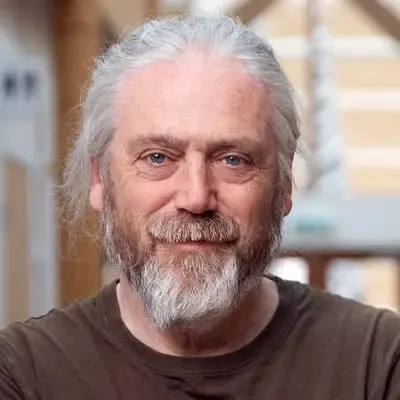
Mark Blaxter, Head of the Tree of Life Programme and Senior Group Leader at the Wellcome Sanger Institute, Cambridgeshire, UK.
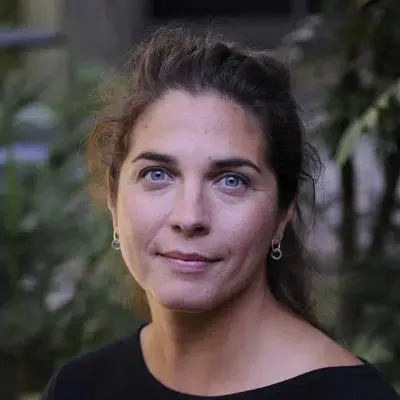
Mara Lawniczak, Senior Group Leader in the Tree of Life Programme at the Wellcome Sanger Institute.
Genomics — that is, reading and recording the unique genetic codes of organisms — is a young science, but one that holds enormous potential. Sequencing the genomes of a tiny fraction of the species that inhabit our planet has led to enormous advances in our understanding of their development and function, and increasingly to breakthrough applications in fields ranging from biomedicine to eco-augmentation. Imagine, then, how many discoveries and advances remain to be unlocked within the genomes of all the other organisms of planet Earth.
The Earth BioGenome Project aims to change biology forever by unveiling the genomes of all described eukaryotic species — that is, all animals and plants, as well as protists (single-celled organisms) and fungi — within 10 years.1,2 The Earth BioGenome Project will be transformational, changing how we analyse the characteristics of species and the ways they interact, as well as their capacity to adapt to rapid ecological change. This is not a fanciful proposition — on the contrary, its foundations have already been laid through efforts to democratise access to genome-sequencing tools and techniques.
The Tree of Life Programme was launched at the Wellcome Sanger Institute in Cambridgeshire, UK, and is a major contributor to the Earth BioGenome Project. Our Tree of Life has started close to home with the Darwin Tree of Life project, where we have already sequenced more than 2000 species found in the UK and Ireland. Having honed our tools, built collaborations and developed new methods to overcome technical challenges, we are also supporting the spread of knowledge and training into new regions harbouring high-density biodiversity that are eager to become sequencing hotspots. We are talking to colleagues in the Caribbean and in Guyana, and working with the African BioGenome Project as they initiate projects across the continent. Such projects have the potential to generate scientific knowledge and economic value in which local communities must rightfully have a stake.
We are developing toolkits and protocols by working with our local biodiversity, and making these available to the world once proven. Our approach is “sequence locally, think globally.” Our system has been remarkably successful: our projects currently deliver about half of all the reference genomes produced anywhere in the world, and should total around 3400 genomes by the end of 2025. The number of described eukaryotic species is around 1.6 million, so there is a long way to go. However, with advancing technologies and joint effort from additional projects under the EBP umbrella, this figure is not as far off as it might first appear.
We are already beginning to use AI tools to help us, for instance in checking that the fragments that make up a genome have been assembled in the right order. In the past few years there have been significant advances in the sequencing instruments themselves. In the future, we expect to be able to sequence a genome using a mobile phone or whatever device people will then be carrying around. Sequencing is continuously becoming faster and more affordable. One of the exciting applications of cheaper, faster sequencing is the ability to explore the species present in an area through what is known as environmental DNA or “eDNA”. Air, water and soil can be sequenced and species can be detected as having recently been present through bits of DNA they leave behind. However, to truly realise the possibilities that eDNA offers, such as invasive pest detection through air-filter sequencing at national borders, we need the library of all genomes to be able to match each eDNA molecule to the organism it came from. The faster we can complete the reference genomes of all species, the sooner eDNA monitoring will become a widespread approach that is broadly useful to conservation, food security, pandemic surveillance and beyond.
One of the questions that comprehensive reference genomes can answer is this: how does a blind process like evolution “invent” something? That is key to advances in synthetic biology, biotechnology and medicine. For example, there are lots of organisms out there that make venom, which then interferes with the immune system or nervous system — we would call these pharmaceuticals if we had invented them ourselves. A bee sting contains lots of chemicals that hurt but also others that numb. In fact, every venomous animal offers a whole inventory of biologically active molecules: anti-inflammatories, painkillers, immune suppressants and more, all of them with potential for medical use by humans.
Genomes for all Earth’s species will help us to realise those medical applications — for example, by providing critical input to AI-powered research systems like Google DeepMind’s AlphaFold system, which advances biological research in any number of ways by using AI to work out the likely structure of protein molecules. Or, as another example, the Generative and Synthetic Genomics programme at the Wellcome Sanger Institute seeks to understand how particular DNA sequences drive the expression of specific genes. Comparing the genomes of different species will help us to pin down these genetic “switches”, offering us much more control over modified or synthetic genomes.
The most exciting possibilities, however, are not the ones we can already see, but the ones that will only become apparent once this massive genomic resource exists — and the faster these emerging opportunities become apparent, the more quickly we can translate this new information into transformational knowledge across a range of scientific fields and applications (see figure). The good news is that it would be quite easy to scale up our operations to meet these objectives. Our current target, in Phase One of the Earth BioGenome Project, is to complete 10,000 genomes. Phase Two aims for 150,000 genomes: with additional centres it could produce 1000 genomes a year, thus reaching that target in just a few years.
Those additional centres, each costing about £5 million, should be based in some of the most biodiverse hotspots around the world. Our own Darwin Tree of Life project is very locally based and nationally focused. National and commercial interest can provide valuable incentives to complete the work, as long as the data is publicly available and remuneration flows back to the centres.
Sovereignty and ownership of digital sequence information is the final piece of the puzzle: fortunately, there are good options here. One is that those who actually do the work of producing a sequence could submit it to one or more international databases and immediately get benefits back, in the form of some sort of credit for building the local bioeconomy or for conservation. It would be possible to implement a system in which the users of genomic data pay in advance into a fund which then pays out to those who are producing the data.
At the Wellcome Sanger Institute we have a group of academics working in a partnership with the private sector called Open Targets. This group is funded to identify and develop drug targets via discovery research. The companies decide what sort of things they’re interested in funding: finding new targets or drug candidates, for example. Sanger researchers do the basic genomic research on potential drug targets, and the pharma companies get an early look at areas of commercial interest to them. A similar model might be applied to “Open Genomes”, in which companies fund research into areas of specific interest — perhaps venomous species — so that these are sequenced as soon as possible.
Sequencing centres for the Earth BioGenome Project around the world could serve just this purpose, sequencing local biodiversity and building reference genomes for species that are interesting to biotech companies, as well as contributing to the global scientific commons. This kind of system would foster autonomous indigenous bioeconomies in biodiversity hotspots. We will need international organisations to run such a system, however, and the importance and urgency of this need is reflected in its inclusion on the agenda of the November 2025 COP30 meeting in Belém, Brazil. Diplomacy also has a job to do in raising awareness of genomics. International biodiversity conventions and assessments don’t usually mention the genetic diversity of the species we’re trying to conserve. That needs to change.
The final hurdle is, of course, funding. The first single human genome cost around $3 billion. Advances in technology mean that we can now sequence individual genomes for a cost in the low thousands of dollars, and that will drop still further. Right now, it is eminently conceivable that sequencing every eukaryotic species on the planet won’t cost much more than the price tag for that first human genome sequence — perhaps $4 billion. And as with that first human reference genome, the rewards will be immeasurable.