

Georgina King
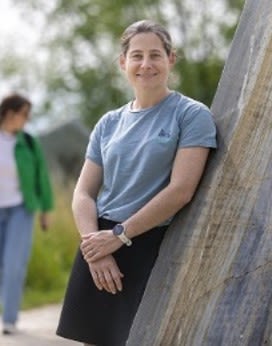
Dr. Georgina King is Associate Professor at the Institute of Earth Surface Dynamics (IDYST), Faculty of Geosciences and Environment, at the University of Lausanne (UNIL), where she leads internationally recognised research at the interface of Quaternary science, geochronology, geomorphology, and cryosphere dynamics. Her work seeks to understand how Earth’s surface responds to environmental and climatic change across timescales ranging from decades to millions of years, with a particular focus on mountain and glacial environments. Trained originally in Geography at the University of Oxford and in Quaternary Science at Royal Holloway, University of London, she completed a PhD in Earth Sciences at the University of St Andrews investigating the fundamental controls on luminescence signals in minerals. Following appointments in the UK, Germany and Switzerland she established her research group at UNIL, where she has developed novel approaches for reconstructing Earth surface processes and environmental histories.
Professor King is internationally known for advancing trapped-charge dating techniques, including luminescence and Electron Spin Resonance (ESR) methods, and for pioneering their application to Earth surface and cryosphere research. Her work has contributed significantly to the emergence of luminescence thermochronometry and new geochronological approaches capable of quantifying rates of erosion, sediment transport, and landscape evolution. Through interdisciplinary collaborations that integrate field observations, geochronology, numerical modelling, and glaciology, her research provides new perspectives on how glaciers shape landscapes and how environmental systems respond to climate change.
Her current research spans mountain systems and glacierized regions worldwide, including the European Alps, Himalaya, Japanese Alps, and arid environments such as the Atacama Desert. Recent work has explored sediment transport through glaciers, postglacial erosion processes, and the long-term coupling between climate, ice, tectonics, and topography. She is also leading new initiatives examining spatial and temporal variability in glacial erosion and relief development. Professor King brings expertise that bridges Quaternary science and frontier cryosphere research. Her work combines methodological innovation with fundamental questions about how ice and climate interact to shape our planet, contributing critical insights into past environmental change and informing understanding of cryosphere futures.