
Topic
Language and Communication
Anticipation Committee Chair:

Jennifer Culbertson
Anticipation Committee:
Language and Communication
However, many human languages are under threat and are likely to become extinct within decades.1 There is an urgent need to preserve and document these languages, both for the sake of the communities who use them and because without them we cannot fully understand the human capacity for language. We have the opportunity to harness new technologies like AI in service of these goals.2 Linguistic diversity is a driver of creativity and a valuable source of information about human culture, history and psychology.
Scientific and technological developments operate within complex social and political contexts, making them fundamentally entangled with questions of power, identity and social hierarchies. Our understanding of language and the cognitive systems that underpin it are shaped by assumptions and world-views as much as by empirical observation. The science of language demands critical reflection on the researcher's position within broader systems of knowledge production.
This is especially true in an age when significant progress in the development of large language models (LLMs) has made human interaction with AI an everyday occurrence, at least for a select few. These developments have many applications, both practical and theoretical: however, the ways in which they will impact human culture and language are unknown. Some of these may be positive: LLMs may help find ways in which languages can be preserved and revitalised in real-world scenarios. They may help us to answer long-standing questions about how language is learned and represented in the human mind. However, disparities in access may exacerbate existing inequalities. Models of cultural evolution also point to possible challenges, including model collapse due to the increasing prevalence of LLM-generated text on the internet.
This picture is likely to become even more complex, as we are seeing unprecedented levels of internal and international migration due to conflicts, the impact of natural hazards and socio-economic factors. There is a consequent rise in multilingualism, particularly among younger generations, together with a decline in intergenerational transmission of minority or minoritised languages. Life in an increasingly multilingual environment provides opportunities for establishing positive new social identities and connections but also raises questions about “belonging” and “identity”, and necessitates the development of research-informed policies concerning language education and use.
KEY TAKEAWAYS
Research on language and communication enables us to understand a core human capacity, which impacts us as individuals and shapes our societies. Recent advances in large language models (LLMs) have opened up new frontiers in the study of Machines and language, shedding light on how languages can be learned and how human communication might be influenced by interaction with AI. At the same time, these models can be used to develop technologies that support linguistic diversity at a critical moment in human history. Emerging technologies, together with rich datasets, are also expanding our understanding of Communication beyond language, from whale vocalisations to birdsong. Understanding the structure and content of these systems will lead to new theories of the evolutionary origins of human language, including how it emerged in our species. In parallel, New empirical and experimental methods are helping to resolve fundamental questions about why human languages look the way they do, how children and adults learn and use diverse languages, and how languages change over time. Language change is in part driven by social change, and our languages form a core part of our social identity. New research is shedding light on Multilingualism — the norm for most human societies — including how multilingualism relates to systems of oppression, how multilingual societies are impacted by language policies and how being multilingual may bring cognitive benefits.
Anticipatory Impact:
Machines and language
Emerging technologies like AI have considerable potential for improving our understanding of language and by extension the evolution of human cognitive capacities.3
Future Horizons:
5-yearhorizon
Machine language influences human language
10-yearhorizon
Machine language becomes ubiquitous
There is widespread evidence for machine-preferred words and constructions in human-generated texts, prompting new approaches to avoid model collapse in future generations of LLMs. Quantised language models, which compress much of the information from LLMs into smaller models, lead to improvements in one-shot learning and generalisation, including between languages.
25-yearhorizon
New machine-language architectures are developed
New architectures that reduce the chances of model collapse improve machine-to-machine communication. Linguistic theories are refined and extended to encompass artificial natural languages. Multimodal AIs allow human-like complex reasoning.
Communication beyond language
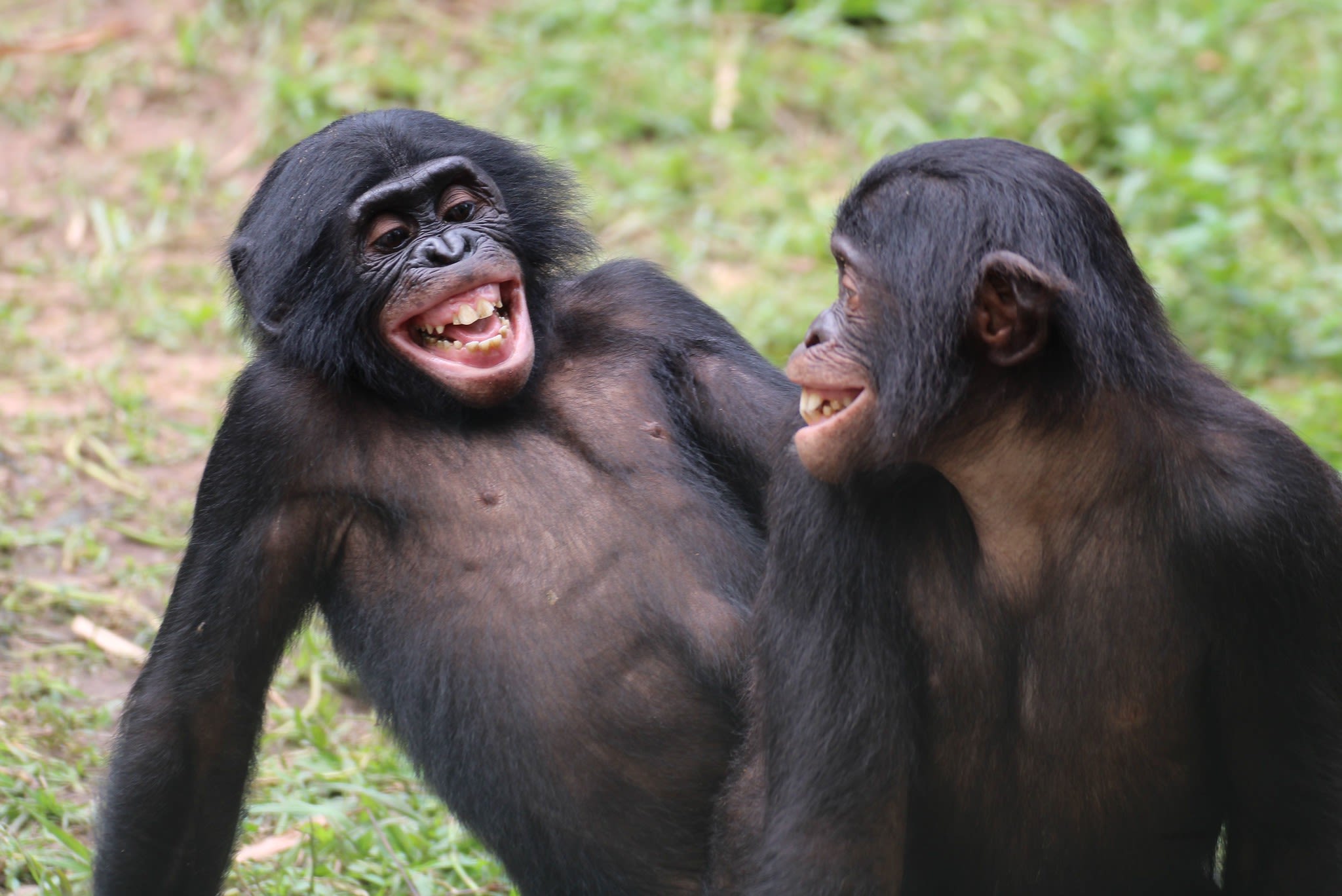
All living things communicate, including plants and insects. While the richness and complexity of human language appears to be unparalleled, there are animals that have communication systems which incorporate some language-like elements. Relevant examples come from birds (especially songbirds),18 cetaceans19 and great apes.20 Recent research has focused on structural similarities. For example, distributional semantic analysis suggests that bonobo calls show “compositionality”,21 a key feature that enables open-ended communication in language.
Future Horizons:
5-yearhorizon
Structure and form of animal communication better understood
Research achieves an improved understanding of the structural complexity of vocal sequences in a number of well-studied species, including primates, cetaceans and birds, revealing the degree of overlap with human language. Integrated datasets reveal how vocal communication is combined with other systems such as gestures. Automated systems help scientists decode basic emotional states such as valence and arousal in some animal calls.
10-yearhorizon
AI generates calls that convey meaning
25-yearhorizon
Neuroscience gives insight into animal communication
Historical and developmental datasets of animal communication become available and are used to compare signal transmission and socially driven change in a variety of animal species. Improved understanding of signal meanings facilitates research on the impacts of interaction with human communities and of environmental change on animal societies. Communication with animals expands in a variety of modalities, including vocal, chemical and visual.
The increasing availability of rich field data is allowing researchers to make rapid strides in analysing animal communication, and data analysis tools including machine learning have the potential to help unravel the communication systems of a plethora of species in the coming years.22 Some researchers argue that this could lead to systems that allow us to communicate directly with animals, using their own signals While AI can be used to generate signals such as fruit-bat sound sequences, it is an open question whether communication with animals will ever become feasible.23 Improvements to our understanding of animal signals already has clear practical implications: tracking changes to animal calls in real time can help us understand how animals adapt to environmental change and provide an early-warning sign of declining ecological health.24
Studying diverse animal communication systems, their cognitive and genetic underpinnings, and the social and environmental contexts that support them will drive new theories of how our own communication system — language — evolved. For example, vocal learning is one of the key capacities that underlie our complex language and is being studied in a range of animals including elephants and bats.25 In terms of representational capacities, some linguists have argued that the hierarchical structure of language represents a discontinuity between animal and human communication. However, there is growing evidence of “deep structure” in some animal communication systems, which may be a precursor to hierarchy.26,27 Finally, there are growing attempts to understand the specific cognitive and neurological constraints that prevent non-human animals from developing language.28
New empirical and experimental methods
Future Horizons:
5-yearhorizon
Research tools gain depth and breadth
Researchers gain larger, higher-quality and more diverse linguistic datasets, with improved geographical and cultural representation. Linguistic experimentation becomes less dependent on the lab thanks to portable tools and virtual experimental environments. Neuroimaging with high temporal and spatial resolution, paired with psychophysiological and behavioural measures, assists our understanding of the cognitive aspects of language. Machine-learning tools are developed to analyse increasingly complex data.
10-yearhorizon
A much greater diversity of data is gathered and generated
25-yearhorizon
Datasets become globally representative
And yet, English remains over-represented, especially in experimental and corpus data, with known impacts on the generalisability of our theories.32 Many languages are under-resourced, including languages that have tens of millions of speakers, like Hausa, Yoruba, Swahili, Quechua and Punjabi. Other languages are at risk of extinction, either because they have so few speakers or because low generational transfer will reduce the number dramatically in the future.33 There is an urgent need to collect more natural and experimental data for such languages, taking care to be sensitive to the ethical challenges such research can sometimes carry.34 Researchers can also play a crucial role in collaborating with communities to raise awareness and support policies that help preserve and revitalise these languages.35
Making sense of such large and diverse datasets will necessitate better theoretical models and computational methods. For example, machine learning and other AI-aided technologies can help to decode continuous signals, including speech and sign-language data, as well as complex data from neuroimaging. Such methods may further our understanding of how children acquire language under diverse conditions,36 how new languages originate37 and how language families have diversified over thousands of years.38 The latter question is currently extremely challenging but may be enabled by fusing linguistic data with other types of data, such as genetics and proteomics.
If carefully interpreted, large language models (LLMs) may offer insights into the psychological and cognitive processes supporting the human capacity for language learning.39 For instance, experiments can be performed by systematically withholding certain types of data from LLM training sets40 or even by using synthetic participants, fuelled by LLMs, which simulate the behaviour of humans in studies. So far, there are some cases in which models align well with existing data and others where they clearly do not. Proprietary models also incorporate training regimes which encode biases that are not transparent, making them less useful as stand-ins for humans.41
Multilingualism
Future Horizons:
5-yearhorizon
Understanding of multilingualism becomes more nuanced
The gradients and heterogeneity of multilingualism across societies are better understood. Researchers gain further insights into the impacts of multilingualism on language use and broader cognition. Changes to language-learning abilities across the lifespan are more fully documented.
10-yearhorizon
Timelines of language acquisition are clarified
Definitive evidence from more diverse samples of languages and learners confirms (or denies) the reality of a sensitive period for language acquisition. The relationship between neurodivergence and multilingualism is better understood. The impacts of technologies such as the internet, social media and AI on multilingualism become clear.
25-yearhorizon
Multilingual policies and technologies are developed
Improved data and models capture the relationships between mass migration, social identity and multilingualism. Long-term impacts of language policies promoting minority and minoritised languages in high-migration societies are documented. Improved language technologies facilitate multilingual language-learning in adults.
Research clearly documents the positive impacts of multilingual education policies that encourage and maintain the use of students’ mother tongue in both primary and secondary schools.54 A key challenge is to understand how people learn multiple languages, and thus improve language-learning outcomes, particularly in adults. There is ongoing debate about whether there is a “sensitive period” after which language learning becomes substantially impaired.58 However, recent evidence suggests that native-like outcomes are possible even up to adulthood.59 Notably, the empirical data on second-language acquisition involves an over-representation of English, and more reliable methods of measuring vocabulary and grammatical knowledge in multilingual children and adults are needed.60 The limits of adult language-learning abilities across diverse settings remain poorly understood. Likewise, it is crucial to better understand how learning a second language affects the first one, a process commonly called “attrition”, which can nevertheless be seen as a normal change due to language contact.61 There is also an emerging field exploring how multilingualism interacts with neurodivergence.62 Importantly, researchers are now developing new metrics of multilingualism.63 These seek to capture more nuance in people’s ability to communicate across language barriers: for instance, measuring subtle gradations in fluency.64
Citations
Topic brief
- L. Bromham et al.. Global predictors of language endangerment and the future of linguistic diversity https://doi.org/10.1038/s41559-021-01604-y
- S. S. Mohanty et al. (editors). Applying AI-based tools and technologies towards revitalization of indigenous and endangered languages https://doi.org/10.1007/978-981-97-1987-7
4.6.1 Machines and language
- J. F. Cantlon and S. T. Piantadosi. Uniquely human intelligence arose from expanded information capacity https://doi.org/10.1038/s44159-024-00283-3
4.6.2 Communication beyond language
- S. Engesser et al.. Seeds of language-like generativity in bird call combinations https://doi.org/10.1098/rspb.2024.0922
- I. Arnon et al.. Whale song shows language-like statistical structure https://doi.org/10.1126/science.adq7055
- G. Badihi et al.. Chimpanzee gestural exchanges share temporal structure with human language https://doi.org/10.1016/j.cub.2024.06.009
- M. Berthet et al*.*. Extensive compositionality in the vocal system of bonobos https://doi.org/10.1126/science.adv1170
- C. Rutz et al.. Using machine learning to decode animal communication https://doi.org/10.1126/science.adg7314
- Y. Yovel and O. Rechavi. AI and the Doctor Dolittle challenge https://doi.org/10.1016/j.cub.2023.06.063
- W. K. Oestreich et al.. Listening to animal behavior to understand changing ecosystems https://doi.org/10.1016/j.tree.2024.06.007
- E. Z. Lattenkamp and S. C. Vernes. Vocal learning: a language-relevant trait in need of a broad cross-species approach https://doi.org/10.1016/j.cobeha.2018.04.007
- C. Girard-Buttoz et al.. Population-specific call order in chimpanzee greeting vocal sequences https://doi.org/10.1016/j.isci.2022.10485
- A. B. Bosshard et al.. Beyond bigrams: call sequencing in the common marmoset (Callithrix jacchus) vocal system https://doi.org/10.1098/rsos.240218
- T. Scott-Phillips and C. Heintz. Animal communication in linguistic and cognitive perspective https://doi.org/10.1146/annurev-linguistics-030421-061233
4.6.3 New empirical and experimental methods
- I. Meir et al.. The effect of being human and the basis of grammatical word order: Insights from novel communication systems and young sign languages https://doi.org/10.1016/j.cognition.2016.10.011
- A. Martin et al.. A universal cognitive bias in word order: evidence from speakers whose language goes against it https://doi.org/10.1177/09567976231222836
- C. Saldana et al.. Cross-linguistic patterns of morpheme order reflect cognitive biases: an experimental study of case and number morphology https://doi.org/10.1016/j.jml.2020.104204
- D. E. Blasi et al.. Over-reliance on English hinders cognitive science https://doi.org/10.1016/j.tics.2022.09.015
- H. Skirgård et al.. Grambank reveals the importance of genealogical constraints on linguistic diversity and highlights the impact of language loss https://doi.org/10.1126/sciadv.adg6175
- E. Kidd and R. Garcia. Where to from here? Increasing language coverage while building a more diverse discipline https://doi.org/10.1177/01427237221121190
- B. Wiltshire et al.. Understanding how language revitalisation works: a realist synthesis https://doi.org/10.1080/01434632.2022.2134877
- C. B. Hilton et al.. Acoustic regularities in infant-directed speech and song across cultures https://doi.org/10.1038/s41562-022-01410-x
- D. E. Blasi et al.. Grammars are robustly transmitted even during the emergence of creole languages https://doi.org/10.1038/s41562-017-0192-4
- P. Heggarty et al.. Language trees with sampled ancestors support a hybrid model for the origin of Indo-European languages https://doi.org/10.1126/science.abg0818
- M. C. Frank. Openly accessible LLMs can help us to understand human cognition https://doi.org/10.1038/s41562-023-01732-4
- R. Futrell and K. Mahowald. How linguistics learned to stop worrying and love the language models https://doi.org/10.48550/arXiv.2501.17047
- J. R. Anthis et al.. LLM social simulations are a promising research method https://doi.org/10.48550/arXiv.2504.02234
4.6.4 Multilingualism
- D. Gramling. The invention of monolingualism https://www.google.co.uk/books/edition/The_Invention_of_Monolingualism/6hPeDAAAQBAJ
- C. Themistocleous. Conflict and unification in the multilingual landscape of a divided city: the case of Nicosia’s border https://doi.org/10.1080/01434632.2018.1467425
- L. Wagner et al.. To what extent does the general public endorse language myths? https://doi.org/10.1111/lnc3.12486
- O. Özkaynak. State monolingualism and its emotional impacts on multilingual identity construction: insights from the Turkish context https://doi.org/10.1080/14790718.2025.2485178
- K. Muszyńska et al.. Bilingual children reach early language milestones at the same age as monolingual peers https://doi.org/10.1017/S0305000924000655
- M. Hordijk and M. Bril. Do bilinguals perform better than monolinguals in foreign language vocabulary learning? A systematic review and meta-analysis https://doi.org/10.1177/13670069251335845
- P. Z. Morales. Transnational practices and language maintenance: Spanish and Zapoteco in California https://doi.org/10.1080/14733285.2015.1057552
- M. Kaushanskaya and A. Prior. Variability in the effects of bilingualism on cognition: it is not just about cognition, it is also about bilingualism https://doi.org/10.1017/S1366728914000510
- V. Dentella et al.. Bilingual disadvantages are systematically compensated by bilingual advantages across tasks and populations https://doi.org/10.1038/s41598-024-52417-5