
Topic
Future Food Systems
Anticipation Committee Chair:

Nam-Hai Chua
Anticipation Committee:
Future Food Systems
These opportunities come at an important time. The global population continues to grow, having topped 8 billion in 2022 and forecast to reach over 10 billion by the 2080s.1 The growing population will lead to a 30 to 62 per cent increase in food demand by 2050 compared with 2010.2 Clearly, agricultural yields must increase, and distribution improve, to ensure adequate nutrition for all.
Scientifically informed policies to change global diets, including major decreases in red-meat consumption (as suggested in the planetary health diet), can help to improve environmental and food-system sustainability. Agricultural practices can be improved both to reduce their impacts and to become more resilient against stressors like extreme weather. Genetic-engineering technologies such as CRISPR, along with more traditional breeding practices, are being used to enhance crops and livestock, both in their nutritional value and their environmental resilience.
AI is emerging as a key technology for managing complex systems such as farms and soils. These advances in AI will be complemented by the development of smaller and cheaper in situ sensors, as well as remote sensors, to closely monitor farms. Approaches in nanotechnology can have applications in agriculture, improving soil quality through nano-engineered additives, for example.3 This will be vital in mitigating the effects of environmental crises such as climate change and ecosystem degradation. This is particularly important because, in many cases, agriculture already operates with unsustainable practices the impact of which will only be increased by the impending environmental issues.
On top of these problems is the issue of food quality. Here again, science and technology breakthroughs can help. We know that even in countries where people have access to sufficient calories, diets are often nutritionally suboptimal and must be improved if we are to avoid perpetuating significant health problems. According to the Global Burden of Disease report 2020, 22 per cent of all adult deaths in 2017 were associated with poor diet, with cardiovascular disease as the leading diet-associated cause of death.4 Type-2 diabetes, also associated with poor diet, was the ninth leading cause of premature death globally in 2017. This is particularly troubling because the situation is getting worse: in 1990, type-2 diabetes was only the 18th leading cause of premature death. Ongoing improvements in the methodology of nutritional studies will help to uncover causal mechanisms behind healthcare problems, however, and to create strategies for optimising and personalising nutrition to take into account the highly individual nature of physiological responses to different types of diet. Science-led personalised nutrition is set to be increasingly important, at least in countries with the infrastructure to support it.
KEY TAKEAWAYS
Bioengineering can bring more, new and better food to the global market. Engineering crops and livestock will be vital as we face the growing nutritional requirements of the large future global population. Reformatting the ecosystem involved in food production is also an option. Possible strategies include consideration of pollinators, soil quality (including the soil microbiome) and the use of chemicals and biotechnology for improving yield and reducing the impact of weeds and pests. On top of this, suitably directed research will enable a reworking of the long-standing traditional processes and practices of agriculture. Reimagining farming will help to dramatically increase food production. Technologies such as AI-led decision-making and vertical farming are examples of potential paths forward here. As well as increased food quantity, there needs to be consideration of food quality, with a view to giving individuals more opportunities to personalise their nutrition and creating foods with higher nutritional value generally. Optimising nutrition in this way could have profound impacts on personal health and significantly reduce the expenditure on healthcare provision in societies that have generally been impacted by widespread prevalence of diet-related health problems such as cardiovascular disease and type-2 diabetes.
Anticipatory Impact:
Three fundamental questions guide GESDA’s mission and drive its work: Who are we, as humans? How can we all live together? How can we ensure the well-being of humankind and the sustainable future of our planet? We asked researchers from the field to anticipate what impact future breakthroughs could have on each of these dimensions. This wheel summarises their opinions when considering each of these questions, with a higher score indicating high anticipated impact, and vice versa.
- Anticipated impact on who we are as humans
- Anticipated impact on how we will all live together
- Anticipated impact on the well-being of humankind and sustainable future of our planet

Engineering crops and livestock
Future Horizons:
5-yearhorizon
Genetic engineering of plant metabolism improves efficiency
10-yearhorizon
Engineering approaches become mainstream
25-yearhorizon
New foods come to market
Biofortification, where conventional plant-breeding or modern biotechnology techniques bolster the amount of iron and other essential minerals and vitamins on offer, is an increasingly promising option.6 Although the factors influencing both the nutrient content of crops and the scale of their absorption by human bodies remain incompletely understood,7 many successes in biofortification have already been achieved through conventional breeding, and the potential of genetic-engineering technologies (gene stacking, where two or more novel and useful genes are introduced into a single plant line, is one example) remains largely untapped.8
Genetic engineering can also boost crop yields, for example by re-engineering photosynthesis to boost energy capture.9 This can be coupled with improved crop resilience to help cope with droughts,10 pests and disease, which together account for 43 per cent of global crop loss.11,12 Domestication of resilient wild species13 could increase agricultural resilience to changing environmental conditions.14 RNA sprays, which deliver RNA-based vaccines against diseases to crops, have considerable potential for improving resilience against pathogens.15
Engineering the plant bacterial microbiome can enhance crop production and resilience.16 That is especially true for the rhizosphere microbiome associated with plant roots, which can help crops resist disease.17 There is also similar potential to engineer livestock. Already, researchers have used genetic engineering to develop fast-growing AquAdvantage salmon (which has been commercialised), pigs resistant to viral infections and dairy cattle resistant to mastitis.18
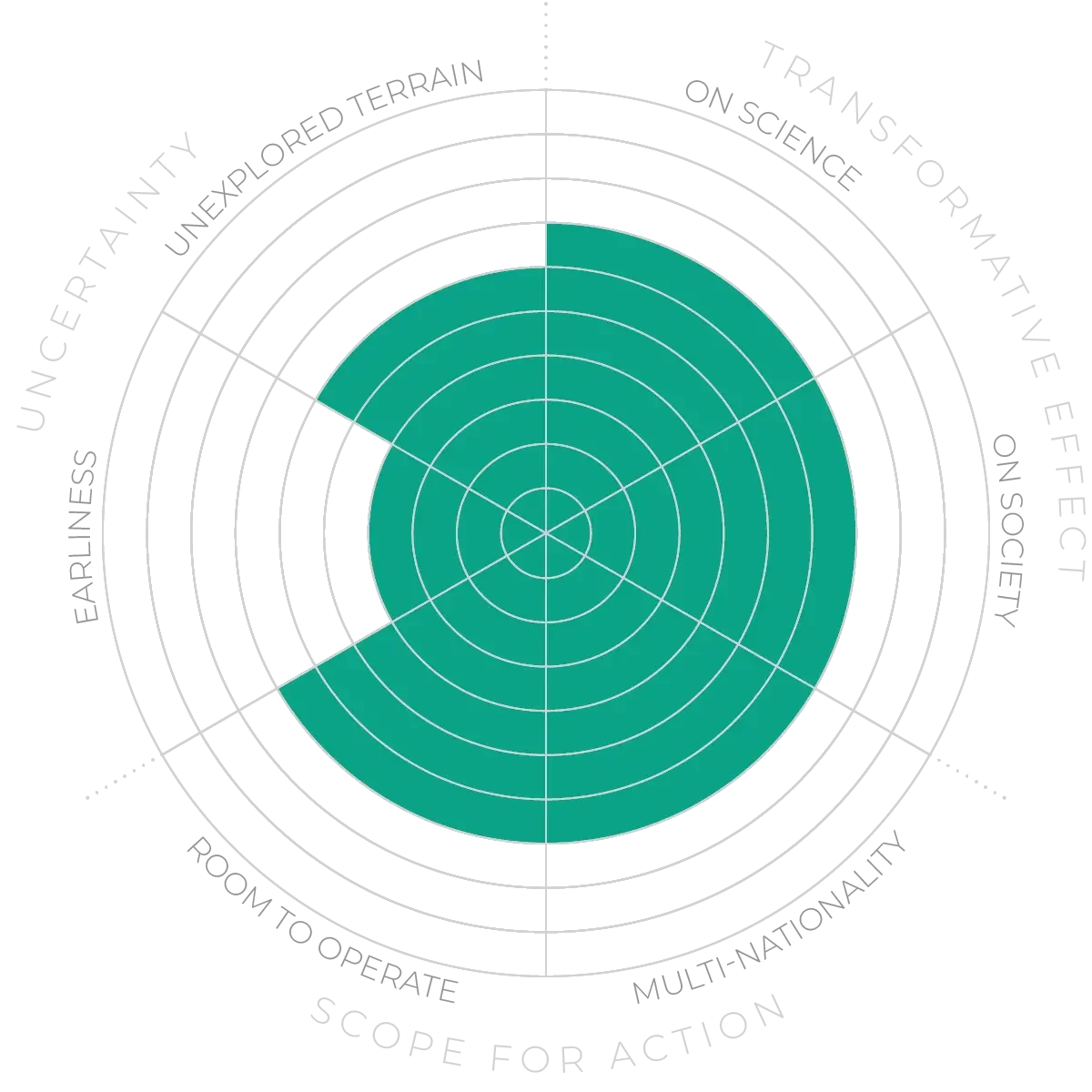
Engineering crops and livestock - Anticipation Scores
The Anticipation Potential of a research field is determined by the capacity for impactful action in the present, considering possible future transformative breakthroughs in a field over a 25-year outlook. A field with a high Anticipation Potential, therefore, combines the potential range of future transformative possibilities engendered by a research area with a wide field of opportunities for action in the present. We asked researchers in the field to anticipate:
- The uncertainty related to future science breakthroughs in the field
- The transformative effect anticipated breakthroughs may have on research and society
- The scope for action in the present in relation to anticipated breakthroughs.
This chart represents a summary of their responses to each of these elements, which when combined, provide the Anticipation Potential for the topic. See methodology for more information.
Reformatting the ecosystem
Future Horizons:
5-yearhorizon
Technology helps improve soil health
10-yearhorizon
Research gives deeper understanding of pests and pollinators
25-yearhorizon
Small-scale interventions preserve productivity
Research is increasing the specificity of pesticides, reducing unintended effects on non-target organisms and thus mitigating harm to crucial parts of the food chain and natural pest controls. Alternatives to pesticides, such as RNA sprays, are in development.23 There is also growing attention being paid to gene drives. These are heritable edits to the genes of a specific organism that will spread through a population when the edited organisms are released into the ecosystem. They can be used to render populations incapable of spreading disease or to control the reproduction of invasive species,24 although further research is required to avoid unintended consequences.25
Novel means of enhancing soils with nutrients, such as the addition of biochar (a charcoal-like substance made from anaerobic burning of organic material), are being explored.26 Understanding the soil microbiome, including competition among microbes, is key.27 Conserving or restoring the soil microbiome is also important, and has been shown to accelerate plant biomass production by more than 60 per cent, making it a priority task.28 Knowledge gaps in the role of cropping systems in soil health remain,29,30 but improving understanding of fundamental ecosystem properties, especially feedback mechanisms and complex interactions, should help close them.
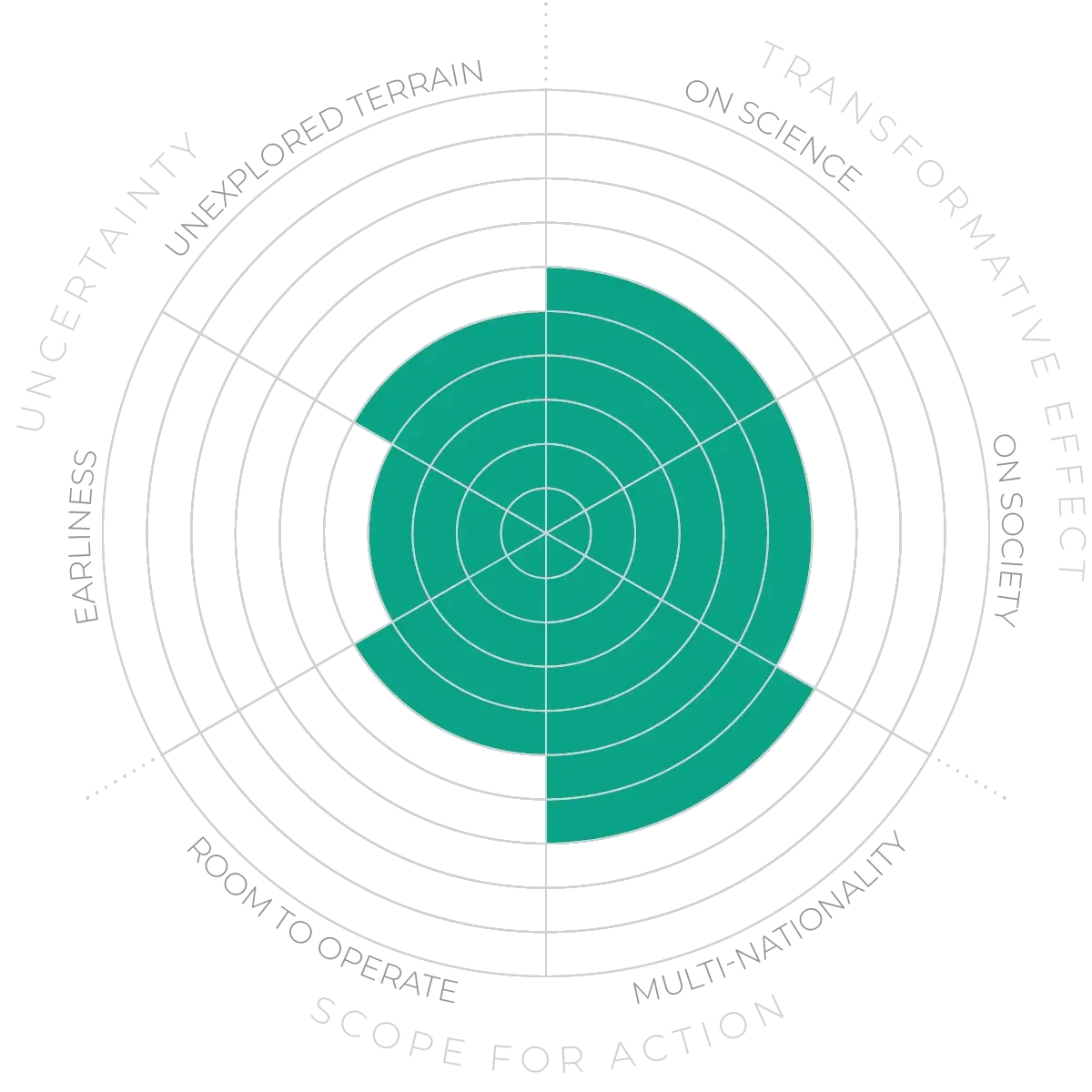
Reformatting the ecosystem - Anticipation Scores
The Anticipation Potential of a research field is determined by the capacity for impactful action in the present, considering possible future transformative breakthroughs in a field over a 25-year outlook. A field with a high Anticipation Potential, therefore, combines the potential range of future transformative possibilities engendered by a research area with a wide field of opportunities for action in the present. We asked researchers in the field to anticipate:
- The uncertainty related to future science breakthroughs in the field
- The transformative effect anticipated breakthroughs may have on research and society
- The scope for action in the present in relation to anticipated breakthroughs.
This chart represents a summary of their responses to each of these elements, which when combined, provide the Anticipation Potential for the topic. See methodology for more information.
Reimagining farming
Future Horizons:
5-yearhorizon
Research improves new approaches to farming
10-yearhorizon
Farming technologies create new processes for food production
25-yearhorizon
Nanotech and biotech provide foundation for efficient farming
One involves incorporating automation, AI and other novel technologies into traditional forms of agriculture.31 For example, tools like deep learning can accurately identify the presence of weeds and signs of disease from drone footage, enabling targeted intervention32 and decreasing unnecessary pesticide use.33 Similarly, engineered plant nanosensors and portable Raman spectroscopy could potentially detect stresses and track the health of crops and soil.34
Such high-tech approaches to traditional farming can be complemented by the use of agro-ecological tools35 such as microbe-based bespoke fertilisers,36 evidence-based crop choice and rotations.
Precision fermentation with engineered microorganisms can provide nutrient sources and improvers for food products such as cultured meat, improving texture and palatability and helping move towards viable large-scale production.37 Microbes and enzymes are already being used as factories that produce fats and proteins for nutrition products.38
The controlled release and targeted delivery of fertiliser ingredients manufactured at the nanoscale may also improve sustainability by ensuring more efficient use of nutrients.39 Combining these approaches with “climate-smart agriculture”, an acknowledgement of the need to take changing climatic conditions and their increasing variability into account,40 will be especially important in developing economies, where farms often lack resilience.41
Vertical farming, in which crops are grown indoors, close to population centres and under artificial light, could have a number of significant benefits. These include reduced food miles, reduced water use (watering systems are closed) and cuts in chemical pollution from fertilisers.42 Making vertical farming economically viable remains challenging, however.43
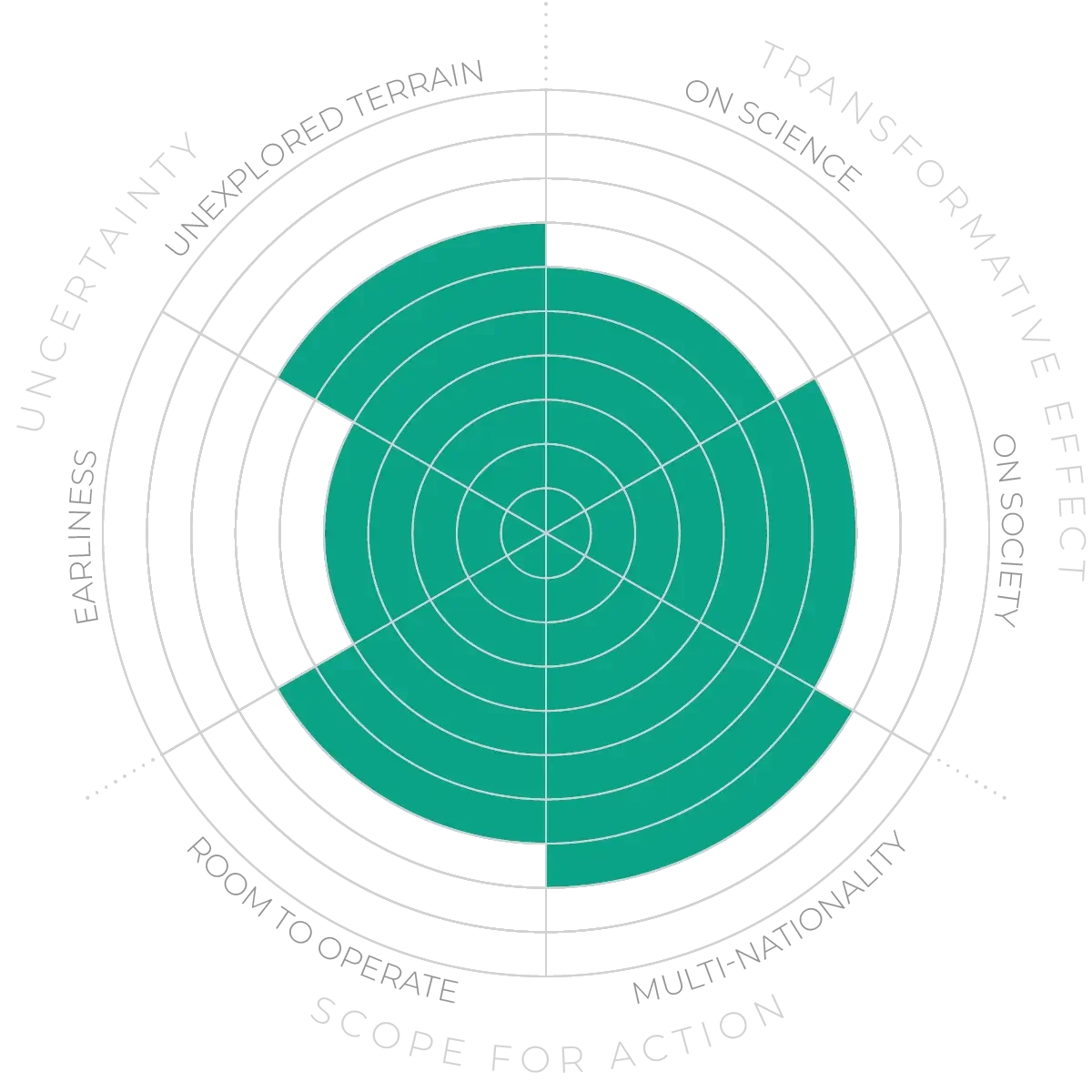
Reimagining farming - Anticipation Scores
The Anticipation Potential of a research field is determined by the capacity for impactful action in the present, considering possible future transformative breakthroughs in a field over a 25-year outlook. A field with a high Anticipation Potential, therefore, combines the potential range of future transformative possibilities engendered by a research area with a wide field of opportunities for action in the present. We asked researchers in the field to anticipate:
- The uncertainty related to future science breakthroughs in the field
- The transformative effect anticipated breakthroughs may have on research and society
- The scope for action in the present in relation to anticipated breakthroughs.
This chart represents a summary of their responses to each of these elements, which when combined, provide the Anticipation Potential for the topic. See methodology for more information.
Optimising nutrition
Future Horizons:
5-yearhorizon
Research gives a clearer view of the gut microbiome’s role
10-yearhorizon
Links between diet and health are clarified
25-yearhorizon
Microbiome-testing becomes standard practice in nutrition planning
Scientists are now making progress in shaping the requirements of personalised nutrition. Gaining such insights involves monitoring individual responses to particular foods — including considerations of the age at which they are introduced and of the role of the individual’s gut microbiome. This has already shown potential to aid the development of a number of important health measures, such as tools for preventing the onset of obesity or food addiction.45
A key challenge is to understand the interactions between diet and the gut microbiome.46 Physiologists have learned that the gut and brain are strongly connected, interacting through links dubbed the “gut-brain axis”.47 Alterations to diet can impact the microbiome,48 with knock-on effects for multiple bodily systems including the immune system and even mental health.49 People’s individual gut flora differ significantly, so understanding the microbiome is key to personalising nutrition.50
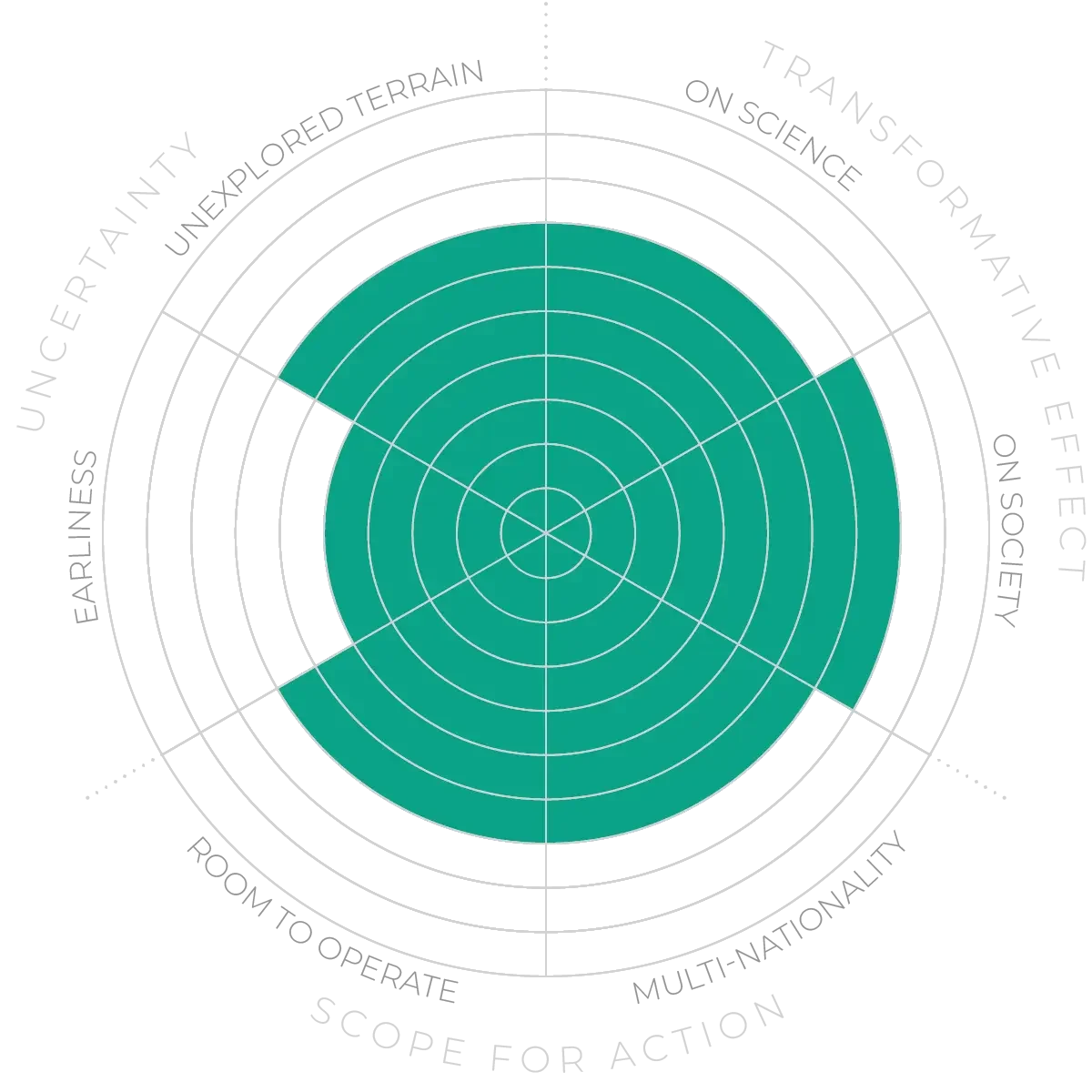
Optimising nutrition - Anticipation Scores
The Anticipation Potential of a research field is determined by the capacity for impactful action in the present, considering possible future transformative breakthroughs in a field over a 25-year outlook. A field with a high Anticipation Potential, therefore, combines the potential range of future transformative possibilities engendered by a research area with a wide field of opportunities for action in the present. We asked researchers in the field to anticipate:
- The uncertainty related to future science breakthroughs in the field
- The transformative effect anticipated breakthroughs may have on research and society
- The scope for action in the present in relation to anticipated breakthroughs.
This chart represents a summary of their responses to each of these elements, which when combined, provide the Anticipation Potential for the topic. See methodology for more information.
Citations
Topic brief
- United Nations. Peace, dignity and equality on a healthy planet https://www.un.org/en/global-issues/population
- Michiel van Dijk et al.. A meta-analysis of projected global food demand and population at risk of hunger for the period 2010–2050 https://doi.org/10.1038/s43016-021-00322-9
- Prasad Ram et al.. Nanotechnology in Sustainable Agriculture: Recent Developments, Challenges, and Perspectives https://doi.org/10.3389/fmicb.2017.01014
- Institute for Health Metrics and Evaluation. Diet https://www.healthdata.org/research-analysis/health-risks-issues/diet
3.3.1 Engineering crops and livestock
- Khalid Sedeek et al.. Plant Genome Engineering for Targeted Improvement of Crop Traits https://doi.org/10.3389/fpls.2019.00114
- Ambuj B. Jha and Thomas D. Warkentin. Biofortification of Pulse Crops: Status and Future Perspectives https://doi.org/10.3390/plants9010073
- Justyna Szerement et al.. Agronomic Biofortification with Se, Zn and Fe: An Effective Strategy to Enhance Crop Nutritional Quality and Stress Defense—A Review https://doi.org/10.1007/s42729-021-00719-2
- Dominique Van Der Straeten et al.. Multiplying the efficiency and impact of biofortification through metabolic engineering https://doi.org/10.1038/s41467-020-19020-4
- Stephen P. Long et al.. Meeting the Global Food Demand of the Future by Engineering Crop Photosynthesis and Yield Potential https://doi.org/10.1016/j.cell.2015.03.019
- Honghong Hu and Lizhong Xiong. Genetic Engineering and Breeding of Drought-Resistant Crops https://doi.org/10.1146/annurev-arplant-050213-040000
- Food and Agriculture Organization of the United Nations. Damage and loss https://www.fao.org/resources/digital-reports/disasters-in-agriculture/en
- Syed Shan-e-Ali Zaidi et al.. Engineering crops of the future: CRISPR approaches to develop climate-resilient and disease-resistant plants https://doi.org/10.1186/s13059-020-02204-y
- Hong Yu et al.. A route to de novo domestication of wild allotetraploid rice https://doi.org/10.1016/j.cell.2021.01.013
- Caixia Gao. Genome engineering for crop improvement and future agriculture https://doi.org/10.1016/j.cell.2021.01.005
- Jenna Gallegos. RNA vaccines for plants? https://allianceforscience.org/blog/2022/03/rna-vaccines-for-plants/
- Inessa Arif et al. Plant Microbiome Engineering: Expected Benefits for Improved Crop Growth and Resilience https://doi.org/10.1016/j.tibtech.2020.04.015
- Ashwani Kumar and Anamika Dubey. Rhizosphere microbiome: Engineering bacterial competitiveness for enhancing crop production https://doi.org/10.1016/j.jare.2020.04.014
- Alison Van Eenennaam et al.. Genetic Engineering of Livestock: The Opportunity Cost of Regulatory Delay https://doi.org/10.1146/annurev-animal-061220-023052
3.3.2 Reformatting the ecosystem
- Rafaella Gimarães Porto et al.. Pollination ecosystem services: A comprehensive review of economic values, research funding and policy actions https://doi.org/10.1007/s12571-020-01043-w
- Sean P. Leonard et al.. Engineered symbionts activate honey bee immunity and limit pathogens https://doi.org/10.1126/science.aax9039
- Qiang Huang et al.. Engineered gut symbiont inhibits microsporidian parasite and improves honey bee survival https://doi.org/10.1073/pnas.2220922120
- Timotheüs van der Niet et al.. Evolutionarily inspired solutions to the crop pollination crisis https://doi.org/10.1016/j.tree.2022.12.010
- Aline Pereira Rank and Aline Koch. Lab-to-Field Transition of RNA Spray Applications – How Far Are We? https://doi.org/10.3389/fpls.2021.755203
- Nina Wedell et al.. Gene drive: progress and prospects https://doi.org/10.1098/rspb.2019.2709
- Tony Nolan. Control of malaria-transmitting mosquitoes using gene drives https://doi.org/10.1098/rstb.2019.0803
- Si Gao et al.. Biochar additions alter phosphorus and nitrogen availability in agricultural ecosystems: A meta-analysis https://doi.org/10.1016/j.scitotenv.2018.11.124
- Pankaj Trivedi et al.. Enabling sustainable agriculture through understanding and enhancement of microbiomes https://doi.org/10.1111/nph.17319
- Colin Averill et al.. Defending Earths terrestrial microbiome https://doi.org/10.1038/s41564-022-01228-3
- Tony Yang et al.. Cropping systems in agriculture and their impact on soil health-A review https://doi.org/10.1016/j.gecco.2020.e01118
- Bernard Vanlauwe et al.. The role of legumes in the sustainable intensification of African smallholder agriculture: Lessons learnt and challenges for the future https://doi.org/10.1016/j.agee.2019.106583
3.3.3 Reimagining farming
- Nhrusimha Nath Misra et al.. IoT, Big Data and and Artificial Intelligence in Agriculture and Food Industry https://doi.org/10.1109/JIOT.2020.2998584
- Kirtan Jha et al.. A comprehensive review on automation in agriculture using artificial intelligence https://doi.org/10.1016/j.aiia.2019.05.004
- Jinha Jung et al.. The potential of remote sensing and artificial intelligence as tools to improve the resilience of agriculture production systems https://doi.org/10.1016/j.copbio.2020.09.003
- Tedrick T. S. Lew et al.. Species-independent analytical tools for next-generation agriculture https://doi.org/10.1038/s41477-020-00808-7
- Alexander Wezel et al.. Agroecological practices for sustainable agriculture. A review https://doi.org/10.1007/s13593-013-0180-7
- Trishna Mahanty et al.. Biofertilizers: a potential approach for sustainable agriculture development https://doi.org/10.1007/s11356-016-8104-0
- Anuj Kumar et al.. Technological and structural aspects of scaffold manufacturing for cultured meat: recent advances, challenges, and opportunities https://doi.org/10.1080/10408398.2022.2132206
- Jonilson M. E. Silva et al.. Microbial Lipid Based Biorefinery Concepts: A Review of Status and Prospects doi: 10.3390/foods12102074
- Ramesh Raliya et al.. Nanofertilizer for Precision and Sustainable Agriculture: Current State and Future Perspectives https://doi.org/10.1021/acs.jafc.7b02178
- Victor O. Abegunde et al.. The Dynamics of Climate Change Adaptation in Sub-Saharan Africa: A Review of Climate-Smart Agriculture among Small-Scale Farmers https://doi.org/10.3390/cli7110132
- Samuel T. Partey et al.. Developing climate-smart agriculture to face climate variability in West Africa: Challenges and lessons learnt https://doi.org/10.1016/j.jclepro.2018.03.199
- Fatemeh Kalantari et al.. Opportunities and Challenges in Sustainability of Vertical Farming: A Review https://doi.org/10.1515/jlecol-2017-0016
- Sander H. van Delden et al.. Current status and future challenges in implementing and upscaling vertical farming systems https://doi.org/10.1038/s43016-021-00402-w
3.3.4 Optimising nutrition
- Corinne L. Bush et al.. Toward the Definition of Personalized Nutrition: A Proposal by The American Nutrition Association https://doi.org/10.1080/07315724.2019.1685332
- Arpana Gupta et al.. Brain–gut–microbiome interactions in obesity and food addiction https://doi.org/10.1038/s41575-020-0341-5
- Mathis Wolter et al.. Leveraging diet to engineer the gut microbiome https://doi.org/10.1038/s41575-021-00512-7
- Gili Ezra-Nevo et al.. The diet-microbiome tango: how nutrients lead the gut brain axis https://doi.org/10.1016/j.conb.2020.02.005
- Joseph Firth et al.. Food and mood: how do diet and nutrition affect mental wellbeing? http://doi.org/10.1136/bmj.m2382
- Mateusz Grajek et al.. Nutrition and mental health: A review of current knowledge about the impact of diet on mental health https://www.frontiersin.org/articles/10.3389/fnut.2022.943998
- Aleksandra A. Kolodziejczyk et al.. Diet–microbiota interactions and personalized nutrition https://doi.org/10.1038/s41579-019-0256-8.