
Fungal Biology
Comment
Stakeholder Type
GESDA
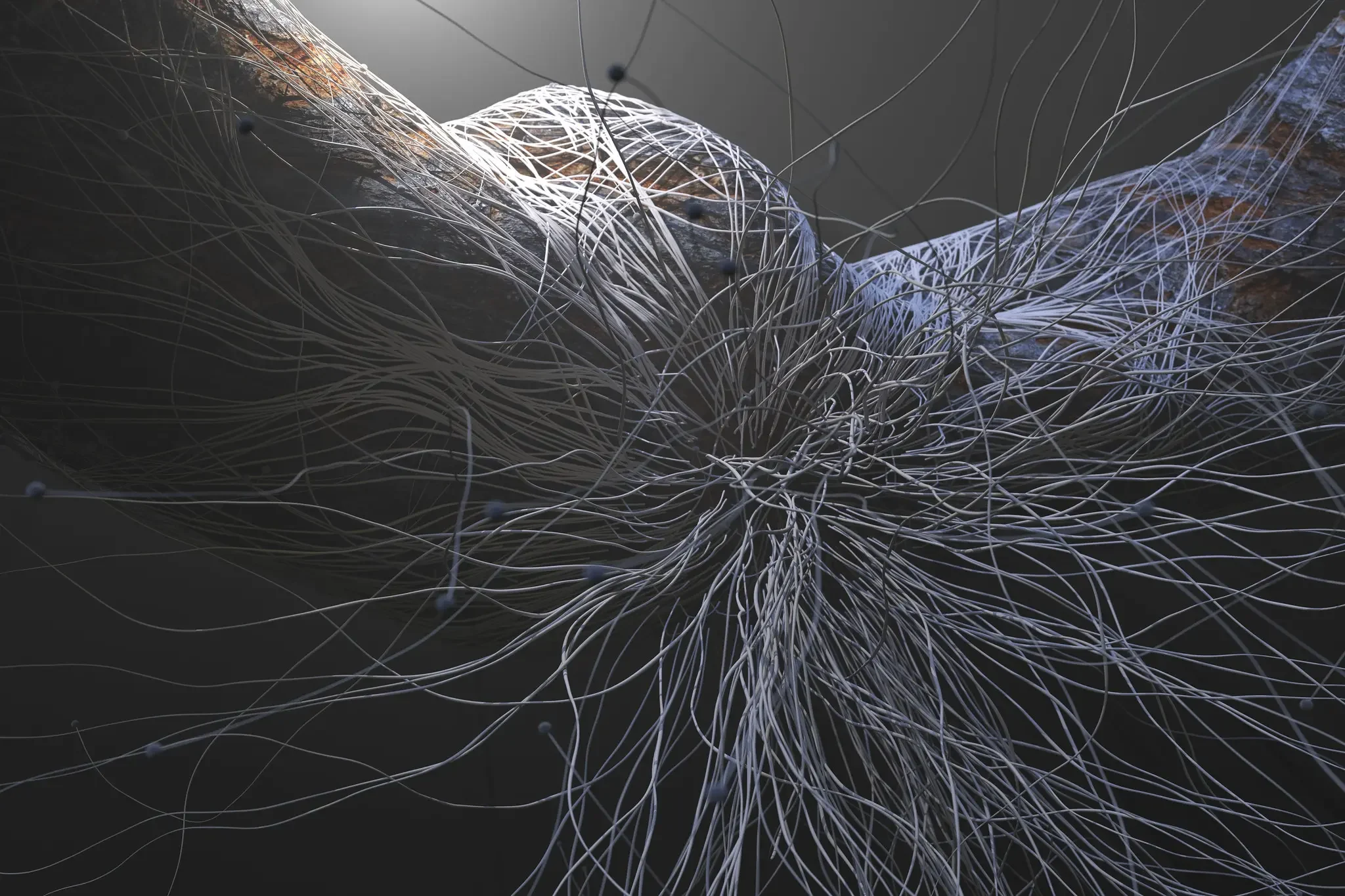
"Mycelium" by Floriane Biner, University of Applied Sciences and Arts Western Switzerland - HESSO
Photo: "Mycelium" by Floriane Biner, University of Applied Sciences and Arts Western Switzerland - HESSO

Topic

Fungal Biology

Anticipation Committee Chairs:

Joseph Heitman

Professor, Department of Molecular Genetics and Microbiology

Duke University

Leah Cowen

Professor Department of Molecular Genetics

University of Toronto

Fungal Biology

Fungi are intricately involved with nearly every organism and ecosystem on Earth. They have changed the course of human civilisation: their yeast makes our bread and beer, their self-defence chemicals underpin important antibiotics1 and now their enzymes promise breakthroughs from greener biofuels and waste-water treatment to potential anti-ageing drugs.

All these applications have come from studying only about 3 per cent of the estimated 5 million species that make up this kingdom. This estimate comes from the range of structures and genes that have been discovered in partial samples in the wild that are not associated with a known species. There is, in other words, significant fungal “dark matter” that remains to be discovered and catalogued. Completing such a fungal taxonomy has historically been a low priority, but recent evidence suggesting that our interactions with them have changed them in dangerous ways has moved the taxonomy up the global agenda.

These changing interactions have arisen because pressures from climate change, agricultural overuse of medical antifungals and global trade have forced fungi into new niches. Emerging and existing fungal diseases threaten ecological biodiversity, including frogs, salamanders and bats. The danger they pose to crops also threatens global food security.2

The long-feared threat of a global fungal pandemic is growing larger with the emergence of drug-resistant strains like Candida auris. The emergence of more drug-resistant species is inevitable, and mounting a response will require major investments in research and infrastructure. Our knowledge of fungi has been gained from studying just the handful of model organisms that can be cultured in a laboratory environment. Investigation of the unknown, unculturable types remains important but has been held back by a lack of reliable and advanced techniques. Developments to deal with this have been slow to ramp up because most of our scientific apparatus has been geared to bacterial and viral threats.

However, change is under way. Genomic surveys are filling out the fungal family tree, and advanced imaging technologies and new experimental models are helping to illuminate the mechanisms of how fungi invade, which provides new targets for mitigation. Mitigation strategies include vaccines, new classes of small-molecule drugs and the redeployment of existing gene-editing platforms. It might even be possible to engineer the fungal microbiome or virome to reduce the threat they pose.

Future success will depend on computational advances, including AI and machine learning, and major interdisciplinary cooperation. The fields of metabolomics and structural biology, supported by hi-tech repositories of fungal samples and isolates, will underpin a culture-free understanding of fungal structures, including insights into what determines whether they behave commensally or pathogenically.

KEY TAKEAWAYS

Our understanding of fungal biology is in its infancy, with perhaps only 3 per cent of Earth’s fungal organisms currently known and catalogued. This situation is being improved by research in the lab and out in the field. Improved healthcare and other Opportunities from fundamental fungal biology will arise through measures such as establishing biobanks of fungi and creating better model organisms, which should also help mitigate fungal biodiversity loss. This will be important, as all of Earth’s ecosystems rely on Fungal ecology and evolution to exploit opportunities and manage threats. Techniques such as “shotgun” metagenomics are already helping us to understand human-fungal interactions and how they will develop due to external factors such as climate change. It is vital that we study the Mechanisms of fungal pathogenesis and symbiosis for this reason. Emerging pathogens such as valley fever are probably just the beginning of new threats, given rising global temperatures and agricultural practices, both of which can force fungi out of their established environmental niches and into greater contact with humans. There is certainly good reason to research strategies for Combatting fungal pandemics. Vaccines and targeted fungicides are among the measures in development, as well as efforts to gain a better understanding of the fungal microbiome and virome in order to steer their properties and behaviour.

Topic:

Anticipation Potential

Fungal Biology

Sub-Fields:

Opportunities from fundamental fungal biology
Fungal ecology and evolution
Mechanisms of fungal pathogenesis and symbiosis
Combatting fungal pandemics
The field of Fungal Biology is the topic with the highest Anticipation Potential score, with breakthroughs anticipated in the near to medium term. This area holds high transformative potential. Sub-topics like Opportunities from fundamental fungal biology and Mechanisms of fungal pathogenesis and symbiosis are expected to reach maturity earliest, with significant advances expected within five years. Despite some uncertainty regarding future scientific developments, there is a clear, strong call for multilateral action across all sub-topics if emerging potential is to be fully realised. This is especially true for Fungal ecology and evolution, where collaborative efforts are crucial for accelerating discovery and developing novel strategies — especially given the inherent complexities of fungal systems and evolution.

Anticipatory Impact:

Three fundamental questions guide GESDA’s mission and drive its work: Who are we, as humans? How can we all live together? How can we ensure the well-being of humankind and the sustainable future of our planet? We asked researchers from the field to anticipate what impact future breakthroughs could have on each of these dimensions. This wheel summarises their opinions when considering each of these questions, with a higher score indicating high anticipated impact, and vice versa.

  • Anticipated impact on who we are as humans
  • Anticipated impact on how we will all live together
  • Anticipated impact on the well-being of humankind and sustainable future of our planet

Opportunities from fundamental fungal biology

About 150,000 fungal species have been described: physical forms range from macroscopic mushrooms to single-celled yeasts. It is worth noting that discoveries made in yeast alone have netted six Nobel prizes. However, some newly identified genetic and molecular structures are not known to exist within any of these organisms, which suggests that existing samples represent only a tiny fraction of the morphological diversity of the fungal kingdom. There is progress here, though: AI and machine learning and imaging advances are beginning to help researchers develop a taxonomy.

Future Horizons:

×××

5-yearhorizon

Research gains better knowledge of known fungi

Single-particle analysis reveals structures at very high resolution, leading to drug optimisation. Rapid advances in computing power allows us to reassemble structures in three dimensions for modelling and investigation, including molecular mechanisms of fungi infecting other organisms. Metagenomic sequencing in fungi matures.

10-yearhorizon

The fungal family tree is filled in with known unknowns

Machine learning and AI allow us to determine phenotype and behaviour from DNA. Diverse new model organisms can be cultured and manipulated thanks to CRISPR. Documenting fungi gets 10 to 100 times cheaper thanks to advances in sequencing technology.

25-yearhorizon

Understanding of the unknown unknowns progresses

The function of “hypothetical” proteins is characterised to determine links between fungi and human diseases. Metagenomics characterise specific fungal strains from scraps of DNA found in the wild. New standardised techniques enable faster and cheaper sequencing of genomes. A repository is built for globally sourced fungal culture collections, where samples are archived and maintained for biosecurity and research purposes.

Furthering research on fungi will require more model organisms. Although most fungi are difficult if not impossible to culture in the laboratory, their DNA can be separated from their symbionts and identified using metagenomics, and editing their genes with CRISPR should make them culturable. Their interaction with other organisms can be elucidated with new imaging advances.

Even in some well-characterised species, between 20 and 30 per cent of genes and gene clusters are either unknown or only hypothetically associated with human disease, and need to be better characterised. Pangenome approaches will illuminate biochemical pathways, including those that underpin disease associations such as the (currently controversial) link between Aspergillus sydowii and lung cancer.3

Fungal biobanks and seed-bank-like repositories could help decode the relationship between genotype and phenotype in the same way that biobanks of genes have helped research.4 Building and maintaining culture collections are also important tasks if we are to retain archival knowledge of diverse fungal species, many of which are dying in the mass extinction — and to understand what spurs fungal evolution and extinction.

Opportunities from fundamental fungal biology - Anticipation Scores

The Anticipation Potential of a research field is determined by the capacity for impactful action in the present, considering possible future transformative breakthroughs in a field over a 25-year outlook. A field with a high Anticipation Potential, therefore, combines the potential range of future transformative possibilities engendered by a research area with a wide field of opportunities for action in the present. We asked researchers in the field to anticipate:

  1. The uncertainty related to future science breakthroughs in the field
  2. The transformative effect anticipated breakthroughs may have on research and society
  3. The scope for action in the present in relation to anticipated breakthroughs.

This chart represents a summary of their responses to each of these elements, which when combined, provide the Anticipation Potential for the topic. See methodology for more information.

Fungal ecology and evolution

Fungi play vital roles in all ecosystems: they decompose dead matter and they are parasites, while also being symbionts of animals, plants and bacteria. That every organism has a microbiome is now a matter of record, but it is becoming clear that fungi play important but as yet unclear roles in shaping the structure of these microbial communities. Mycelial networks, for example, are vast ecological structures that interdigitate with most of life on Earth, but our understanding of how these systems function is far from complete.

Future Horizons:

×××

5-yearhorizon

Fungi are separated from their niches

Fungal community ecology catches up with advanced bacterial community ecology. Comparative genomics reveal how suites of genes have been transformed across evolutionary time and space. Thanks to long-read sequencing technologies, it becomes possible to tease out plant and other kingdoms’ genes to isolate fungal genes. Viruses that can manipulate fungal aggression are tested.

10-yearhorizon

Improvements in culturing and real-world experiments are achieved

It becomes possible to put together an “experimental diorama” in culture to perform experiments on relevant biological communities. Large agriculture and forestry trials determine the extent to which lab experiments can mimic real-world scenarios and provide insights into combinatorially complex fungal networks. New non-toxic antimicrobials are discovered in insect-associated fungi that have evolved to live non-destructively with their hosts.

25-yearhorizon

A 21st-century fungal research infrastructure is established

The fungal family tree is completed using a combination of gene sequencing from partial environmental samples and pattern-matching using AI and machine learning.

One way to study commensal fungi is to separate fungal from host genes using “shotgun” metagenomics,5 a sequencing technique that allows researchers to study the genomes of entire microbial communities without needing to culture them first. This has already made it possible to advance the study of the human skin mycobiome6, the fungal component of the microbiota.

However, the interactions themselves also need to be studied, which requires an understanding of community ecology: how organisms interact within specific habitats. New insights are making it possible to study commensal strains in animals in vivo — in the gut mycobiome of lab mice,7 for example. Beyond standard lab-mouse work, novel model systems like hydra are also being developed to study fungal interactions within microbial communities.

Such approaches will be required to understand important changes we are making to commensal relationships: fungi, for example, play a crucial role in promoting carbon capture and in agriculture. This may be changing, however, as a consequence of synthetic phosphate use in soil.8 The synthetic phosphates change plants’ long-established symbiotic relationships with fungi, which may have knock-on effects for farming and for climate change.

Fungal ecology and evolution - Anticipation Scores

The Anticipation Potential of a research field is determined by the capacity for impactful action in the present, considering possible future transformative breakthroughs in a field over a 25-year outlook. A field with a high Anticipation Potential, therefore, combines the potential range of future transformative possibilities engendered by a research area with a wide field of opportunities for action in the present. We asked researchers in the field to anticipate:

  1. The uncertainty related to future science breakthroughs in the field
  2. The transformative effect anticipated breakthroughs may have on research and society
  3. The scope for action in the present in relation to anticipated breakthroughs.

This chart represents a summary of their responses to each of these elements, which when combined, provide the Anticipation Potential for the topic. See methodology for more information.

Mechanisms of fungal pathogenesis and symbiosis

The mechanisms that make fungi commensal can also make them turn pathogenic. Their ability to circumvent the immune system, using tricks including changes to their morphology and metabolism, is useful in both cases, enabling them to survive within hosts and even host immune cells.

Future Horizons:

×××

5-yearhorizon

Sequencing traces infection routes

Fungal-genome sequencing help to trace routes of infection into groups of hosts not previously exposed to a particular pathogen. AI tools help begin to identify effectors in other fungal pathogens.

10-yearhorizon

Pathogen identification improves

New fungal pathogens, emerging due to climate and environmental change, are increasingly identified. Diagnostics in hospitals become rapid and routine.

25-yearhorizon

Technological advances accelerate precautionary action

Fast detection and advances in modelling and simulation lead to the ability to quickly shut down trade routes to prevent the spread of fungal pathogens that harm wildlife and humans.

The same fungus can exist as either a commensal or a pathogenic organism. For example, Candida albicans is an opportunistic fungus that can choose either lifestyle. As a benign resident of the human microbiome, C. albicans is an ovoid yeast. However, as it transitions to a pathogen, its shape changes, extruding filamentous hypha that penetrate host cells. Research is under way to study the gene products relevant in pathogenesis. The damage done by C. albicans, for example, is largely attributable to a peptide it secretes, candidalysin. It has been shown to be essential in the ability of C. albicans to cause cell damage and host immune activation.

Environmental factors encourage these transitions. Climate change has forced fungi into new niches as higher temperatures push them to adapt to the sorts of conditions that have, for millions of years, kept them from colonising warm mammalian bodies. Additionally, agricultural use of the same few types of fungicides used in medicine to fight infections have ensured that fungi adapt to our available drugs, which are now losing efficacy,9 and global trade has brought non-native species into places that have not evolved defences against them.

Scientific advances will change the way we study other mechanisms of pathogenesis and how they arise, take effect and spread. They will also allow us to identify specific agricultural practices, trade routes and climate problems that can be targeted for biosecurity interventions.

Mechanisms of fungal pathogenesis and symbiosis - Anticipation Scores

The Anticipation Potential of a research field is determined by the capacity for impactful action in the present, considering possible future transformative breakthroughs in a field over a 25-year outlook. A field with a high Anticipation Potential, therefore, combines the potential range of future transformative possibilities engendered by a research area with a wide field of opportunities for action in the present. We asked researchers in the field to anticipate:

  1. The uncertainty related to future science breakthroughs in the field
  2. The transformative effect anticipated breakthroughs may have on research and society
  3. The scope for action in the present in relation to anticipated breakthroughs.

This chart represents a summary of their responses to each of these elements, which when combined, provide the Anticipation Potential for the topic. See methodology for more information.

Combatting fungal pandemics

The major fungal pathogens include Candida albicans, Cryptococcus neoformans and Aspergillus fumigatus. These may cause direct or indirect harm. For example, the emerging fungal pathogen behind Candidozyma auris infection, first identified in 2009, is becoming a widespread hospital threat, with the number of infections growing by 59 per cent between 2019 and 2020, and by 95 per cent between 2021 and 2022.10 But even strains that do not harm humans directly may harm them indirectly: While Pseudogymnoascus destructans — which causes white-nose syndrome in bats — was thought to be primarily a threat to biodiversity,11 its downstream consequences for ecosystem stability have been linked to increased human infant illness and death. Aspergillus sydowii affects coral reefs but has also spread into hospitals, where it causes respiratory infections. It has also been (controversially) found to drive lung cancer progression.

Future Horizons:

×××

5-yearhorizon

New drugs are deployed

Results from phase III trials of novel anti-fungals yield new drugs to deploy in hospitals. Experimental and computer models help illuminate the mechanisms of how fungi invade, which provides targets for mitigation. Vaccination strategy and insights in bats that helped mitigate the damage of white-nose syndrome (including grooming spread) reduce the impact of the next pandemic. A new small-molecule drug is discovered. Passive surveillance technology allows monitoring of the next pandemic threat.

10-yearhorizon

Control and development of anti-fungals improves

New anti-fungals that do not interfere with clinical anti-fungals are developed for agriculture. A major pharmaceutical company starts human trials with newly discovered natural products. Active surveillance technology prevents fungal pathogens emerging. Vaccines are developed against major fungal threats.

25-yearhorizon

Real-time pandemic prediction and control becomes possible

Predictive biology combines mechanistic models, ecological insights, surveillance and in vivo data on pathogenesis into real-time pandemic prediction and control.

Mitigation strategies include vaccines and RNA interference (via extracellular vesicles as a promising route),12 new small-molecule drugs and natural compounds that are isolated from bacteria and other sources where anti-fungal strategies have evolved. There is a need to replace broad-spectrum agricultural fungicides that poison the entire kingdom, moving towards a more tailored approach involving targeted fungicides that leave soil-fungal communities intact, lock down carbon and do not cause resistance in clinical anti-fungals. Research into these tailored approaches is ongoing but not yet mature.

More positively, two novel small-molecule anti-fungals — olorofim and fosmanogepix — are now in phase III trials.13 New synthetic chemicals are also being developed, as well as new approaches for delivering them. Manipulating the fungal microbiome or virome may guide their behaviour into being more favourable for us.

Combatting fungal pandemics - Anticipation Scores

The Anticipation Potential of a research field is determined by the capacity for impactful action in the present, considering possible future transformative breakthroughs in a field over a 25-year outlook. A field with a high Anticipation Potential, therefore, combines the potential range of future transformative possibilities engendered by a research area with a wide field of opportunities for action in the present. We asked researchers in the field to anticipate:

  1. The uncertainty related to future science breakthroughs in the field
  2. The transformative effect anticipated breakthroughs may have on research and society
  3. The scope for action in the present in relation to anticipated breakthroughs.

This chart represents a summary of their responses to each of these elements, which when combined, provide the Anticipation Potential for the topic. See methodology for more information.

Citations

Topic brief

  1. J. Clardy et al.. The natural history of antibiotics https://doi.org/10.1016/j.cub.2009.04.001
  2. E. Stukenbrock and Sarah Gurr. Address the growing urgency of fungal disease in Crops https://www.nature.com/articles/d41586-023-01465-4

5.4.1 Opportunities from fundamental fungal biology

  1. N-N. Liu et al.. The intratumor mycobiome promotes lung cancer progression via myeloid-derived suppressor cells https:// doi.org/10.1016/j.ccell.2023.08.012
  2. G. McInnes et al.. Global Biobank Engine: enabling genotype-phenotype browsing for biobank summary statistics https://doi.org/10.1093/bioinformatics/bty999

5.4.2 Fungal ecology and evolution

  1. D. M. Underhill DM and I. D. Iliev. The mycobiota: interactions between commensal fungi and the host immune system https://doi.org/10.1038/nri3684
  2. A. Byrd et al.. The human skin microbiome https://doi.org/10.1038/nrmicro.2017.157
  3. Y. Liao et al.. Fungal symbiont transmitted by free-living mice promotes type 2 immunity https://doi.org/10.1038/s41586-024-08213-2
  4. C. Balzergue et al.. High phosphate reduces host ability to develop arbuscular mycorrhizal symbiosis without affecting root calcium spiking responses to the fungus https://www.frontiersin.org/journals/plant-science/articles/10.3389/fpls.2013.00426

5.4.3 Mechanisms of fungal pathogenesis and symbiosis

  1. M. C. Fisher et al.. Worldwide emergence of resistance to antifungal drugs challenges human health and food security https://doi.org/10.1126/science.aap7999

5.4.4 Combatting fungal pandemics

  1. L. Carroll. Deadly fungal infection spreading at an alarming rate https://www.nbcnews.com/health/health-news/cdc-fungal-infection-candida-auris-alarming-spread-rcna75477
  2. M. Izidoro-Ayza and B. S. Klein. Pathogenic strategies of Pseudogymnoascus destructans during torpor and arousal of hibernating bats https://www.science.org/doi/10.1126/science.adn5606
  3. L. Honorato et al.. Fungal Extracellular Vesicles as a Potential Strategy for Vaccine Development https://doi.org/10.1007/978-3-030-83391-6_10
  4. The Lancet. An exciting time for antifungal therapy https://www.thelancet.com/journals/laninf/article/PIIS1473-3099(23)00380-8/fulltext