
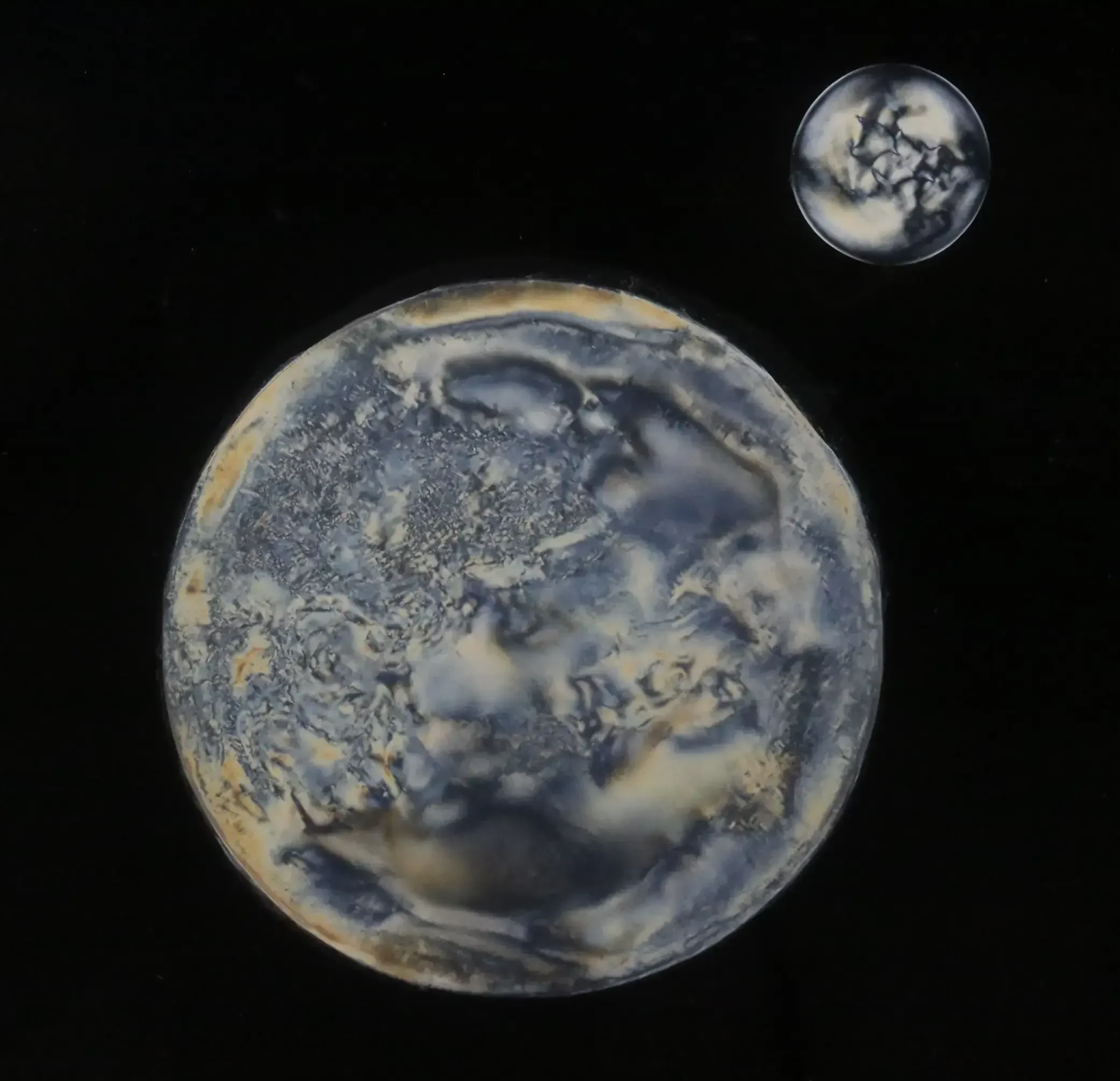
Topic
Mathematics
Anticipation Committee Chair:
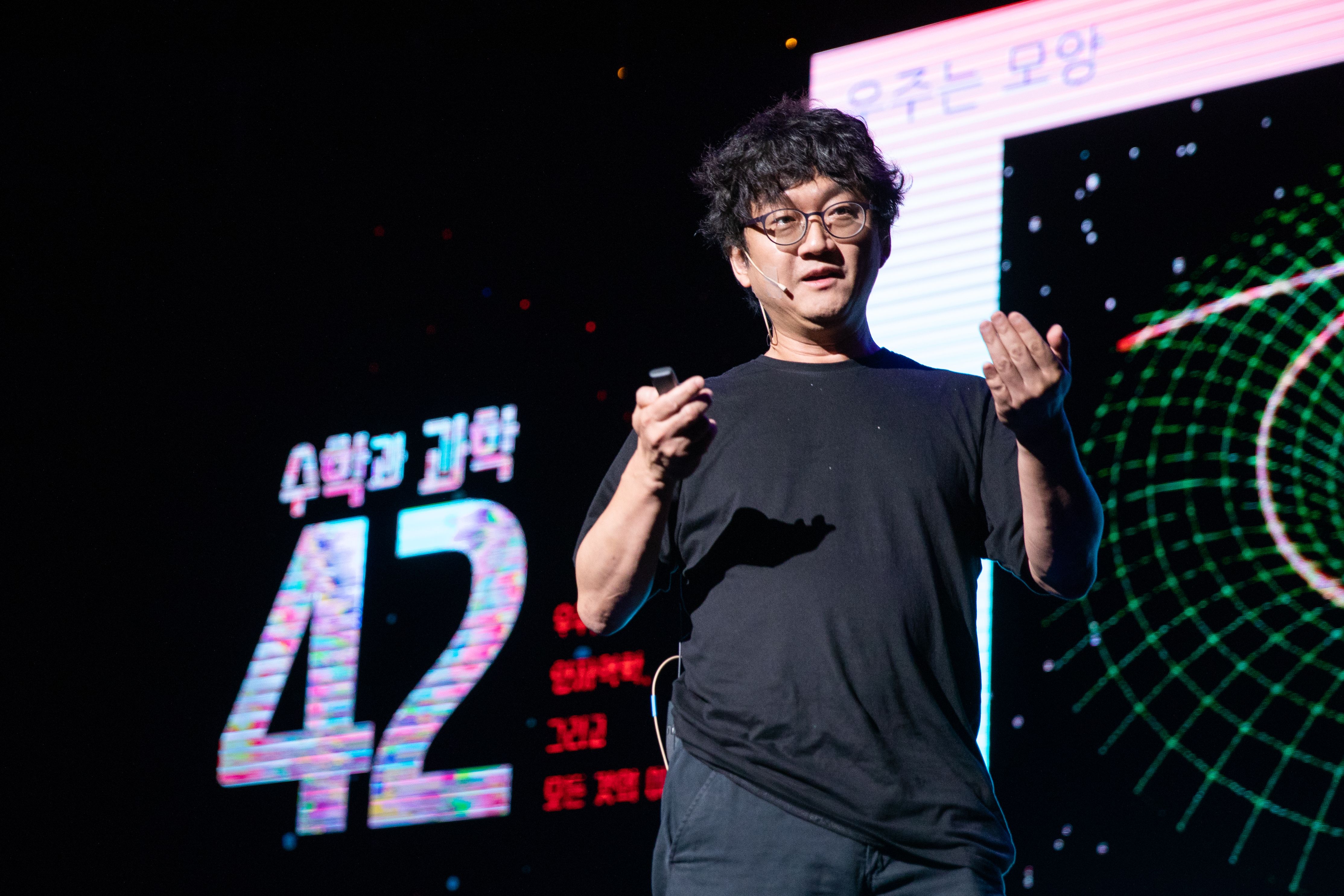
Minhyong Kim
Anticipation Committee:
Mathematics
Unlike any other discipline, mathematics is deeply rooted in almost every human culture. This has been the case for as long as written records have existed. The practices of counting, measuring, arranging, quantifying and comparing objects in the physical world around us is so useful that we begin to teach them to our children at a very young age.
Unlike any other discipline, mathematics is deeply rooted in almost every human culture. This has been the case for as long as written records have existed. The practices of counting, measuring, arranging, quantifying and comparing objects in the physical world around us is so useful that we begin to teach them to our children at a very young age.
The modern academic study of mathematics is a world away from these basic activities, but remains an essential part of the functioning of human civilisation. In the 21st century, mathematical fields such as linear algebra, differential calculus and statistical analysis underpin a wide swathe of our everyday activities, from online shopping to medical diagnosis.
The field has always been aware of its shortcomings: mathematics has a long tradition of raising awareness of unsolved challenges. At the beginning of the 20th century, for instance, the mathematician David Hilbert outlined 23 significant challenges, 20 of which now have full or partial solutions. At the turn of this century, the Clay Institute offered a $1 million prize for the solution of any of seven problems, only one of which has been solved so far.
Mathematicians are aware of plenty of other less-celebrated gaps that also need to be filled, both for the “completeness” of mathematics and because those gaps can contain tools useful for the advancement of humanity’s interests. It has always been extremely difficult to predict the pace of progress and breakthrough in mathematics, and to know which as yet undeveloped mathematical tools will be useful to academics in other disciplines of the natural and social sciences. However, it is clear from past experience that future developments in a variety of mathematical disciplines will accelerate progress in science and technology, facilitate greater societal stability and push forward the frontiers of medicine.
Achieving these advances will require increased collaboration between mathematicians and academics from other disciplines, and improvements in the equity of access to advanced mathematics education.
KEY TAKEAWAYS
Humans have been counting, measuring and comparing aspects of the physical world, as well as defining abstract mathematical concepts and their interactions, for many tens of thousands of years. While the uses of mathematics have broadened, some of the central original applications remain, albeit with significantly more complexity. Modern mathematics is essential to the study of Nature, whether that is for understanding our planet’s past and possible futures, or broader cosmological considerations. Taking this further will require new mathematical tools. The wealth of data available to us in the 21st century has facilitated the development of Machines that can assist with the complexity of modern mathematical calculation and logical inference. With judicious development, such AI could soon become a useful tool for mathematicians. Whether in supply chains, medical technologies, transport logistics or public administration, the central role of mathematics in human Society is set to continue. Suitably applied, mathematical models can assist with the development of better futures for human groups of all sizes, though challenges remain. There are also challenges in applying mathematics to the study of biological Life, which necessarily involves dealing with complex components and processes that are often difficult to formalise as mathematical entities and procedures. Nonetheless, progress is being made, raising the possibility that the application of mathematics can improve future human health and our scientific understanding of life.
Anticipatory Impact:
Nature
Future Horizons:
5-yearhorizon
Research models effects of policy on humans
10-yearhorizon
Mathematicians quantify value of ecosystem services
25-yearhorizon
AI informs bio-abundance predictions
Machines
Future Horizons:
5-yearhorizon
Benchmarks help improve AI performance in mathematics
10-yearhorizon
AI assists with proofs
25-yearhorizon
AI ubiquitous in mathematics research
A complication comes from the tendency for AIs doing mathematics to “hallucinate” mathematical truths in ways that make their output unsuitable for use in formal proof. As yet, the field has yet to agree on what constitutes a good set of benchmarks for AI performance in a number of mathematical fields,8,9 making it extremely difficult to measure progress. Nonetheless, it is expected that theoretical advances in AI and ML will make their mathematics increasingly reliable and useful for pressing issues such as modelling the interactions of ocean, human and climate systems, as well as in basic science.10
Generative AI and statistical ML are being used by applied mathematicians and assisting with the design of physical systems. However, building AI that understands the real world means building “embodied” AI that works via the maths-based rules behind real-world physical processes, integrating symbolic and physical models. This will also produce more robust, efficient and explainable intelligence. Artificial general intelligence will not be achieved without new mathematical insights and architectures that unify and streamline the variety of paths currently being taken.
Society
Future Horizons:
5-yearhorizon
Data analysis supports new urban initiatives
10-yearhorizon
Models predict citizen response to policy
25-yearhorizon
Decision-making forecasts improve
Mathematical tools may nonetheless be able to extract rules and descriptions for human behaviour in the aggregate.12 There are, for instance, mathematical relationships between quality of societal infrastructure, population size, crime statistics and income distributions. In addition, understanding the kinds of network structures that exist in online and other communities, or organisational structures in particular disciplines, can help describe and model human behaviour and characteristics. Such phenomenological modelling can reveal the core dynamics that drive large-scale transformations in complex systems where first-principles models are impossible. These insights, if gained with sufficient mathematical rigour, can be applied to help shape human behaviour, not just to describe it. Data analysis carried out on societal systems facilitates the exposure of systemic risks13 or hidden biases, such as might be found in legal, governmental or corporate decision-making. Mathematically-derived insights can also provide ways to go beyond simple market dynamics, facilitating new, urgently required hybrid markets such as those needed for sustainable development and healthcare.14 Understanding of social-network structures can help with robust communication in an information-saturated world, enabling the exchange of ideas beyond the originator’s bubble or to avoid echo-chamber effects.15
One impediment to progress is not lack of mathematical tools but a lack of data on human behaviour and decision-making. Historical records are too sparse to create precise economic models, and there is a dearth of controlled experiments generating useful, cleanly interpretable data. Mathematically driven data science can be expected to help fill the gap, maybe incorporating new advances in the understanding of human behaviour such as that provided by neuroscience.16
Life
Future Horizons:
5-yearhorizon
Mathematicians flow into biology
10-yearhorizon
Neuroscience benefits from theory-formation
25-yearhorizon
Mapping initiatives facilitate clinical research
One example is the Human Cell Atlas,18 which aims to make a cellular and molecular-level resolution three-dimensional map of the human body. This involves the integration of vast amounts of data, inclusion of annotation at relevant resolutions and incorporating the facility to interrogate the underlying data. The mid-term aim is to build a foundation model of the human body at cellular and molecular resolution.19
In neuroscience, there is a lack of mathematical models to describe high-dimensional, non-linear complex systems.20 If the mathematical tools for describing the dynamics of such systems were to be developed, there would probably be applications in many other areas, such as economics.
For these projects and others, which promise a revolution in the ability to understand and engineer the mechanisms of life, lack of data is not always the main problem, though data for a comprehensive Human Cell Atlas would be transformational for biology and medicine. Instead, there is a need to formalise the mathematical requirements of biology21 so that mathematicians can efficiently and effectively work with biologists to make progress — there are progress opportunities here for both fields. There is also a need to understand how deep or complex the models of various systems need to be in order for progress to be made — not all biological systems require the same level of granularity for useful analysis.22
Citations
5.3.1 Nature
- A. M. M. Sequeira et al.. Ecosystem services “on the move” as a nature-based solution for financing the Global Biodiversity Framework https://doi.org/10.1038/s44183-024-00073-7
- V. Eyring et al.. Pushing the frontiers in climate modelling and analysis with machine learning https://doi.org/10.1038/s41558-024-02095-y.
- R. Loll et al.. Quantum Gravity in 30 Questions https://arXiv.org:2206.06762
- N. Arkani-Hamed and J. Trnka. The Amplituhedron https://arXiv.org:1312.2007
5.3.2 Machines
- C. Dessimoz and P. D. Thomas. AI and the democratization of knowledge https://doi.org/10.1038/s41597-024-03099-1
- W. Douglas Heaven. Large language models are amazing but nobody knows why https://www.technologyreview.com/2024/03/04/1089403/large-language-models-amazing-but-nobody-knows-why
- C. Drösser. AI Will Become Mathematicians’ ‘Co-Pilot’: interview with Terence Tao https://www.scientificamerican.com/article/ai-will-become-mathematicians-co-pilot/
- M. Eriksson et al.. Can We Trust AI Benchmarks? An Interdisciplinary Review of Current Issues in AI Evaluation https://arXiv.org:2502.06559
- N. McGreivy and A. Hakim. Weak baselines and reporting biases lead to overoptimism in machine learning for fluid-related partial differential equations https://doi.org/10.1038/s42256-024-00897-5
- President’s Council of Advisors on Science and Technology. Supercharging Research: Harnessing Artificial Intelligence to Meet Global Challenges https://bidenwhitehouse.archives.gov/wp-content/uploads/2024/04/AI-Report_Letter-ExSumm-29APRIL2024_SEND.pdf
5.3.3 Society
- S. Hochrainer-Stigler et al.. Measuring, modelling, and managing systemic risk: the missing aspect of human agency https://doi.org/10.1080/13669877.2019.1646312
- V. Chuqiao Yang et al.. Regulatory Functions from Cells to Society https://arXiv.org:2409.02884
- K. Lucas et al.. Systemic Risks: Theory and Mathematical Modeling https://doi.org/10.1002/adts.201800051
- E. Maskin. Mechanism design for pandemics https://doi.org/10.1007/s10058-021-00270-7
- S. Bhattacharya et al.. Unveiling Scaling Laws in the Regulatory Functions of Reddit https://arXiv.org:2407.12063
- D. Peixoto et al.. Decoding and perturbing decision states in real time https://doi.org/10.1038/s41586-020-03181-9
5.3.4 Life
- H. Peter Fischer. Mathematical modeling of complex biological systems: from parts lists to understanding systems behavior https://pmc.ncbi.nlm.nih.gov/articles/PMC3860444/
- O. Rozenblatt-Rosen et al.. The Human Cell Atlas: from vision to reality https://doi.org/10.1038/550451a
- J. E. Rood et al.. The Human Cell Atlas from a cell census to a unified foundation model https://www.nature.com/articles/s41586-024-08338-4
- K. Morrison et al.. Diversity of emergent dynamics in competitive threshold-linear networks https://doi.org/10.1137/22M1541666
- S. T. Vittadello and Michael P.H. Stumpf. Open problems in mathematical biology https://doi.org/10.1016/j.mbs.2022.108926
- K. A. White et al.. Charting a New Frontier Integrating Mathematical Modeling in Complex Biological Systems from Molecules to Ecosystems https://doi.org/10.1093/icb/icab165