
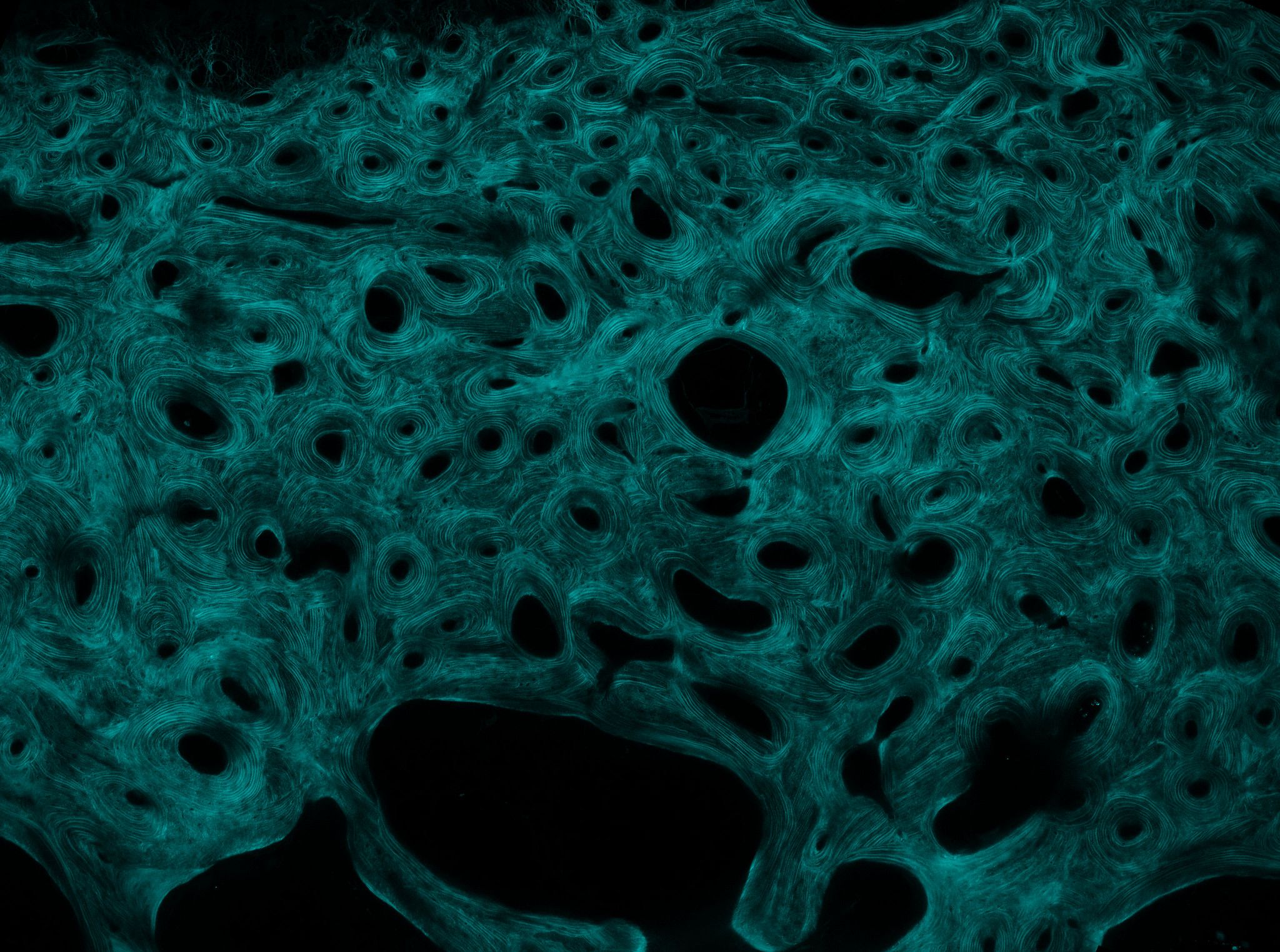
Photo: "To the bone" by Tatiana Kochetkova, University of Bern JURY DISTINCTION FOR CATEGORY 1 Object of study
Copyright CC-BY-NC-ND: Tatiana Kochetkova</i> — CC BY-NC-ND 4.0
Topic
Healthspan Extension
Anticipation Committee Chair:

Vera Gorbunova
Anticipation Committee:
Healthspan Extension
Recently, however, geroscience has begun to find ways to separate the accumulation of chronological years from issues such as frailty, weakened immune response and the chronic diseases of age, such as neurodegenerative and metabolic disorders and most cancers. Though they were once considered an inevitable consequence of the passing of time, these and other “hallmarks of ageing” may be amenable to modulation. It is even possible that they may be caused by a single underlying biological process that could provide a powerful intervention target. This raises the possibility of not only preventing diseases individually but reversing the entire process that underpins their development.
A growing set of useful, well-characterised biomarkers is making it increasingly possible to predict what the unfolding of biological processes over time will do to a specific individual’s health. Among the most widely used is a statistical tool known as an epigenetic clock, which can benchmark the comparative rate of deterioration of an individual or their organs against population data. This measure of biological (rather than chronological) age offers not only diagnosis but new therapeutic targets. Abnormally fast deterioration, identified via these biomarkers,1 may be corrected by epigenome editing to restore the system to a youthful state, for instance.
The ability to tinker with ageing via epigenetic modification is only one part of an ongoing reassessment of the wider human genome and how we can interact with it to extend healthy life. The non-coding elements that make up 98 per cent of the genome — until recently dismissed as “junk DNA” — have been revealed as an important but poorly understood source of age-related physiological deterioration. Now recast as the “dark genome”, this vast trove of elements may also prove a new source of biomarkers to diagnose and promote longevity and health.
Understanding how these elements change under the influence of lifestyle factors — exercise, diet, habits and so on — to accelerate or decelerate biological ageing is also a fast-moving area of research. A deeper understanding of the dark genome and epigenetic rejuvenation will reveal why certain lifestyle factors affect populations differently, Meanwhile, we are already entering an era of “lifestyle mimetics”: clinical trials are under way on small-molecule drugs that chemically imitate the consequences of lifestyle choices that contribute to resilience (fasting, for instance), or suppress processes that harm the system.
The most important focus in the near term is validation of biomarkers and targets. However, this will require better data, which can be obtained only through finding new ways to raise funds for research without compromising sensitive medical data. Investigations of the dark genome will create vast volumes of new data that could be usefully mined by AI for new insights, but this can only happen with innovative new trial designs built on a model that assures patient data integrity and trust.
KEY TAKEAWAYS
Many decades after scientific insights significantly extended human lifespan, research is making inroads into improving our healthspan — the amount of time for which we have a healthy, productive existence. Research has begun to identify important Biomarkers of ageing that help to identify potential problems and enable researchers to understand why some people age more robustly than others. The epigenome, a suite of mechanisms that regulate gene expression, are strongly associated with ageing. Rejuvenating the epigenome through various means is becoming a viable path towards increasing healthspan. A significant proportion of the genome that was previously ignored as “junk” is also now a target for healthspan extension. Certain parts of the dark genome seem to be involved in a number of ageing-associated processes, and finding ways to intervene here could prove impactful. Investigations of the role of Lifestyle modification in ageing are also proving fruitful. Patterns of sleep, exercise, nutrition and circadian rhythms are all associated with ageing, and improving the effectiveness of lifestyle interventions and understanding the biological transducers that mediate such effects could assist with the development of drugs that engender them.
Anticipatory Impact:
Biomarkers of ageing
Thanks to the interplay of their genes with environmental factors, some people age more robustly than others. Years lived is therefore not a reliable predictor of future health and longevity. Much more useful is “biological age”, derived from analysis of biological factors known as biomarkers. Research has identified a vast range of biomarkers that can help chart the accumulation of molecular and cellular damage that leads to age-dependent deterioration.2
Future Horizons:
5-yearhorizon
Beta testers and bigger data assist research
Datasets get bigger and more diverse. New sample analysis platforms make it possible to compare across cohorts for many different studies. More biomarkers are validated, and more companies use this information, making it available, initially, to private customers. Researchers begin to analyse molecular underpinnings of previously published clinical trials of successful ageing interventions, generating better models and driving deeper understanding.
10-yearhorizon
Biological age is normalised
Validated biomarkers enter the clinic more widely, approved either as companion diagnostics or independent predictors. Moderately invasive, inexpensive biomarkers of ageing, such as age-related molecular changes in blood, become part of standard clinical care and monitoring. Measurements from wearables collect non-invasive data that has been validated against epigenetic clocks, allowing more data to be collected. Large cohorts and established biobanks unlock genetic information that leads to better models of cognitive decline. Research pins down which diseases are primarily caused by biological ageing.
25-yearhorizon
Biomarkers directly improve healthspan
AI-led data analysis robustly correlates biomarkers of ageing with the underlying processes of ageing. Researchers gain a mechanistic understanding of how healthy and unhealthy ageing diverge. Age care based on personalised biomarkers becomes part of standard medical care, resulting in population-wide improvements in healthspan.
Epigenetic clocks — a type of biomarker that estimates biological age by analysing DNA methylation patterns — can estimate accelerated biological ageing in cells, tissues or organs.3 This is a means of identifying problematic biochemical trends before diseases manifest. More recent advances integrate statistics from multiple epigenetic biomarkers to predict mortality.4
Validating these biomarkers so that they are reliable and consistent is the key to making biological age a useful tool. Because biomarkers are statistical tools whose power lies in the amount of data that they can draw on, the more population data that is available against which to benchmark individuals, the more accurately the tools will be able to identify patterns and make predictions. One promising model, the Global Neurodegeneration Proteomics Consortium,5 combines the data of 40,000 individuals and solves data-privacy issues via federation of access and cloud analysis. Mining this and future large datasets, including the UK Biobank, will refine biomarkers of ageing.
Rejuvenating the epigenome
Future Horizons:
5-yearhorizon
Ex vivo rejuvenation begins
10-yearhorizon
Rejuvenation becomes safe
Livers, hearts and kidneys are transplanted after perfusion with epigenome-modifying agents that rejuvenate the organs. In vivo reprogramming of specific pathologies is tested on debilitating single-tissue pathologies for which risk is tolerable, for example COPD, chronic kidney disease and rheumatoid arthritis.
25-yearhorizon
In vivo rejuvenation becomes widespread
In vivo reprogramming targets normal human ageing. Research identifies a master cell type that systemically rejuvenates tissues, enabling new forms of intervention.
Epigenetic reprogramming to turn the body’s somatic cells into pluripotent cells has been investigated for decades. This is mediated by proteins called transcription factors and has been shown to have rejuvenating effects in preclinical trials.6 However, the mechanism (which uses four transcription factors — known collectively as OSKM — that are delivered by viral payload) carries an inherent risk of cancer.7 Safety will be key to human translation, meaning that potentially cancer-causing transcription factors will need to be replaced by small molecule drugs or other alternatives. Early work identifying safer transcription factors, including HNF4 alpha, which can rejuvenate the liver, is under way. The epigenome may also be targeted more indirectly, including by the SIRT6 activator fucoidan or forskolin.8
Instead of in vivo modification, ex vivo interventions could be undertaken to reprogram aged stem cells before reintroducing them to the body. This would allow more control of the process. This approach is a focus of current research for reprogramming transplant organs, such as kidneys and hearts, which are epigenetically rejuvenated before being introduced into a recipient.9
Dark genome
Future Horizons:
5-yearhorizon
Understanding transposable elements
10-yearhorizon
AI assists dark-genome research
AI identifies many of the functions of non-coding elements and their effects on healthspan. It becomes possible to biochemically separate adaptive from maladaptive changes induced by jumping genes. First drugs developed to target specific transposable elements. Dark genome yields anti-cancer drugs.
25-yearhorizon
Research identifies harmful elements of dark genome
Identification of specific, harmful elements that carry no hidden benefits to an organism leads to improved therapies with reduced side effects. We untangle the other ways activation of the dark genome affects multiple, often unrelated, traits that affect apparently unrelated tissues and cell types.
Of particular interest for geroscience are transposons: repeating, self-replicating DNA sequences that can alter their location in the genome.10 Also known as “jumping genes”, they make up about half of the genome. Their activity — which increases with an organism’s age — can alter chromosome structure, destabilise the genome, trigger immune response and inflammation,11 and create other conditions that have been tied to poor health outcomes in old age.12 Turning them off seems to have broad health benefits, as revealed in HIV antiretroviral therapies that turn off the “LINE” transposons (among the most prevalent repeating sequences, and major contributors to human genetic variation).13 This reverses the age-accelerating effects of HIV with no health trade-offs.14 Doing so holds promise for other diseases associated with LINE-1, such as rheumatoid arthritis15 and lupus.16
However, manipulating the dark genome will be more complex than simply finding a general-purpose “off” switch. Preclinical trials are beginning to show that, under certain conditions, some parts of the dark genome might have beneficial effects. Also, a better understanding of how non-coding elements interact with coding elements may yield a rich new source of new biomarkers and potentially even therapies. Our understanding of the dark genome has been hampered by technological limitations of DNA and RNA sequencing requiring fragmentation followed by aligning to reference sequences to forecast the underlying sequence. New technologies, including nanopore, which allows direct reading of long sequences of DNA and RNA, are advancing our understanding of the dark genome,17 but more research into these intricate relationships and how to balance the trade-offs is needed. Excitingly, the dark genome appears to be responsive to rejuvenation, so a better understanding of rejuvenation may also shed light on it.
Lifestyle modification
Strong epidemiological evidence has confirmed that environment and behaviour are important components of longevity. Sleep, nutrition, exercise and other healthspan-affecting lifestyle choices can cause healthy and unhealthy ageing to diverge.
Future Horizons:
5-yearhorizon
Role of circadian clocks becomes clearer
Circadian clocks are recognised as one of the hallmarks of ageing beyond metabolism and immune functions, and become more widely appreciated in cancer and neurodegeneration. Measurement of the resilience response in humans becomes possible. Research reveals how clocks mechanistically affect healthy ageing.
10-yearhorizon
Health-extending plans are personalised
Personalised resilience information helps develop a lifestyle prescription map based on how an individual’s body responds to environmental stressors. Researchers develop small-molecule drug candidates to enhance clock function, with benefits in longevity but also short-term benefits for health.
25-yearhorizon
Interventions target genetic vulnerabilities
What’s more, the interplay between two or more behavioural or environmental interventions can amplify the efficacy of each, as suggested by mouse trials in which calorie restriction’s moderate benefits for lifespan and healthspan were multiplied several times over by combination with circadian timing patterns of eating.19 However, how single or multiple behaviours are transduced into cellular changes is an area of open research.
While that research continues, efforts are under way to find ways to boost circadian rhythms associated with not just sleep/wake cycles but also body temperature, blood pressure and so on. Their fluctuations are controlled by time-keeping proteins encoded in master clock genes, and drugs that enhance the master clocks could make us healthier. This should have beneficial effects, since these clocks regulate the genes in all 12 hallmarks of ageing pathways,20 and seem to regulate sleep, metabolism and neurodegeneration. In mice, boosting clock gene expression yielded a 15 per cent increase in lifespan.
Finding and measuring biomarkers that link lifestyle choices with clocks will open the possibility of lifestyle mimetics, small-molecule drugs that could manipulate the same pathways and slow ageing before disease manifests.
We may already be administering such drugs. The immunosuppressant rapamycin, whose signalling is increasingly understood to influence longevity and ageing, and the metabolic drug metformin have been in clinical trials for their suspected ability to mimic lifestyle benefits. More recent investigations have studied drugs that target sirtuins. Stimulation of sirtuin 6 (SIRT6) has extended lifespan in mice, rejuvenated the epigenome and silenced transposable elements. Activating SIRT6 or similar epigenetic regulators with small molecules or natural compounds will provide safe ways to improve healthspan.21 Fucoidan, a natural SIRT6-activating compound, is under test in a clinical trial for its ability to slow the biomarkers of ageing in humans.
Citations
Topic brief
- S. Kabacik et al.. The relationship between epigenetic age and the hallmarks of aging in human cells https://doi.org/10.1038/s43587-022-00220-0.
2.3.1 Biomarkers of ageing
- B. Lehallier et al.. Undulating changes in human plasma proteome profiles across the lifespan https://doi.org/10.1038/s41591-019-0673-2.
- S. Horvath. DNA methylation age of human tissues and cell types https://doi.org/10.1186/gb-2013-14-10-r115.
- T. Huan et al.. Integrative analysis of clinical and epigenetic biomarkers of mortality https://doi.org/10.1111/acel.13608.
- M. Bringmann et al.. The Global Neurodegeneration Proteomics Consortium — biomarker and drug target discovery across >40,000 biosamples for AD, PD, ALS, FTD, and aging https://doi.org/10.1002/alz.095579.
2.3.2 Rejuvenating the epigenome
- S. Horvath et al.. Cognitive rejuvenation in old rats by hippocampal OSKM gene therapy https://doi.org/10.1007/s11357-024-01269-y.
- A. D. Yücel and V. N. Gladyshev. The long and winding road of reprogramming-induced rejuvenation https://doi.org/10.1038/s41467-024-46020-5.
- S. A. Biashad et al.. SIRT6 activator fucoidan extends healthspan and lifespan in aged wild-type mice https://doi.org/10.1101/2025.03.24.645072.
- A. Lau et al.. Mixing old and young: enhancing rejuvenation and accelerating aging https://doi.org/10.1172/JCI123946.
2.3.3 Dark genome
- G. Bourque et al.. Ten things you should know about transposable elements https://doi.org/10.1186/s13059-018-1577-z.
- A. Saleh et al.. Transposable elements, inflammation, and neurological disease https://doi.org/10.3389/fneur.2019.00894.
- K. H. Burns. Our conflict with transposable elements and its implications for human disease https://doi.org/10.1146/annurev-pathmechdis-012419-032633.
- D. Ardeljan et al.. The human long interspersed element-1 retrotransposon: an emerging biomarker of neoplasia https://doi.org/10.1373/clinchem.2016.257444.
- A. Esteban-Cantos et al.. Epigenetic age acceleration changes 2 years after antiretroviral therapy initiation in adults with HIV: a substudy of the NEAT001/ANRS143 randomised trial https://doi.org/10.1016/S2352-3018(21)00006-0.
- M. Ali et al.. Overexpression of transcripts containing LINE-1 in the synovia of patients with rheumatoid arthritis https://doi.org/10.1136/ard.62.7.663.
- M. K. Crow. Long interspersed nuclear elements (LINE-1): potential triggers of systemic autoimmune disease https://doi.org/10.3109/08916930903374865.
- M. I. Nielsen et al.. Targeted detection of endogenous LINE-1 proteins and ORF2p interactions https://doi.org/10.1186/s13100-024-00339-4.
- J. D. Boeke et al.. Proceedings of the inaugural Dark Genome Symposium: November 2022 https://doi.org/10.1186/s13100-023-00306-5.
2.3.4 Lifestyle modification
- V. Acosta-Rodríguez et al.. Circadian alignment of early onset caloric restriction promotes longevity in male C57BL/6J mice https://doi.org/10.1126/science.abk0297.
- R. Zhang et al.. A circadian gene expression atlas in mammals: implications for biology and medicine https://doi.org/10.1073/pnas.1408886111.
- S. A. Biashad et al.. SIRT6 activator fucoidan extends healthspan and lifespan in aged wild-type mice https://doi.org/10.1101/2025.03.24.645072.