
Topic
Future of Consciousness
Anticipation Committee Chair:

Itzak Fried
Anticipation Committee:
Future of Consciousness
As yet, science can offer no standard, widely agreed definition of consciousness, partly because researchers use the same word to describe a variety of phenomena such as wakefulness, awareness, attention, responsiveness to stimuli and inner life. It is thus a field of broad interdisciplinary study.
There is also significant linguistic and cultural variance in what people understand by the term “consciousness”.1 This is also true of “disorders” of consciousness: the experience of what might be termed delusions or hallucinations by Western medicine can be seen as normal and even valuable in many cultures. Responses to the idea of non-human consciousness are also culturally differentiated.
Currently, there is no agreed theory of how consciousness arises.2 However, progress is being made here, particularly by the Cogitate consortium’s innovative and rigorous experimental approach to testing the predictions of two competing leading theories within a framework of “adversarial collaboration”.3 The lack of deep theoretical understanding has not prevented the adoption of technologies and conceptual advances that help make decisions in a clinical setting.
We have devised methods to quantify the degree of presence or absence of consciousness (as inner life, awareness or mental response to stimuli), allowing us to define whether a patient is in a vegetative state, for instance, and to evaluate whether their consciousness can be “augmented”, that is, shifted to a more elevated state of consciousness, whether by intervention or through the body’s natural healing processes.4
As with many medical applications, technologies that spring from a clinical setting will eventually benefit the broader population. This is because the same technologies that diagnose or modulate consciousness when there is a deficit or disorder can be pressed into service to enhance or augment healthy, functioning consciousness. They will also be helpful in more philosophical areas, improving our understanding of free will, the self and the ethics of cases at the edges of sentience.
Meanwhile, work is under way to determine the developmental emergence of consciousness in humans5 and the extent to which machines and animals can have or develop consciousness.6,7 Researchers also aim to understand whether organoids and other synthetic biological organisms are capable of developing a kind of consciousness.8 This is likely to spark debate on the ethics of the field itself and of the assignment of moral status and rights.
KEY TAKEAWAYS
Although central to the experience of being human, consciousness has proved difficult to investigate scientifically, with researchers struggling to reach consensus on many aspects of the field. While it is clear that Human consciousness is a multifaceted phenomenon, its relation to brain states — including those induced by injury, degradation and trauma — is dizzyingly complex. Understanding where, when (and whether) Non-human consciousness arises, whether in other animals or in machines, together with the developmental origins of consciousness in humans, is a useful path towards further understanding of the brain and of the wider phenomenon of consciousness. Drugs, electrical stimulation and in some cases cell replacement, genetic and other biotech interventions all show promise for Modulation of consciousness for therapeutic, recreational and knowledge-gathering purposes. Eventually, we may be able to extend the phenomenon to create Beyond-human consciousness that augments our evolved abilities in ways that might facilitate an existence lived alongside intelligent machines.
Anticipatory Impact:
Three fundamental questions guide GESDA’s mission and drive its work: Who are we, as humans? How can we all live together? How can we ensure the well-being of humankind and the sustainable future of our planet? We asked researchers from the field to anticipate what impact future breakthroughs could have on each of these dimensions. This wheel summarises their opinions when considering each of these questions, with a higher score indicating high anticipated impact, and vice versa.
- Anticipated impact on who we are as humans
- Anticipated impact on how we will all live together
- Anticipated impact on the well-being of humankind and sustainable future of our planet

Human consciousness
Future Horizons:
5-yearhorizon
Diagnosis of consciousness improves
Brain-state diagnostics improve, and machine learning overcomes individual patient variability to assist in prognosis and guide rehabilitation. Specific tests reliably detect early onset of diseases that disrupt consciousness. Better computational models improve our understanding of the systems biology that contributes to conscious states.
10-yearhorizon
Guidelines for consciousness assessment agreed
An agreed set of international guidelines (effectively a standard scale) standardises assessment of human consciousness. Improved imaging, combined with AI pattern recognition, leads to more reliable prediction of which patients are aware, which will respond to stimulation and which will require implants to communicate from their vegetative state. Neuroscientific tools give a rudimentary ability to decode the content of dreams in sleeping humans, as well as other contents of conscious experience.
25-yearhorizon
Consciousness evaluation evolves
Understanding the difference between these various types of human consciousness will be a vital part of the effort to treat injury and disease, and to understand various aspects of human-rights issues associated with consciousness. Research efforts are aiming to do this, with some success in the application of diagnostic tools that can differentiate between a vegetative state and a minimally conscious state, for instance.10 Functional MRI and EEG can be used to demonstrate performance of cognitive tasks in some comatose patients who do not follow verbal commands.11 Intervention in coma patients, aiming at recovery, is becoming a realistic, if long-term, prospect.12,13 There is hope that better understanding will help detect and assess early memory loss in ageing and in Alzheimer’s disease, and guide treatment and care.14At the other end of life the need to assess consciousness “in the cradle”, in the prenatal and infant stages, is becoming an issue with medical, educational, legal and ethical implications.15
Neurosurgical research demonstrates that specific neuronal activity underlies the emergence of concepts, memories and intentions in human consciousness. Recent work involving direct recordings from the human brain has highlighted the role of specific regions of the thalamus in mediating conscious perception, showing flow of involved information from these thalamic nuclei to the prefrontal cortex.16 Further exploration here, with emerging brain-recording and stimulation tools, partnered with AI-based analysis, could help decode conscious and preconscious states.17,18 Interaction with sleeping humans can also help to explore the space between the conscious and unconscious brain.19
Such work could also help with fundamental science, such as developing theoretical understanding of consciousness by identifying areas of interest for probing the neural correlates of consciousness, and contribute to the quantification and classification of consciousness in humans.
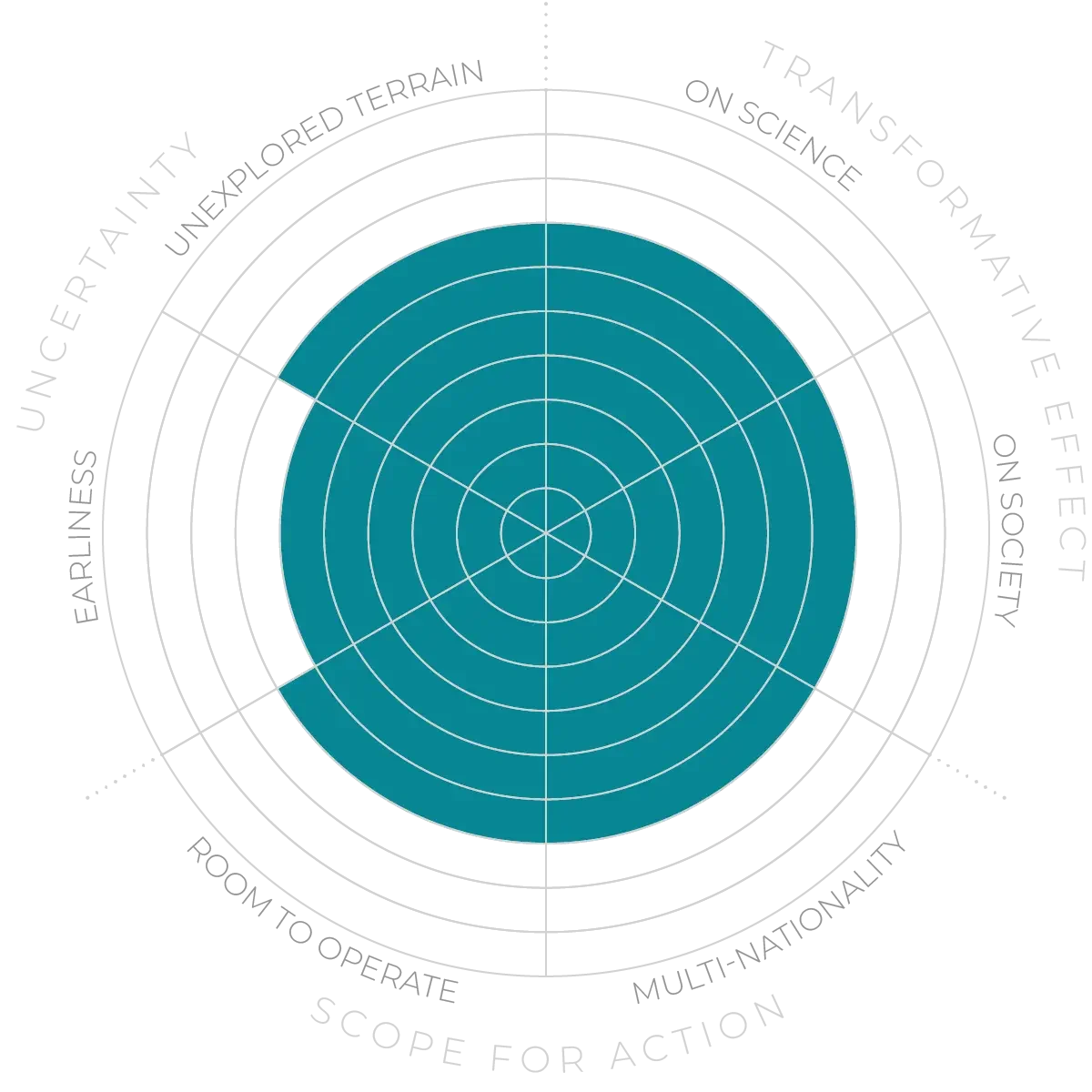
Human consciousness - Anticipation Scores
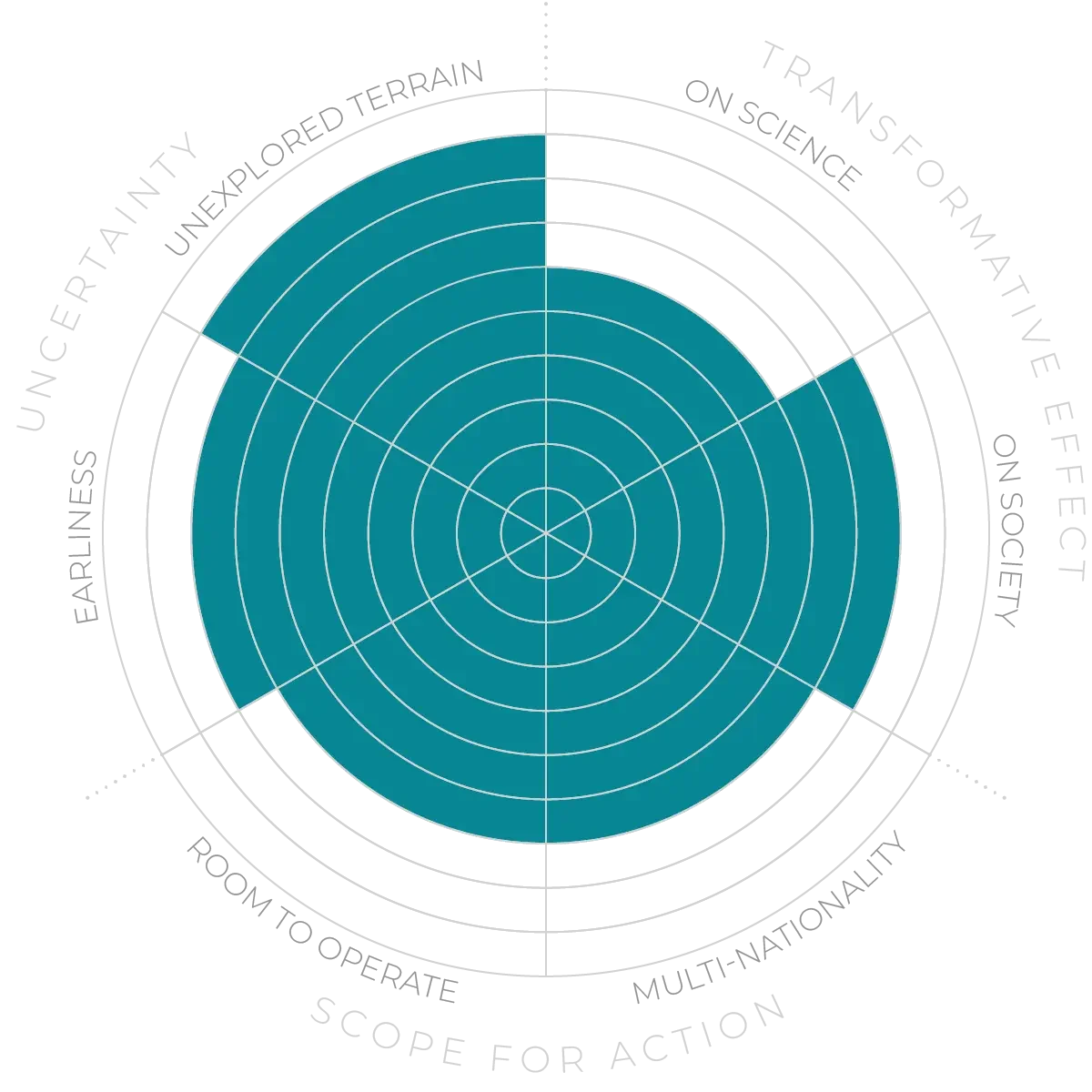
The Anticipation Potential of a research field is determined by the capacity for impactful action in the present, considering possible future transformative breakthroughs in a field over a 25-year outlook. A field with a high Anticipation Potential, therefore, combines the potential range of future transformative possibilities engendered by a research area with a wide field of opportunities for action in the present. We asked researchers in the field to anticipate:
- The uncertainty related to future science breakthroughs in the field
- The transformative effect anticipated breakthroughs may have on research and society
- The scope for action in the present in relation to anticipated breakthroughs.
This chart represents a summary of their responses to each of these elements, which when combined, provide the Anticipation Potential for the topic. See methodology for more information.
Non-human consciousness
Future Horizons:
5-yearhorizon
Debates over non-human consciousness take centre stage
10-yearhorizon
Non-human consciousness sheds light on human consciousness
Animal consciousness is measured and assessed by a wide-ranging set of tests developed for the assessment of human consciousness (and adapted for non-verbal responders based on assessment techniques developed for human infants). Machines that display many characteristics associated with human consciousness are probed as tools for understanding how consciousness might arise in humans — in particular, for ascertaining whether embodiment plays a critical role.
25-yearhorizon
Hybrid consciousness improves learning
Interesting advances are being made in the study of machine consciousness.20 Researchers are making progress in developing methods to assess AI systems for consciousness21 and investigating machine implementations of neuroscientific theories of consciousness.22 Efforts to understand whether machine consciousness is possible, and what might constitute it, provide an important anchor for our understanding of consciousness itself.23
In animals, the issue of consciousness is more immediate, pertaining to issues of moral status, and with ramifications for agriculture and food economics. A cohort of researchers have suggested there is “strong scientific support for attributions of conscious experience to other mammals and to birds”, and that “empirical evidence indicates at least a realistic possibility of conscious experience in all vertebrates (including reptiles, amphibians, and fishes) and many invertebrates (including, at minimum, cephalopod mollusks, decapod crustaceans, and insects)”.24 This is a controversial claim, but one that highlights the lack of agreement about the nature and extent of consciousness in the natural world. Further exploration of the issue can only improve our understanding of the phenomenon, although funding for this work is limited.
There is also a growing awareness of the possibility that some rudimentary form of consciousness could arise in brain organoids, which are proto-organs grown in vitro from human brain tissue.25 However, despite the potential ubiquity of non-human conscious experience, caution is needed due to the possibility that very complex cognitive abilities can unfold without conscious experience.26
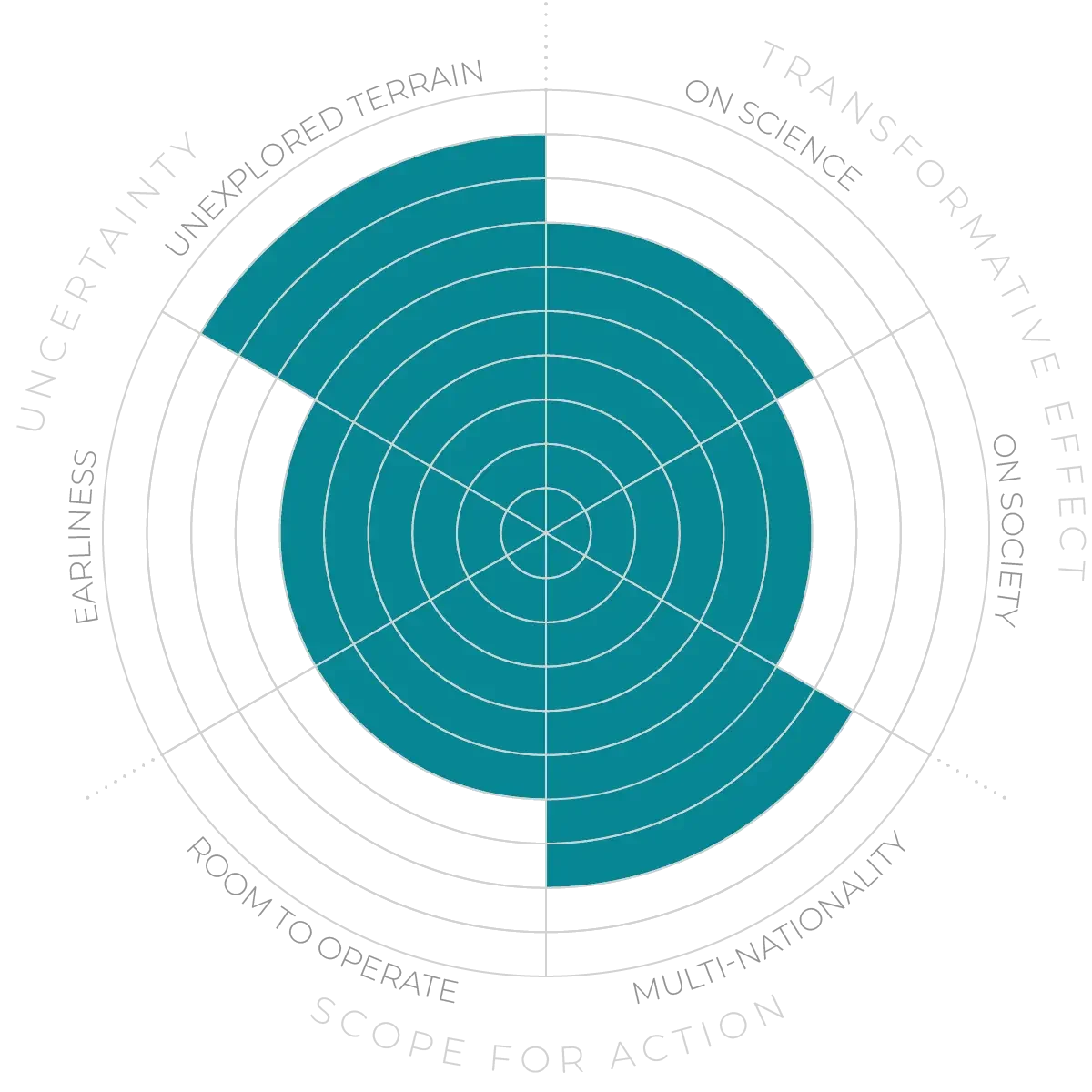
Non-human consciousness - Anticipation Scores
The Anticipation Potential of a research field is determined by the capacity for impactful action in the present, considering possible future transformative breakthroughs in a field over a 25-year outlook. A field with a high Anticipation Potential, therefore, combines the potential range of future transformative possibilities engendered by a research area with a wide field of opportunities for action in the present. We asked researchers in the field to anticipate:
- The uncertainty related to future science breakthroughs in the field
- The transformative effect anticipated breakthroughs may have on research and society
- The scope for action in the present in relation to anticipated breakthroughs.
This chart represents a summary of their responses to each of these elements, which when combined, provide the Anticipation Potential for the topic. See methodology for more information.
Modulation of human consciousness
We can modulate human consciousness by several methods. One is chemical: there has been some significant progress in the use of psychedelic and psychoactive drugs, for instance, to augment and alter consciousness. New imaging techniques demonstrate the neurological details of these alterations: psilocybin, for instance, produces a state of increased chaotic brain activity and induces changes in frontal brain structures that may be associated with the phenomenology of psychedelic experiences.27 Increasingly, experience with chemical modulations of consciousness are proving useful in medical contexts. Psilocybin and MDMA are being used to treat post-traumatic stress disorder (PTSD) and depression, for example.28,29
Future Horizons:
5-yearhorizon
Brain modulation experiments widen their scope
Drug-control frameworks are loosened to allow PTSD and other disorders of the brain to be treated in wider clinical settings using psychedelics. Electrical stimulation of the brains of coma patients sees some success in re-establishing higher levels of consciousness. Clinical trials in selected neurological and psychiatric disorders accelerate technologies capable of extracting information from the brain, inserting information or closing the information loop, thus enabling direct modulation of conscious states.
10-yearhorizon
AI decodes the brain
25-yearhorizon
Brain injuries are treated with stem-cell therapy
Electrical modulation of consciousness is also seeing success in invasive and non-invasive forms. Brain-computer interfaces are developing at pace.30 More precisely targeted non-invasive technology like transcranial direct-current stimulation (tDCS) has successfully brought minimally conscious patients back towards higher consciousness.31 Deep brain stimulation is showing therapeutic promise for treating disorders of consciousness associated with impaired arousal or awareness.32 “Closed-loop” neuromodulation is able to act on, and sense, brain state based on feedback.33,34 There is also growing scope for editing of memory and/or urges and wishes through electrical implants, as the technological tools required are already available.35
Stem cells provide another approach to neuromodulation. Rat stem cells, for instance, have restored sensory abilities within a mouse brain that had its own olfactory neurons rendered inert.36 It seems that stem-cell injection can modify the cellular composition of neural circuits, potentially altering conscious experience.
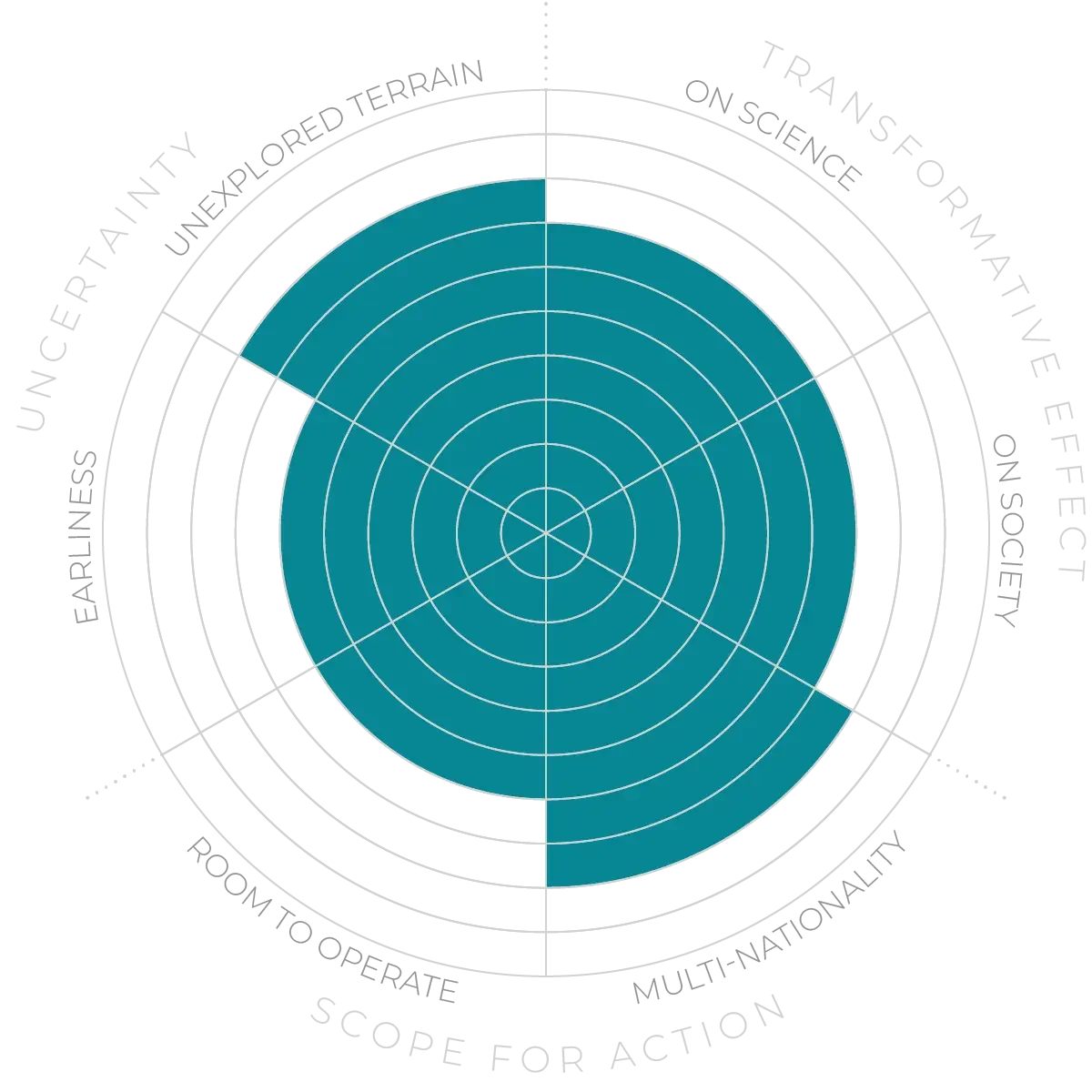
Modulation of human consciousness - Anticipation Scores
The Anticipation Potential of a research field is determined by the capacity for impactful action in the present, considering possible future transformative breakthroughs in a field over a 25-year outlook. A field with a high Anticipation Potential, therefore, combines the potential range of future transformative possibilities engendered by a research area with a wide field of opportunities for action in the present. We asked researchers in the field to anticipate:
- The uncertainty related to future science breakthroughs in the field
- The transformative effect anticipated breakthroughs may have on research and society
- The scope for action in the present in relation to anticipated breakthroughs.
This chart represents a summary of their responses to each of these elements, which when combined, provide the Anticipation Potential for the topic. See methodology for more information.
Beyond-human consciousness
Future Horizons:
5-yearhorizon
Humans begin to adopt augmentations
10-yearhorizon
Engineered body enhancements become available
25-yearhorizon
The era of consciousness-engineering and meta-humans arrives
Newly developed brain-to-brain interfaces — currently possible invasively in animals40 and non-invasively in humans41 — may allow direct communication between two brains without involving the peripheral nervous system, instantiating intelligence and perhaps consciousness that has a distributed or collective aspect.42 In addition, two-person fMRI scanning and hyperscanning43 is opening up new possibilities of shared experience leading to some form of shared consciousness.44
Experiments in robotics are indicating that robots might learn the ability to think in abstract terms, planning and estimating the outcomes of prospective actions without the need to physically execute them. This may have application in averting workplace accidents and recovering from damage.45 Via brain-computer interfaces (BCIs), robot self-simulation may also open up pathways for humans to augment their experience. There is scope for human-machine hybrid “teams” to improve industrial decision-making and other tasks.46
Beyond-human consciousness - Anticipation Scores
The Anticipation Potential of a research field is determined by the capacity for impactful action in the present, considering possible future transformative breakthroughs in a field over a 25-year outlook. A field with a high Anticipation Potential, therefore, combines the potential range of future transformative possibilities engendered by a research area with a wide field of opportunities for action in the present. We asked researchers in the field to anticipate:
- The uncertainty related to future science breakthroughs in the field
- The transformative effect anticipated breakthroughs may have on research and society
- The scope for action in the present in relation to anticipated breakthroughs.
This chart represents a summary of their responses to each of these elements, which when combined, provide the Anticipation Potential for the topic. See methodology for more information.
Citations
Topic brief
- R. Trnka and R. Lorencova. Indigenous Concepts of Consciousness, Soul and Spirit: A Cross-Cultural Perspective https://doi.org/10.53765/20512201.29.1.113
- A.K. Seth and T.Bayne. Theories of consciousness https://doi.org/10.1038/s41583-022-00587-4
- Cogitate Consortium. Adversarial testing of global neuronal workspace and integrated information theories of consciousness https://doi.org/10.1038/s41586-025-08888-1
- B.L. Edlow et al.. Recovery from disorders of consciousness: mechanisms https://doi.org/10.1038/s41582-020-00428-x
- T. Bayne et al.. Consciousness in the cradle: on the emergence of infant experience https://doi.org/10.1016/j.tics.2023.08.018
- S. Schneider. Artificial You: AI and the Future of Your Mind https://doi.org/10.2307/j.ctvfjd00r
- D.J. Chalmers. Could a Large Language Model be Conscious? https://doi.org/10.48550/arXiv.2303.07103
- A. Lavazza and Marcello Massimini. Cerebral Organoids: Ethical Issues and Consciousness Assessment https://doi.org/10.1136/medethics-2017-104555
2.4.1 Human consciousness
- M. Vatrano et al.. Assessing Consciousness through Neurofeedback and Neuromodulation: Possibilities and Challenges https://doi.org/10.3390/life13081675
- Y.G. Bodien et al.. Cognitive Motor Dissociation in Disorders of Consciousness https://doi.org/10.1056/NEJMoa2400645
- N.D. Schiff. Toward an interventional science of recovery after coma https://doi.org/10.1016/j.neuron.2024.04.027
- W. Fan et al.. Effect of Transcranial Direct Current Stimulation on Patients With Disorders of Consciousness: A Systematic Review and Meta-analysis https://doi.org/10.1097/PHM.0000000000002290
- A. Castegnaro et al.. Assessing mild cognitive impairment using object-location memory in immersive virtual environments https://doi.org/10.1002/hipo.23458
- T. Bayne et al.. Consciousness in the cradle: on the emergence of infant experience https://doi.org/10.1016/j.tics.2023.08.018
- Z. Fang et al. Human high-order thalamic nuclei gate conscious perception through the thalamofrontal loop https://doi.org/10.1126/science.adr3675
- M.M. Andelman-Gur and I. Fried. Consciousness: a neurosurgical perspective https://doi.org/10.1007/s00701-023-05738-9
- I. Fried. Neurons as will and representation https://doi.org/10.1038/s41583-021-00543-8
- K.R. Konkoly et al.. Real-time dialogue between experimenters and dreamers during REM sleep https://doi.org/10.1016/j.cub.2021.01.026
2.4.2 Non-human consciousness
- J. LeDoux et al.. Consciousness beyond the human case https://doi.org/10.1016/j.cub.2023.06.067
- P. Butlin et al.. Consciousness in Artificial Intelligence: Insights from the Science of Consciousness https://doi.org/10.48550/arXiv.2308.08708
- R.F.J. Dossa et al.. Design and evaluation of a global workspace agent embodied in a realistic multimodal environment https://doi.org/10.3389/fncom.2024.1352685
- J. Aru et al.. The feasibility of artificial consciousness through the lens of neuroscience https://doi.org/10.1016/j.tins.2023.09.009
- K. Andrews et al.. The New York Declaration on Animal Consciousness https://sites.google.com/nyu.edu/nydeclaration/declaration
- J.L. Boyd and N. Lipshitz. Dimensions of Consciousness and the Moral Status of Brain Organoids https://doi.org/10.1007/s12152-023-09538-x
- L.R. Squire et al.. One-trial perceptual learning in the absence of conscious remembering and independent of the medial temporal lobe https://doi.org/10.1073/pnas.2104072118
2.4.3 Modulation of human consciousness
- A. Ort et al.. TMS-EEG and resting-state EEG applied to altered states of consciousness: oscillations, complexity, and phenomenology https://doi.org/10.1016/j.isci.2023.106589
- L.N. Fonseka and B.K. Woo. Therapeutic role of psilocybin and 3, 4-methylenedioxymethamphetamine in trauma: A literature review https://doi.org/10.5498/wjp.v13.i5.182
- R. Haridy. Australia to prescribe MDMA and psilocybin for PTSD and depression in world first https://www.nature.com/articles/d41586-023-02093-8
- B. Maiseli et al.. Brain–computer interface: trends, challenges, and threats https://doi.org/10.1186/s40708-023-00199-3
- A. Thibaut et al.. TDCS in Patients with Disorders of Consciousness: Sham-Controlled Randomized Double-Blind Study https://doi.org/10.1212/WNL.0000000000000260
- A.E.L. Warren et al. A human brain network linked to restoration of consciousness after deep brain stimulation https://doi.org/10.1101/2024.10.17.24314458
- F. Frohlich and L. Townsend. Closed-Loop Transcranial Alternating Current Stimulation: Towards Personalized Non-invasive Brain Stimulation for the Treatment of Psychiatric Illnesses https://doi.org/10.1007/s40473-021-00227-8
- K. Scangos et al.. Closed-loop neuromodulation in an individual with treatment-resistant depression https://doi.org/10.1038/s41591-021-01480-w
- I. Fried. Neurons as will and representation https://doi.org/10.1038/s41583-021-00543-8
- B.T. Throesch et al.. Functional sensory circuits built from neurons of two species https://doi.org/10.1016/j.cell.2024.03.042
2.4.4 Beyond-human consciousness
- D. Nelidova et al. Restoring light sensitivity using tunable near-infrared sensors https://doi.org/10.1126/science.aaz5887
- J. Hameed et al. A novel human-machine interface using subdermal magnetic implants https://doi: 10.1109/UKRICIS.2010.5898141
- S.D. Novich and David Eagleman. Using space and time to encode vibrotactile information: toward an estimate of the skin’s achievable throughput https://doi.org/10.1007/s00221-015-4346-1
- C.S. Nam et al.. Direct Communication Between Brains: A Systematic PRISMA Review of Brain-To-Brain Interface’ doi: 10.3389/fnbot.2021.656943
- L. Jiang et al.. A Multi-Person Brain-to-Brain Interface for Direct Collaboration Between Brains https://doi.org/10.1038/s41598-019-41895-7
- E. Hildt. Multi-Person Brain-To-Brain Interfaces: Ethical Issues https://doi.org/10.3389/fnins.2019.01177
- G. Dumas et al.. From social behaviour to brain synchronization: review and perspectives in hyperscanning https://doi.org/10.1016/j.irbm.2011.01.002
- V. Renvall et al.. Imaging Real-Time Tactile Interaction With Two-Person Dual-Coil fMRI https://doi.org.10.3389/fpsyt.2020.00279
- Y. Hu et al.. Teaching Robots to Build Simulations of Themselves https://doi.org/10.48550/arXiv.2311.12151
- F. Bocklisch et al.. Hybrid decision-making in atmospheric plasma spraying enables human–machine teaming https://doi.org/10.1007/s00170-024-13595-8