
Topic
Engineering Human Biology
Anticipation Committee Chair:

Robin Lovell-Badge
Anticipation Committee:
Engineering Human Biology
One is the rapid improvement in our understanding of how tissues, organs and embryos develop.1 The other is the emergence of new technologies such as genome synthesis and editing, tissue engineering and the lab-based growth of replicas of organs and embryos. The third is the development of comprehensive in silico models of developmental processes. This pairing of fundamental knowledge and emergent technologies has rendered engineering (and re-engineering) the components of our bodies increasingly practical.
These developments are likely to have considerable benefits for human health and well-being. However, it is crucial to separate true potential from utopian hype. A great deal of venture-capital money has been thrown at the prospect of reversing ageing and radically extending human lifespans, for instance, but there are more immediate and wide-reaching benefits from tackling major killers such as cardiovascular disease and cancer, as well as chronic conditions like bone degeneration and immune suppression. Lab-grown “organoids” may ultimately offer an alternative to organ donation. Furthermore, an improved understanding of embryonic development may lead to treatments for a host of congenital conditions.
Despite this potential, the complexity of the systems in the human body remains a challenge. “Digital twins” of the human body2 may help here,3 as will the development of new technologies and therapeutics.4 Likewise, specialised AIs that can sift through the vast datasets on human biology are likely to offer great insights. Studying how extreme environments like space affect our biology will also aid our understanding.5
There are also profound issues of ethics and social acceptance. For instance, some technologies require working with human embryos. Many people are also wary of anything they perceive as unnatural. Sustained, long-term public engagement is required: the successful use of pronuclear transfer to enable UK children to be born without mitochondrial disease, begun 25 years ago through early conversations with policy-makers, media and regulators, offers a good model.6
KEY TAKEAWAYS
It is increasingly possible to exert control over how cells behave and even how they develop. Scaled up, these technologies offer the prospect of engineering entire tissues. Cellular (re-)programming and tissue development are leading to new therapeutics. In parallel, researchers have developed methods to study the rules governing development. Organoids are simplified replicas of organs that can be grown in a lab: they enable the study of processes that were previously inaccessible. The large amount of data emerging from these systems is driving the development of in-silico “digital twins” of organ functions and early human development, which should further accelerate our understanding of fundamental developmental processes and interventions that lead to better health. Similarly, model embryos allow researchers to study how human embryos develop. Both technologies could ultimately lead to treatments for congenital conditions. In the longer term, researchers may be able to create synthetic human genomes. This represents a huge technical challenge, but offers the possibility of understanding and perhaps eliminating a host of inherited conditions.
Anticipatory Impact:
Cellular (re-)programming and tissue development
Future Horizons:
5-yearhorizon
Practical engineering solutions emerge
Researchers identify sets of rules that determine cell-fate decisions. Improved substrates for tissue culture lead to more realistic cultured tissues. AI-based models of epigenetic gene regulation enable rational engineering of the epigenome.
10-yearhorizon
Reprogramming comes of age
25-yearhorizon
Complex circuits and organs are created
Researchers learn how to engineer cells into highly complex circuits and organs. The human genome becomes editable in a systematic, large-scale fashion, enabling the creation of human cells that perform wholly novel functions.
On a larger scale, these and other techniques can be used to grow tissues and organs to order. To achieve this, it is necessary to first understand how those tissues develop naturally, and research is under way on a host of body parts, including the immune system, heart,15 muscle,16 breasts17 and skin.18 Replicating the three-dimensional structures of organs and how they change over time will be difficult, but bioprinting will enable this,19 and AI is also likely to help optimise tissue engineering.20
Tissue engineers have worked for decades to develop “scaffolds” on which tissues can be grown.21 Originally made from synthetics, these are increasingly made from biological materials such as human collagen,22 biological films23 and decellularised matrices.24 It is vital to understand how the developing tissues interact with these scaffolds.25
A key challenge is to ensure that implanted cells and tissues do not cause harm. It is becoming possible to “cloak” the cells by adding and then overexpressing a set of immune genes, enabling the introduced cells to survive long-term.26 Another promising precaution is a “safety switch”27 that enables the cells to be quickly killed if they prove harmful28 — or, preferably, multiple safety switches for redundancy.29
Organoids
Future Horizons:
5-yearhorizon
Organoids move beyond the basic
Organoids are created with blood supplies and lymphatic systems. Microfluidic devices enable multiple organoids to be connected and their interactions studied.
10-yearhorizon
Organ damage is mitigated with organoid grafts
Organoids are grafted into existing organs to repair damage. More in-vivo data enables organoids to be validated against real organs.
25-yearhorizon
Organoids provide new transplant opportunities
AI-based systems optimise the maturation of organoids into organs. Organoid-based organ transplants are performed in humans.
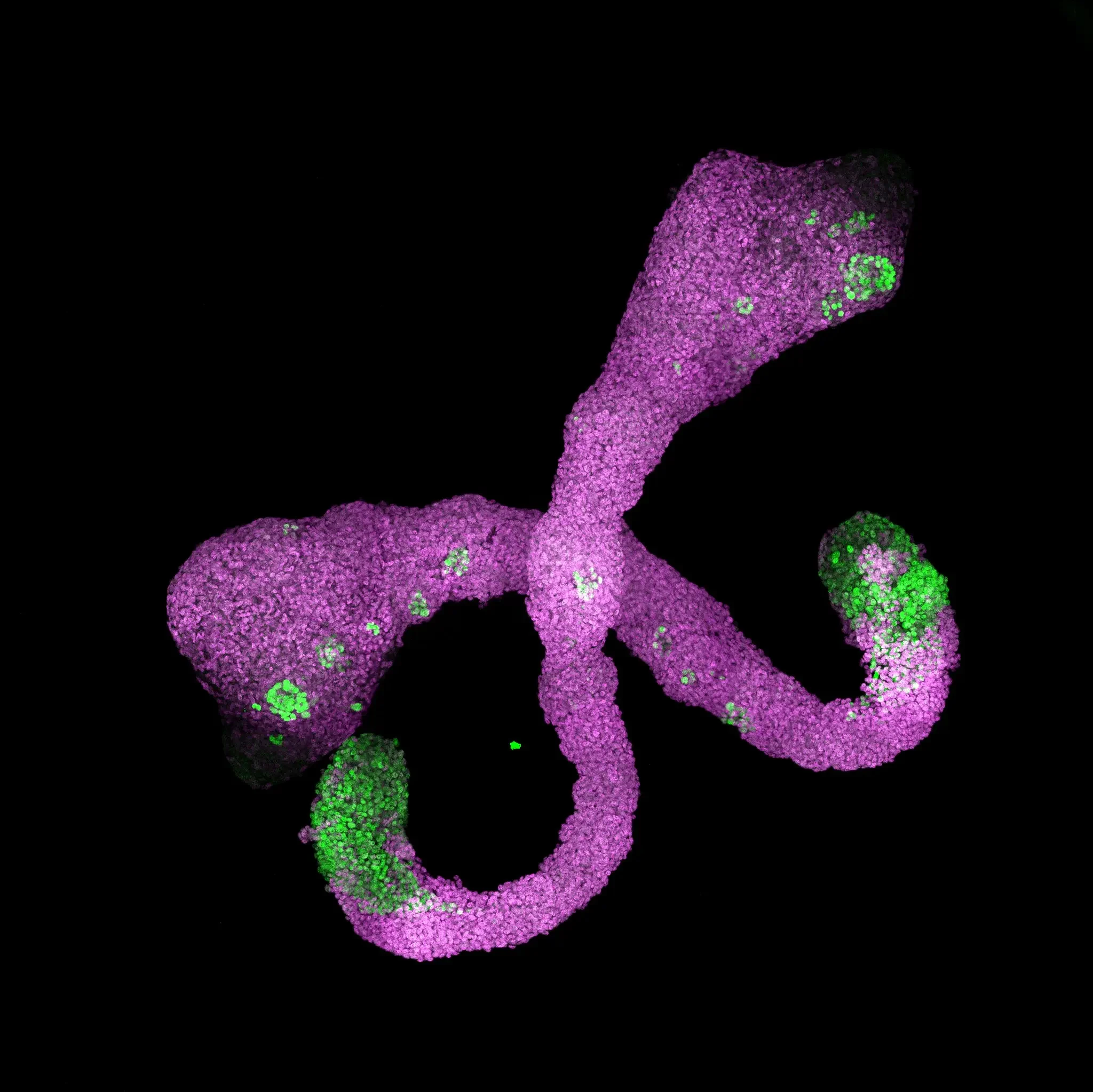
Organoids have been developed for many body systems, including the intestines,32 kidneys,33 bone marrow,34 cartilage35 and neurons.36 It has also proved possible to create “gastruloids” that mimic some of the earliest stages of embryonic development.37 Furthermore, organoids can be used to simulate the growth of tumours, shedding light on the internal mechanisms of cancers.38
To create more realistic organoids, it will be necessary to add in more cells and complex tissues. For example, living organs have a blood supply, which affects their development and function.39 Researchers are now developing ways to create vascularised organoids,40 but the next generation may also need a lymphatic system and other additions.
Ultimately, organoids could be used to create replacement tissues and organs, serving as an alternative to organ donation. However, at present the culturing of organoids is inefficient, and it is difficult to upscale them to model more complex tissues. For clinical purposes, it will be necessary to validate organoids against “real” tissues or organs, and this is challenging because the necessary in-vitro data is frequently unavailable. One useful benchmark is the Human Cell Atlas41: however, for testing organoids it would be necessary to create an atlas showing how cells and tissues change during development.
As a result, organoids are not ready to be widely used clinically.42 Improvements may emerge from integrating organoids with the related field of organ-on-a-chip,43 and from the use of AI to optimise the construction.44
Model embryos
Embryo-like structures or “model embryos” can be grown from embryonic stem cells,45 mimicking the behaviour and physiology of early embryos46 and offering a means to study the earliest stages of the development of human embryos.47
Future Horizons:
5-yearhorizon
Improved model embryos are allowed to develop for longer
10-yearhorizon
Model-embryo research improves IVF outcomes
25-yearhorizon
Research gives better pregnancy-related treatments
Many unanswered foundational questions in biology — the mechanisms of cell differentiation48 and embryo implantation,49, for example — could be answered through the study of model embryos.5051
By revealing the processes governing embryonic development, model embryos could enable the development of treatments for genetic diseases and certain forms of infertility. Considerable challenges must be overcome if this is to come to fruition: at present, it is difficult to make model embryos that are both high-fidelity and controllable.52 Model embryos would also benefit from a degree of standardisation.53 Digital twins of model embryos may enable us to improve our methods here.
Model embryos pose challenging ethical and regulatory questions because they blur the line between cell cultures and human beings. At present, researchers often deliberately simplify their model embryos: this ensures they stay within regulations, at the cost of limiting the insights that can be gleaned. The UK created new rules to guide model embryo research in 2024,54 but these will surely not be the last word on the matter. It may be necessary to reconsider legal norms around the beginnings of development55 and to create distinct regulatory systems for model embryos.56 Such regulations should also anticipate potential downstream developments, such as growing viable embryos from stem cells, and even “ectogenesis” — growing a human fetus entirely outside the womb.57
Synthetic human genomes
Future Horizons:
5-yearhorizon
Synthetic human chromosomes are created
10-yearhorizon
AI improves synthesis
25-yearhorizon
Creating a synthetic human genome becomes feasible
The project builds on previous work to create simpler synthetic genomes,60 beginning with viruses and bacteria,61 and to “upload” these artificial genomes into living organisms.62 Following early proof-of-concept work, researchers have begun creating synthetic genomes that are heavily modified from the originals.63
Synthesising and booting up entire genomes remains challenging, however.64 Consequently, many steps in the workflow will need to be optimised before a complete human genome is synthesised. Likewise, it will be necessary to obtain a fuller understanding of the functions of the “natural” human genome65 if researchers are to safely design a synthetic version.
In parallel with the technical developments, public dialogue and governance is essential. The public’s expectations will be shaped by early proof-of-concept research, as will industry interest. Regulators will need to develop new frameworks to govern synthetic human genomes, especially if they are used therapeutically or for human enhancement.
Citations
Topic brief
- A. T. Clark et al.. Human developmental biology – a global perspective https://doi.org/10.1242/dev.203092
- C. Tang et al.. A roadmap for the development of human body digital twins https://doi.org/10.1038/s44287-024-00025-w
- M. E. Miller and E. Spatz. A unified view of a human digital twin https://doi.org/10.1007/s42454-022-00041-x
- M. W. Lauer-Schmaltz et al.. Designing human digital twins for behaviour-changing therapy and rehabilitation: a systematic review https://doi.org/10.1017/pds.2022.132
- C. Kern and K. Siew. Beyond the horizon: why space biology is the next great innovation opportunity https://doi.org/10.1113/EP092651
- R. Lovell-Badge. Reducing the risks of mitochondrial disease in children https://doi.org/10.1056/NEJMe2507753
2.5.1 Cellular (re-)programming and tissue development
- S. Capponi and S. Wang. AI in cellular engineering and reprogramming https://doi.org/10.1016/j.bpj.2024.04.001
- A. D. Yücel and V. N. Gladyshev. The long and winding road of reprogramming-induced rejuvenation https://doi.org/10.1038/s41467-024-46020-5
- P. R. Pitrez et al.. Cellular reprogramming as a tool to model human aging in a dish https://doi.org/10.1038/s41467-024-46004-5
- N. Gonen et al.. In vitro cellular reprogramming to model gonad development and its disorders https://doi.org/10.1126/sciadv.abn9793
- R A. Avelar et al.. Conserved biological processes in partial cellular reprogramming: relevance to aging and rejuvenation https://doi.org/10.1016/j.arr.2025.102737
- L. N. Stankiewicz et al.. Rebuilding and rebooting immunity with stem cells https://doi.org/10.1016/j.stem.2024.03.012
- P. T. Paine et al.. Partial cellular reprogramming: a deep dive into an emerging rejuvenation technology https://doi.org/10.1111/acel.14039
- E. Ascic et al.. In vivo dendritic cell reprogramming for cancer immunotherapy https://doi.org/10.1126/science.adn9083
- J. Kieda et al.. Advances in cardiac tissue engineering and heart-on-a-chip https://doi.org/10.1002/jbm.a.37633
- M. Minne et al.. Generating human skeletal myoblast spheroids for vascular myogenic tissue engineering https://doi.org/10.1088/1758-5090/ad2fd5
- M.-B. Buchholz et al.. Human breast tissue engineering in health and disease https://doi.org/10.1038/s44321-024-00112-3
- D. Kocsis et al.. In vitro functional and structural evaluation of low-complexity artificial human epidermis for 3D tissue engineering https://doi.org/10.3390/bioengineering12030230
- S. Žiaran et al.. Editorial: tissue engineering and regenerative medicine: advances, controversies, and future directions https://doi.org/10.3389/fbioe.2025.1568490
- R. Bagherpour et al.. Application of artificial intelligence in tissue engineering https://doi.org/10.1089/ten.TEB.2024.0022
- Y.-H. Kim et al.. Biomaterials and scaffolds for tissue engineering and regenerative medicine https://doi.org/10.1186/s44330-024-00002-7
- L. Cao et al.. Tissue engineering applications of recombinant human collagen: a review of recent progress https://doi.org/10.3389/fbioe.2024.1358246
- J. Borges et al.. Recent developments in layer-by-layer assembly for drug delivery and tissue engineering applications https://doi.org/10.1002/adhm.202302713
- J. Liu et al.. Bioactive scaffolds for tissue engineering: a review of decellularized extracellular matrix applications and innovations https://doi.org/10.1002/EXP.20230078
- S. Norouzi et al.. Recent advances in biomaterials for tissue-engineered constructs: essential factors and engineering techniques https://doi.org/10.1016/j.mtchem.2024.102016
- J. Harding et al.. Immune-privileged tissues formed from immunologically cloaked mouse embryonic stem cells survive long term in allogeneic hosts https://doi.org/10.1038/s41551-023-01133-y
- J. Dahlke et al.. Efficient genetic safety switches for future application of iPSC-derived cell transplants https://doi.org/10.3390/jpm11060565
- Q. Liang et al.. Linking a cell-division gene and a suicide gene to define and improve cell therapy safety https://doi.org/10.1038/s41586-018-0733-7
- F. Rossignoli et al.. Developing and characterizing a two-layered safety switch for cell therapies https://doi.org/10.1080/15384047.2023.2232146
2.5.2 Organoids
- M. Birtele et al.. Modelling human brain development and disease with organoids https://doi.org/10.1038/s41580-024-00804-1
- G. Park et al.. Replacing animal testing with stem cell-organoids: advantages and limitations https://doi.org/10.1007/s12015-024-10723-5
- T. Xiang et al.. Current applications of intestinal organoids: a review https://doi.org/10.1186/s13287-024-03768-3
- S. Musah et al.. Kidney disease modeling with organoids and organs-on-chips https://doi.org/10.1146/annurev-bioeng-072623-044010
- A.-A. Olijnik et al.. Generating human bone marrow organoids for disease modeling and drug discovery https://doi.org/10.1038/s41596-024-00971-7
- L. Bai et al.. Engineering bone/cartilage organoids: strategy, progress, and application https://doi.org/10.1038/s41413-024-00376-y
- S. P. Pasca et al.. A framework for neural organoids, assembloids and transplantation studies https://doi.org/10.1038/s41586-024-08487-6
- L. Beccari et al.. Multi-axial self-organization properties of mouse embryonic stem cells into gastruloids https://doi.org/10.1038/s41586-018-0578-0
- R. Polak et al.. Cancer organoids 2.0: modelling the complexity of the tumour immune microenvironment https://doi.org/10.1038/s41568-024-00706-6
- J. Rouwkema et al.. Vascularization in tissue engineering https://doi.org/10.1016/j.tibtech.2008.04.009
- Y. Miao et al.. Co-development of mesoderm and endoderm enables organotypic vascularization in lung and gut organoids https://doi.org/10.1016/j.cell.2025.05.041
- Human cell atlas https://www.humancellatlas.org
- M. M. A. Verstegen et al.. Clinical applications of human organoids https://doi.org/10.1038/s41591-024-03489-3
- Y. Zhao et al.. Integrating organoids and organ-on-a-chip devices https://doi.org/10.1038/s44222-024-00207-z
- L. Bai et al.. AI-enabled organoids: construction, analysis, and application https://doi.org/10.1016/j.bioactmat.2023.09.005
2.5.3 Model embryos
- B. Oldak et al.. Complete human day 14 post-implantation embryo models from naive ES cells https://doi.org/10.1038/s41586-023-06604-5
- N. C. Rivron et al.. Blastocyst-like structures generated solely from stem cells https://doi.org/10.1038/s41586-018-0051-0
- C. Dupont. A comprehensive review: synergizing stem cell and embryonic development knowledge in mouse and human integrated stem cell-based embryo models https://doi.org/10.3389/fcell.2024.1386739
- I. Rodriguez-Polo and N. Moris. Using embryo models to understand the development and progression of embryonic lineages: a focus on primordial germ cell development https://doi.org/10.1159/000538275
- H. Heidari Khoei et al.. Generating human blastoids modeling blastocyst-stage embryos and implantation https://doi.org/10.1038/s41596-023-00802-1
- H. Kaul et al.. Virtual cells in a virtual microenvironment recapitulate early development-like patterns in human pluripotent stem cell colonies https://doi.org/10.1016/j.stemcr.2022.10.004
- H. Kagawa et al.. Human blastoids model blastocyst development and implantation https://doi.org/10.1038/s41586-021-04267-8
- X. Xue et al.. Bioengineering embryo models https://doi.org/10.1038/s44222-024-00241-x
- A. Martinez Arias et al.. Criteria for the standardization of stem-cell-based embryo models https://doi.org/10.1038/s41556-024-01492-x
- S. Mallapaty. Lab-grown embryo models: UK unveils first ever rules to guide research https://doi.org/10.1038/d41586-024-02171-5
- H.-W. Denker. Embryoids, models, embryos? We need to take a new look at legal norms concerning the beginning of organismic development https://doi.org/10.1093/molehr/gaad047
- E. Cave. Advocating distinct regulatory paths for embryos and embryo-like structures https://doi.org/10.1093/jlb/lsaf008
- S. Segers. The path toward ectogenesis: looking beyond the technical challenges https://doi.org/10.1186/s12910-021-00630-6
2.5.4 Synthetic human genomes
- SynHG: pioneering the principles of human genome synthesis https://www3.mrc-lmb.cam.ac.uk/sites/synhg/
- Researchers take first steps to creating synthetic human genomes https://wellcome.org/news/researchers-take-first-steps-creating-synthetic-human-genomes
- W. Zhang et al.. Synthetic genomes https://doi.org/10.1146/annurev-biochem-013118-110704
- J. C. Venter et al. Synthetic chromosomes, genomes, viruses, and cells https://doi.org/10.1016/j.cell.2022.06.046
- D. G. Gibson et al.. Creation of a bacterial cell controlled by a chemically synthesized genome https://doi.org/10.1126/science.1190719
- J. Fredens et al.. Total synthesis of Escherichia coli with a recoded genome https://doi.org/10.1038/s41586-019-1192-5
- J. S. James et al.. The design and engineering of synthetic genomes https://doi.org/10.1038/s41576-024-00786-y
- M. Feuermann et al.. A compendium of human gene functions derived from evolutionary modelling https://doi.org/10.1038/s41586-025-08592-0